South Carolina Driver's Permit Diagnostic Quiz
Find your weak spots before you book the test. 10 questions drawn from the topics the South Carolina driver manual spends the most time on. You'll see which topics need work the moment you finish; enter your email at the end and we'll send the full ranked plan with exact scores and the chapters to study next.
South Carolina Driver's Permit Diagnostic Quiz (10 questions). Correct answers and explanations follow each question.
-
1. What does a lane with this pavement marking indicate?

- Restricted to buses only during posted hours.
- Reserved for high-occupancy vehicles during posted hours. (correct)
- Reserved for bicycles at all times.
- Closed to all traffic during posted hours.
Why: The white diamond marks a lane reserved for high-occupancy vehicles during the hours posted on the accompanying sign. The HOV category covers carpools, vanpools, and buses. Drivers who've watched buses use the lane on their daily commute pick the buses-only choice, treating one qualifying vehicle type as the whole HOV category.
-
2. What does this Fresh Oil sign require of a driver approaching the treated pavement?

- Brake and steer gently and leave extra following distance behind the vehicle ahead. (correct)
- Maintain highway speed since the treatment sets quickly under traffic.
- Stop before entering the treated section and wait for a flagger to wave you through.
- Change to the adjacent lane to avoid driving on the fresh surface.
Why: The sign marks a surface treatment that has just been laid down and has not yet set, so the pavement offers much less grip than it looks like it should. Brake and steer gently, and leave extra following distance so loose chips and oil thrown up by the vehicle ahead don't reach your windshield. The trap is the choice that turns the sign into a flagger cue and stops the driver; every orange work-zone diamond is a hazard warning, not a traffic-control order, and nothing on this one directs a halt.
-
3. What does this Divided Highway Begins sign tell a driver about the road ahead?

- Two same-direction lanes ahead merge into a single travel lane.
- The road splits into two separate one-way roadways separated by a median. (correct)
- The divided highway ends ahead and traffic returns to two-way.
- The road ahead ends at a dead end with no through route.
Why: The sign warns that the road splits into two separate one-way roadways separated by a median or barrier, so from that point you keep right of the divider and treat each direction as its own one-way street. The trap is the choice that reads the sign as the divided highway ending and traffic returning to two-way; that meaning belongs to the mirror-image W6-2 sign, whose symbol on the same yellow diamond points the opposite way.
-
4. What does this Hospital sign tell a driver?
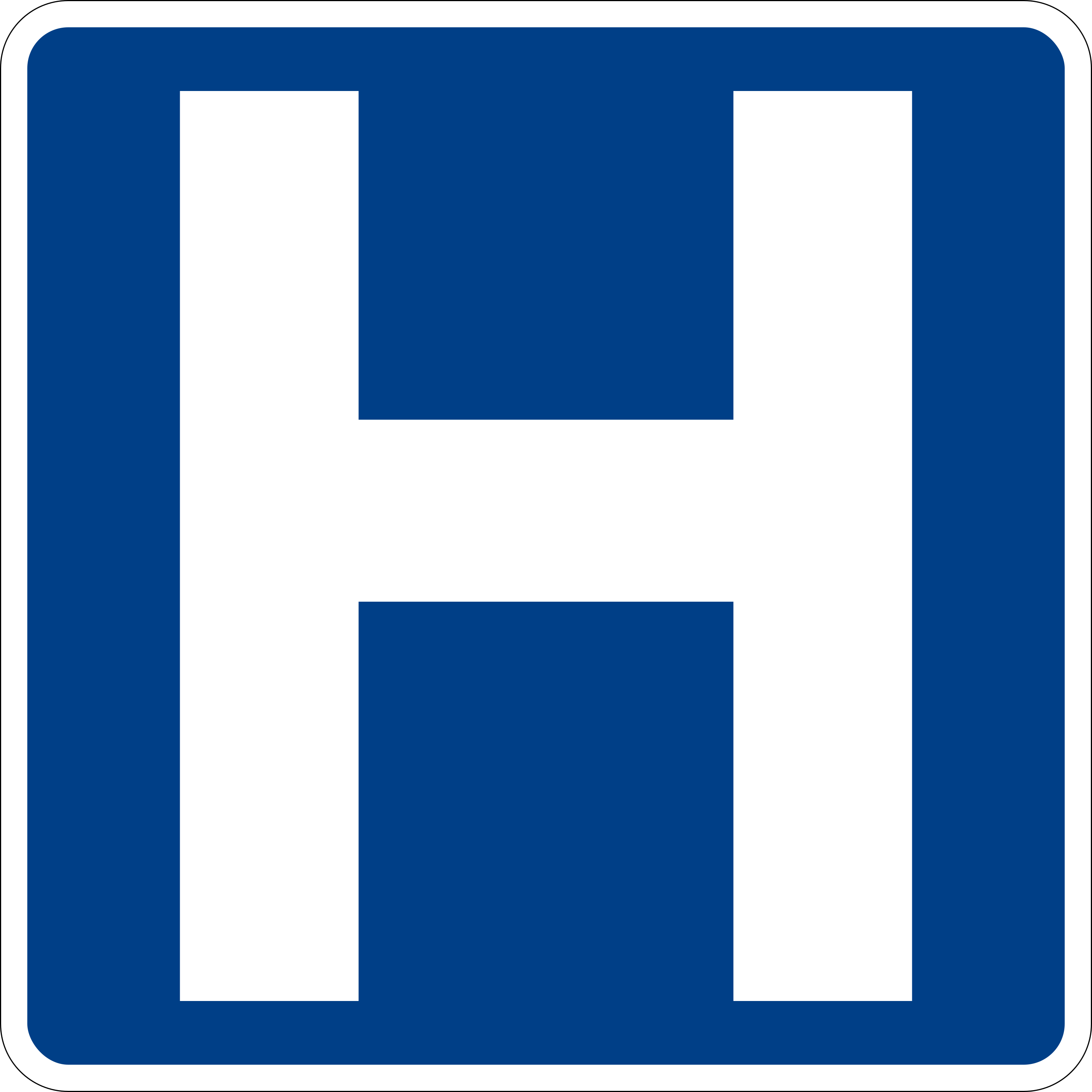
- A hospital is ahead in the direction the sign points. (correct)
- A helicopter landing zone is located ahead on the roadway.
- A general information center for travelers is ahead.
- A pharmacy providing prescription services is ahead.
Why: The white block letter H on a blue services square marks the route to a hospital that offers emergency care, in the direction the sign points. The trap is reading the H as a helipad marker; the block letter H on a blue guide square is reserved for a hospital route, and a helicopter landing area is signed with its own separate symbol.
-
5. You are following a light rail vehicle on a shared street and see this R15-5a sign as the train stops at a station. What does it require of you?
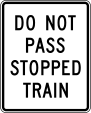
- Pass on the left once the opposing track looks clear of trains.
- Wait behind the stopped train until it moves and passengers finish crossing. (correct)
- Sound the horn and pass slowly once riders have boarded the train.
- Go around the train as you would any stalled vehicle blocking the lane.
Why: The R15-5a marker forbids overtaking a light rail or transit train stopped at a station while passengers are loading, unloading, or crossing the roadway, so you hold position until the train pulls away and riders have cleared the street. Drivers who fall back on the everyday reflex of easing around a stalled vehicle in the lane are the ones who steer past a halted transit train and cross straight through the boarding zone.
-
6. You approach a roundabout entry marked with a row of solid white triangles pointing toward you. What does the marking require before you cross it?

- Yield to traffic in the roundabout and cross only when safe. (correct)
- Come to a complete stop before entering, then proceed.
- Maintain speed and merge into any gap you find.
- Wait for a driver in the circle to wave you in.
Why: The row of triangles is a yield line, and it puts the duty to yield on you. Slow down, watch for traffic and pedestrians already in the circle, and cross only when there is a safe gap. The trap is the answer that requires a full stop; drivers reach for it by treating the triangles like a stop bar. A stop bar is a single solid white line spanning the lane and it is what a stop sign uses, while shark's teeth signal yielding, not stopping.
-
7. What does this Be Prepared To Stop sign require of a driver approaching it?
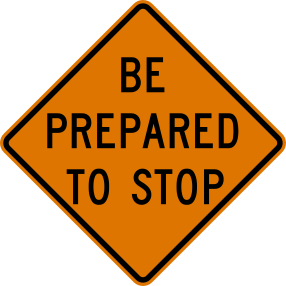
- Reduce speed and be ready to brake because traffic ahead may stop without warning. (correct)
- Stop at the sign and wait for a flagger to wave you through.
- Merge left immediately because the right lane is closing ahead.
- Yield to workers and equipment entering the roadway from the shoulder.
Why: The orange diamond warns that traffic ahead may halt without notice at a flagger, a signal, or the back of a queue. Ease off the accelerator, open up your following distance, and cover the brake so you can stop firmly if a stopped line appears around the next curve. The trap is the answer that treats the words 'prepared to stop' as an order to halt at the sign itself; a diamond flags what is coming, not the point where the driver actually stops.
-
8. What does the number on this milepost tell a driver?
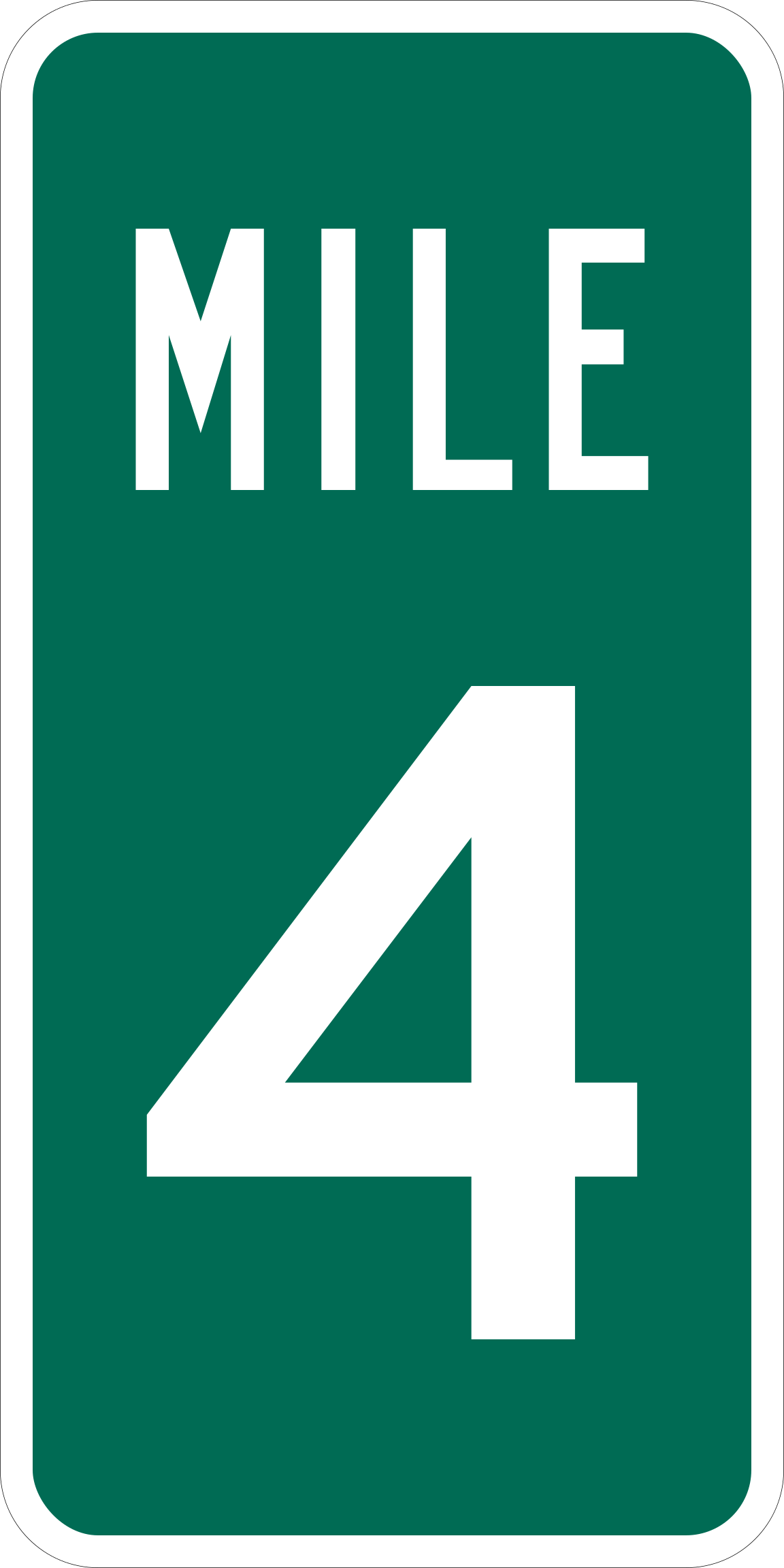
- Miles along the route from where it entered the state. (correct)
- The route number assigned to this highway.
- How many miles are left until the state line.
- The distance to the next numbered exit.
Why: Green milepost panels count up from the point where the route enters the state, giving a running mile count along the route rather than a distance to anywhere ahead. Depending on direction of travel the numbers may rise or fall, but they are not a countdown to the next border or exit. The "miles left until the state line" answer is the trap for drivers used to watching a GPS clock down to a destination. They expect the milepost to work the same way and read the panel as miles remaining rather than miles counted since entering.
-
9. What should you do when this Hill sign warns of a downgrade ahead?

- Reduce speed and shift to a lower gear before starting down. (correct)
- Stop completely at the crest before beginning the descent.
- Yield to any vehicles climbing the grade from below.
- Hold your speed and rely on the brakes throughout the descent.
Why: The Hill sign warns that a steep downgrade is ahead, and the safe response is to slow down and shift to a lower gear before you start down so engine braking helps control your speed. The answer that says to hold your speed and rely on the brakes is the trap: it borrows the everyday habit of tapping the brakes on a mild slope, which lets the brakes overheat and fade on a real grade.
-
10. What does this yield sign require of a driver approaching it?
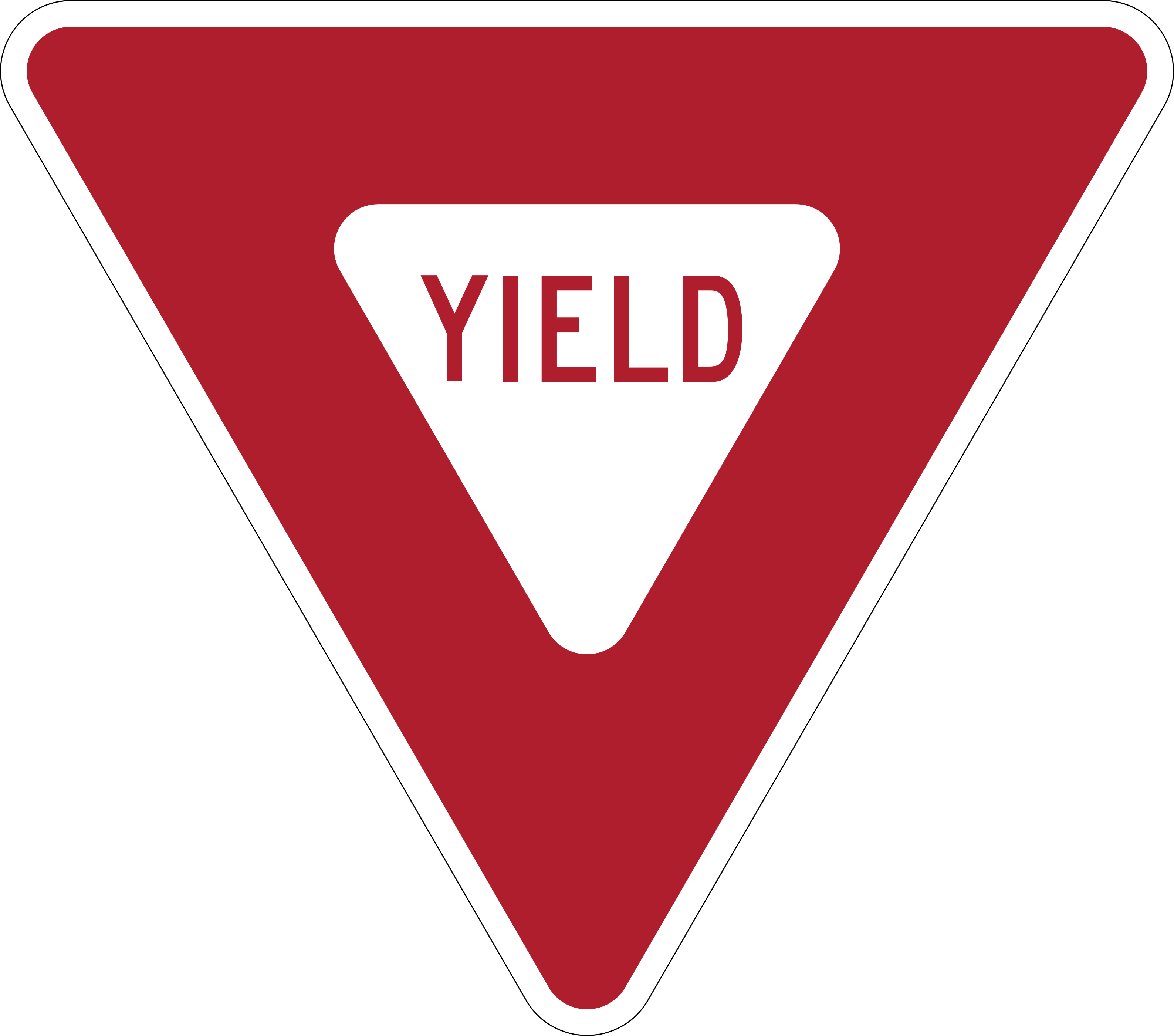
- Slow down, give the right-of-way to cross traffic and pedestrians, and stop if needed. (correct)
- Stop completely at the line every time before entering the intersection.
- Speed up through the intersection to clear it before cross traffic arrives.
- Continue at the posted speed unless a signal or officer directs otherwise.
Why: A yield sign asks a driver to slow, scan for cross traffic and pedestrians, and stop only when someone else has the right-of-way; if the way is clear, the driver may roll through without stopping. The trap is the answer that turns the triangle into a stop sign because both signs are red, but the octagon demands a halt every time and the downward triangle demands one only when a conflict is present.
Where to go next.
Ready for a longer go? Take the full South Carolina practice test or jump into the topic study guide.
This diagnostic is one snapshot. The South Carolina book unlocks a companion that turns it into a ranked study plan and re-ranks your weakest topics every time you practice, so the top of the list is always what to drill next.