South Carolina Practice Test
A full-length practice test for the South Carolina DMV knowledge test.
25 Questions Click an answer to reveal the explanation








South Carolina Practice Test (25 questions). Correct answers and explanations are noted under each question.
-
1. A white arrow pointing straight ahead is painted in the lane you are driving in as you approach an intersection. What does it require?
- Proceed straight through the intersection (correct)
- Merge into the adjacent lane before the intersection
- Turn either left or right from this lane
- Yield to cross traffic before proceeding straight
Why: The white straight-ahead arrow reserves the lane for through movement; a driver in it must continue forward through the intersection and cannot turn out. The trap is the choice that lets a driver turn left or right from the lane. A reader who learned the two-way turn arrow first tends to carry that "either way" reading over to any painted arrow, but a single arrow points one direction only, and the lane it marks is committed to that direction.
Source: Manual on Uniform Traffic Control Devices, marking 3B.24 (Straight-Through Arrow).
-
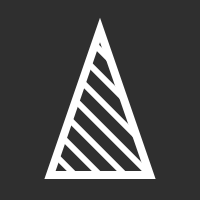
2. You approach a roundabout entry marked with a row of solid white triangles pointing toward you. What does the marking require before you cross it?
- Yield to traffic in the roundabout and cross only when safe. (correct)
- Come to a complete stop before entering, then proceed.
- Maintain speed and merge into any gap you find.
- Wait for a driver in the circle to wave you in.
Why: The row of triangles is a yield line, and it puts the duty to yield on you. Slow down, watch for traffic and pedestrians already in the circle, and cross only when there is a safe gap. The trap is the answer that requires a full stop; drivers reach for it by treating the triangles like a stop bar. A stop bar is a single solid white line spanning the lane and it is what a stop sign uses, while shark's teeth signal yielding, not stopping.
Source: Manual on Uniform Traffic Control Devices, marking 3B.19 (Yield Line (Shark's Teeth)).
-
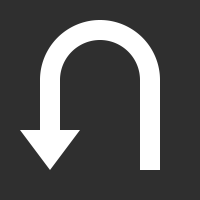
3. What does this pavement marking permit a driver in the lane to do?
- Reverse direction with a U-turn at the intersection. (correct)
- Make a left turn only at the intersection.
- Use the lane for left turns from either direction of travel.
- Execute a three-point turn to change direction.
Why: A curved arrow that loops a full 180 degrees marks the lane as one where U-turns are permitted, so a driver may reverse direction at the intersection. The trap sits with the plain left-turn reading: a left-turn arrow bends once toward the left and stops there, while the U-turn arrow wraps the whole way around to show the reversal, and the two markings sit close enough in shape that the loop gets misread as an ordinary left.
Source: Manual on Uniform Traffic Control Devices, marking 3B.24 (U-Turn Arrow).
-
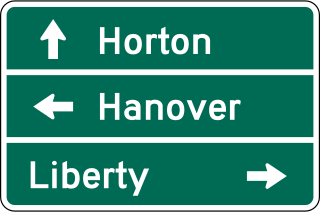
4. A single green rectangular sign at an intersection lists three destinations, each next to its own arrow. How should a driver use the sign?
- Follow all three arrows in the order they appear on the panel.
- Read the line for your destination and follow that line's arrow. (correct)
- Take the top destination first because straight-ahead arrows sit above turns.
- Yield to any traffic turning toward the destinations shown on the sign.
Why: A destination guide panel packs up to three places onto one green sign, and each destination carries its own arrow. Find the line for the place you're going and follow only that arrow. The choice that says to follow all three arrows in order traps drivers carrying the habit of reading stacked turn-by-turn navigation prompts, where each line is the next move in one trip rather than a separate destination to pick from.
Source: Manual on Uniform Traffic Control Devices, sign D1-3 (Destination Sign (Three Destinations)).
-
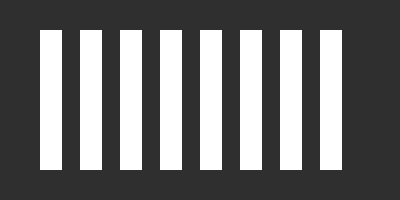
5. A series of wide white bars is painted across the road, parallel to the direction of traffic, like piano keys. What does this marking indicate?
- A high-visibility pedestrian crosswalk. (correct)
- A stop line telling drivers where to halt at the intersection.
- A yield line telling drivers to slow and give way.
- A rumble strip designed to alert drowsy drivers.
Why: A series of wide white bars painted across the road, parallel to the direction of traffic, marks a continental crosswalk, a high-visibility pedestrian crossing. Drivers must yield to pedestrians within it, must not stop on or block the bars, and must not pass another vehicle stopped for someone in the crossing. The stop-line answer comes from confusing these parallel bars with the single perpendicular white line at an intersection that tells drivers where to halt; the two markings run in different directions and carry different meanings.
Source: Manual on Uniform Traffic Control Devices, marking 3B.18 (Continental Crosswalk).
-
6. A single broken yellow line runs down the center of a two-way roadway. What does it permit a driver to do?
- Pass slower traffic by briefly crossing into the oncoming lane when the way is clear (correct)
- Make left turns from the center lane in either direction of travel
- Drive in the oncoming lane whenever traffic in the driver's own lane is heavy
- Straddle the line to share the roadway with wide oncoming vehicles
Why: A single broken yellow center line permits passing when the way is clear. A driver may briefly cross into the oncoming lane to pass slower traffic and then return. The trap is the answer that treats this line as a two-way left-turn lane; those lanes are marked with outer solid yellow lines paired with inner broken yellow lines, and a driver who learned that pattern first can reach for it here.
Source: Manual on Uniform Traffic Control Devices, marking 3B.01 (Broken Yellow Center Line).
-
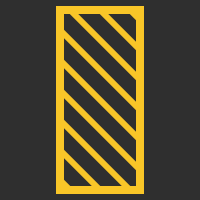
7. Yellow diagonal stripes inside a solid yellow border fill a rectangle between opposing-direction lanes. What does this require of you?
- Use it as a two-way left-turn lane for turns to either side.
- Do not drive into the striped area. (correct)
- Treat it as a passing zone for opposing traffic.
- Stop inside the stripes before merging into the next lane.
Why: A rectangle outlined in solid yellow and filled with diagonal stripes is a painted median between opposing-direction lanes, and it is closed to travel. The trap is the two-way left-turn lane, which also sits between opposing traffic and uses yellow paint; a driver who learned that rule first carries it over. But a two-way left-turn lane is bounded by a solid outer yellow and a broken inner yellow with no diagonal fill, and it exists to be entered for turns. The diagonal stripes flag pavement not meant for any travel at all.
Source: Manual on Uniform Traffic Control Devices, marking 3B.25 (Yellow Diagonal Crosshatch (Neutral Median Area)).
-
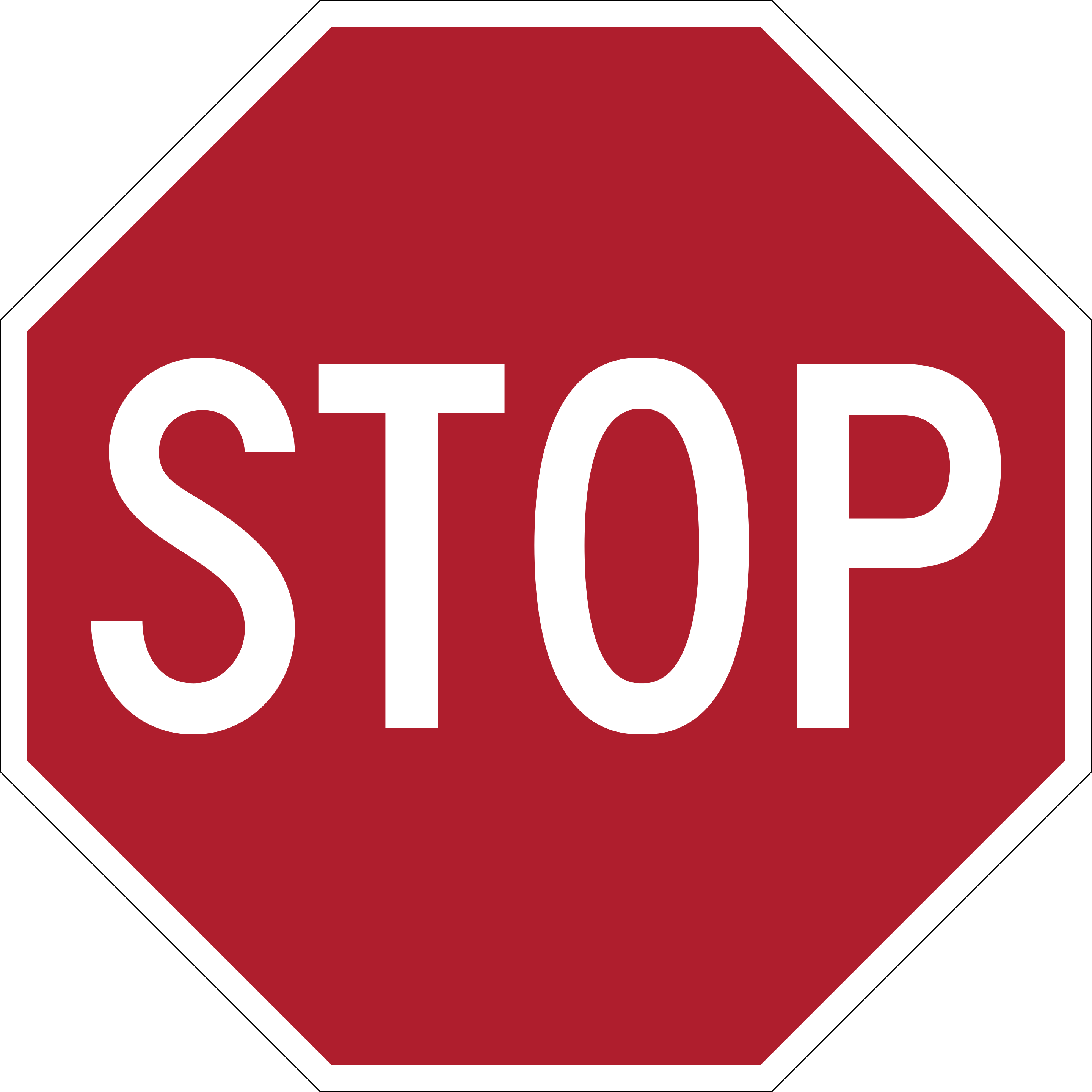
8. A stop sign requires a driver to do what at the marked location?
- Come to a complete stop at the line, crosswalk, or intersection before proceeding (correct)
- Slow down and yield only if other traffic or pedestrians are present
- Stop only when cross traffic is visibly approaching the intersection
- Reduce speed and proceed carefully through the intersection
Why: The octagon calls for a full halt at the stop line, crosswalk, or intersection edge, and the driver moves again only when the way is safe. Drivers who slow, glance around, and roll through when the way looks clear are treating the octagon as a yield sign. That habit fails the road test.
Source: Manual on Uniform Traffic Control Devices, sign R1-1 (Stop).
-
9. What does this Slow Traffic Ahead sign require of a driver approaching it?
- Ease off the throttle now because traffic ahead is moving much slower. (correct)
- Come to a complete stop before reaching the marked line.
- Yield to workers entering the roadway from the shoulder.
- Merge into the adjacent lane before reaching the sign.
Why: Traffic ahead is moving much slower than you are, so start easing off now. Cover the brake, check your mirror so the driver behind you has time too, and be ready to brake harder or stop if the queue ahead is standing still. The pick that treats this as a stop order comes from a driver carrying the red-octagon reflex to any orange work-zone message; the sign gives you an early cue to slow down, not a fixed point to halt at.
Source: Manual on Uniform Traffic Control Devices, sign W23-1 (Slow Traffic Ahead).
-
10. A broken white line separates your lane from the lane to your left, both traveling in the same direction. What does this marking permit?
- Lane changes across the line when it is safe to do so. (correct)
- Passing by crossing into oncoming traffic.
- Crossing only in an emergency.
- Nothing; the line must not be crossed.
Why: A broken white line divides lanes moving the same way, and a driver may cross it to change lanes whenever the move is safe: signal, check mirrors and blind spots, then move over. The choice about passing into oncoming traffic reaches for the rule that governs broken yellow center lines on two-way roadways; broken white never sits between opposing lanes and has nothing to do with oncoming vehicles.
Source: Manual on Uniform Traffic Control Devices, marking 3B.04 (Broken White Lane Line).
-
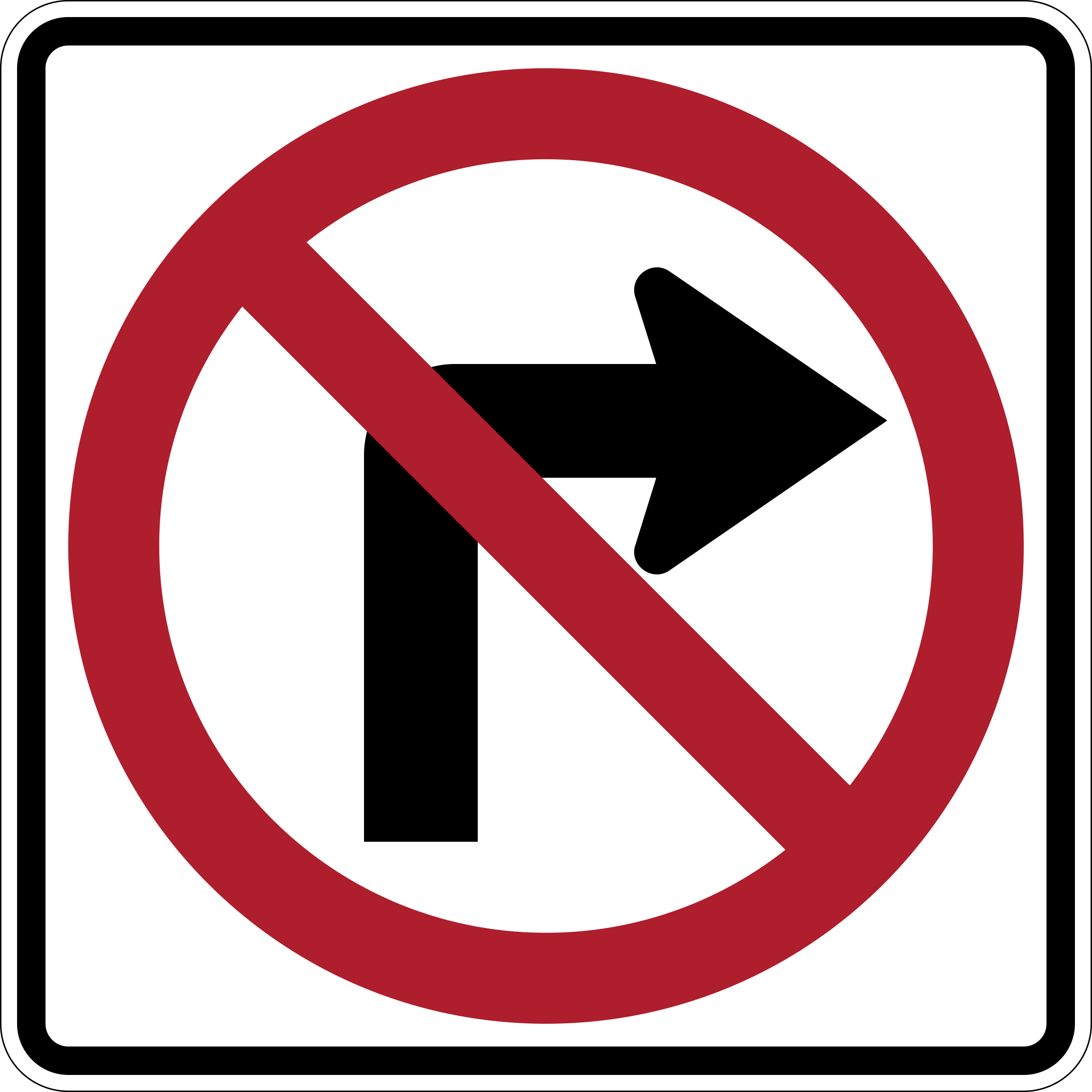
11. What does this No Right Turn sign require of a driver in the lane where it is posted?
- Stop before turning right, then proceed when the way is clear.
- Continue straight or use another approved movement instead of turning right. (correct)
- Yield to any crossing traffic before completing a right turn.
- Turn right only when a green arrow signal is showing.
Why: The sign forbids a right turn at that intersection or driveway from the lane where it's posted, so a driver in that lane continues straight or uses another approved movement. The stop-then-turn answer pulls at drivers who carry a stop-sign habit into a white regulatory sign, treating a full stop as permission to complete the turn; the R3-1 is an outright prohibition, and no amount of stopping first satisfies it.
Source: Manual on Uniform Traffic Control Devices, sign R3-1 (No Right Turn).
-
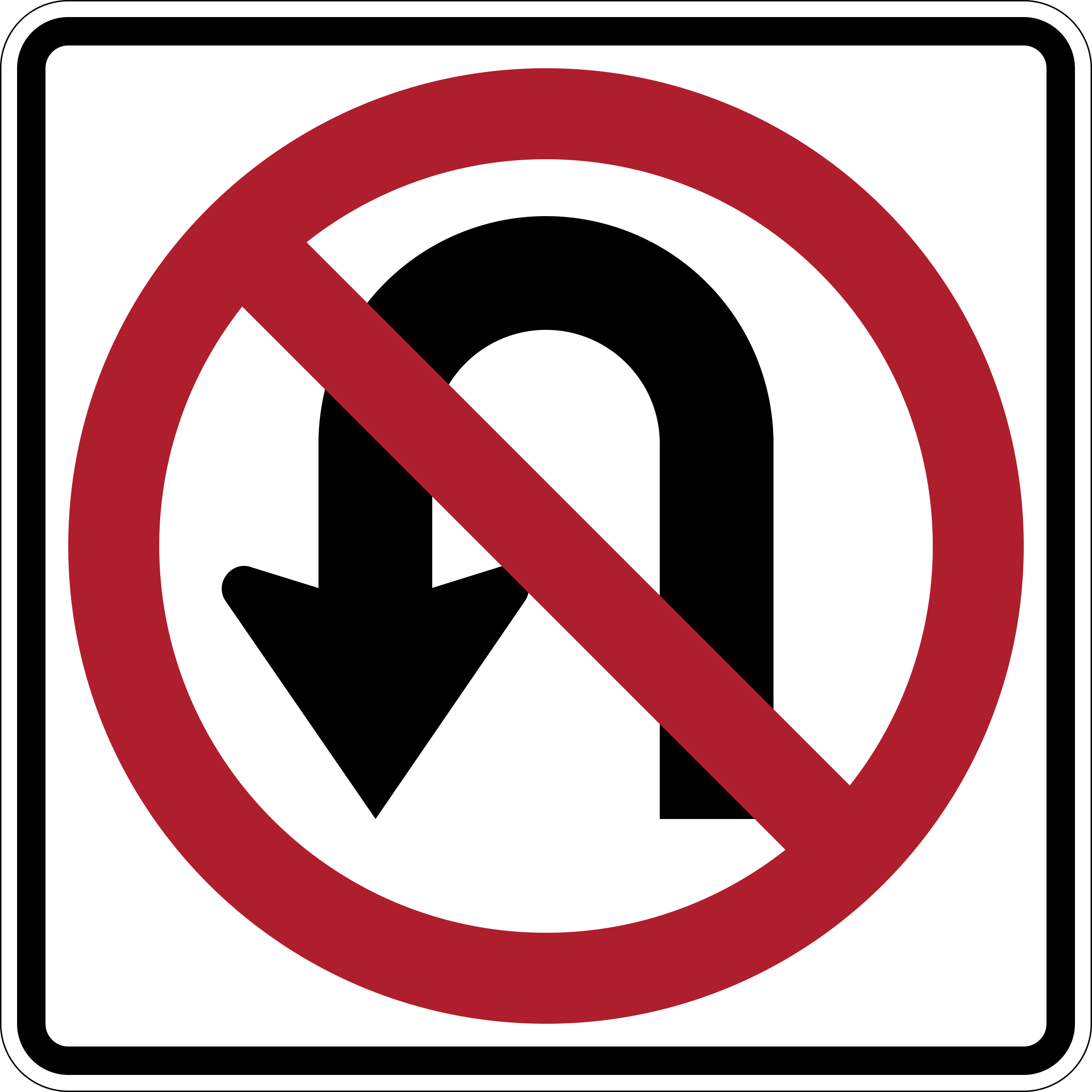
12. You approach this No U-Turn sign and need to reverse your direction of travel. What does the sign require?
- Continue past and use a designated turnaround or another intersection. (correct)
- Complete the U-turn only when the road is clear of oncoming traffic.
- Complete the U-turn only from the leftmost lane on a green signal.
- Turn left here instead, since the sign forbids only left turns.
Why: A No U-Turn sign forbids reversing direction by turning 180 degrees through this intersection or median opening, so a driver who needs to turn around continues past and uses a designated turnaround or another intersection where U-turns are allowed. Drivers who read the sign as a yield-style caution pick the answer that waits for a clear oncoming lane; the sign is a prohibition, not a caution about traffic, and a clear lane does not make the U-turn legal here.
Source: Manual on Uniform Traffic Control Devices, sign R3-4 (No U-Turn).
-
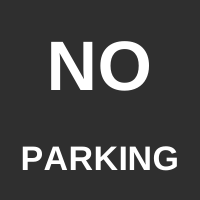
13. A white 'NO PARKING' legend is painted on the pavement along the curb ahead. What does it require of you?
- Park briefly if you leave your hazard lights on.
- Do not park a vehicle in that space. (correct)
- Park there outside posted business hours.
- The prohibition applies only during posted rush hours.
Why: The painted NO PARKING legend means you cannot park a vehicle in that space; treat it the same way you would a posted No Parking sign. The idea that flashing hazard lights buy you a quick stop is borrowed from delivery vans double-parking, and the painted word does not read blinkers.
Source: Manual on Uniform Traffic Control Devices, marking 3B.20 ("No Parking" Pavement Word Marking).
-
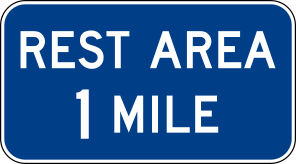
14. What does this Rest Area sign tell a driver?
- The distance to the next rest area ahead. (correct)
- That a rest area entrance is at this location.
- That vehicles may pull onto the road from a shoulder ahead.
- The gas and food brands available at the coming exit.
Why: A blue rectangular Rest Area advance sign posts how far ahead the next rest area is, so you can plan whether to pull off in time. The pick that reads the sign as the entrance itself confuses this advance version with the ramp-mouth sign at the actual driveway; the advance sign is set back so drivers still have room to slow, signal, and exit.
Source: Manual on Uniform Traffic Control Devices, sign D5-1 (Rest Area Advance).
-
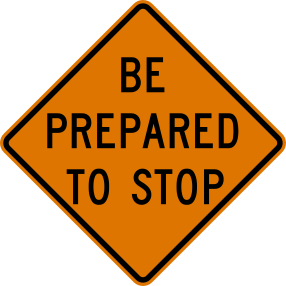
15. What does this Be Prepared To Stop sign require of a driver approaching it?
- Reduce speed and be ready to brake because traffic ahead may stop without warning. (correct)
- Stop at the sign and wait for a flagger to wave you through.
- Merge left immediately because the right lane is closing ahead.
- Yield to workers and equipment entering the roadway from the shoulder.
Why: The orange diamond warns that traffic ahead may halt without notice at a flagger, a signal, or the back of a queue. Ease off the accelerator, open up your following distance, and cover the brake so you can stop firmly if a stopped line appears around the next curve. The trap is the answer that treats the words 'prepared to stop' as an order to halt at the sign itself; a diamond flags what is coming, not the point where the driver actually stops.
Source: Manual on Uniform Traffic Control Devices, sign CW3-4 (Be Prepared To Stop).
-
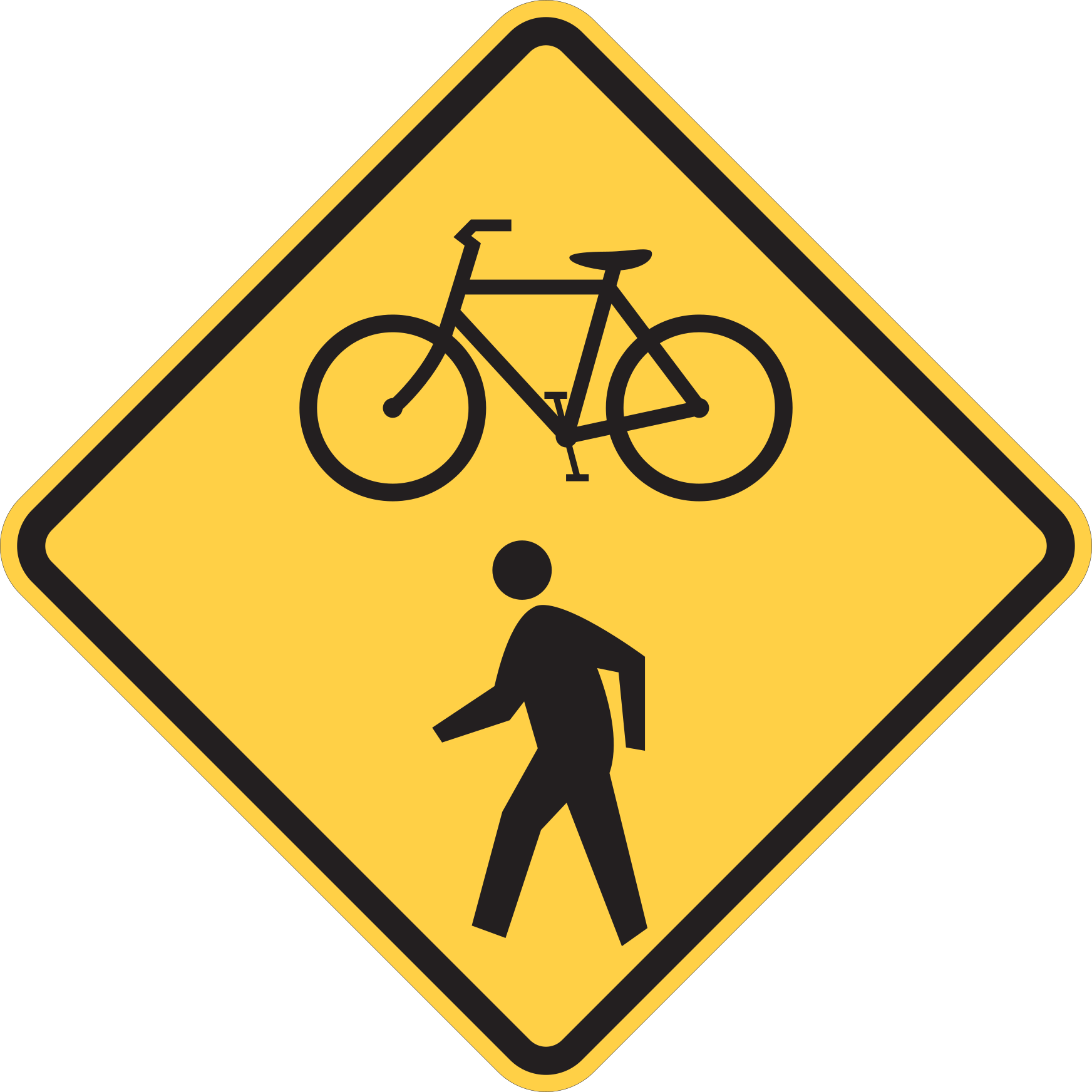
16. What does this warning sign tell a driver to expect on the road ahead?
- A shared crossing used by pedestrians and bicyclists (correct)
- A school crosswalk where children cross the road
- A bike lane beginning along the roadway
- A pedestrian-only crosswalk with no bikes
Why: The W11-15 warns of a shared crossing where pedestrians and bicyclists may enter the roadway, usually where a sidepath or multi-use trail meets the road at one point. The school-crosswalk reading is the trap because the S1-1 school crossing sign carries the same fluorescent yellow-green background, so the color reads to some drivers as 'children crossing' when it actually flags any non-motorist crossing.
Source: Manual on Uniform Traffic Control Devices, sign W11-15 (Pedestrian and Bicycle Crossing).
-
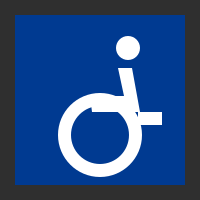
17. The blue wheelchair symbol painted on a parking space marks the space as what?
- Reserved for vehicles displaying a valid disability placard or plate. (correct)
- Free parking closest to the entrance for any driver in a hurry.
- Reserved for medical staff and emergency responders on duty.
- Loading zone for wheelchair-accessible vans during business hours.
Why: A parking space marked with the wheelchair symbol is reserved for vehicles displaying a valid disability placard or license plate. The trap is the answer that treats the symbol as a convenience marker for the closest spot to the entrance; these spaces are often near the door, but proximity is not what the paint reserves. Access for a placard or plate holder is.
Source: Manual on Uniform Traffic Control Devices, marking 3B.27 (Accessible Parking Symbol).
-
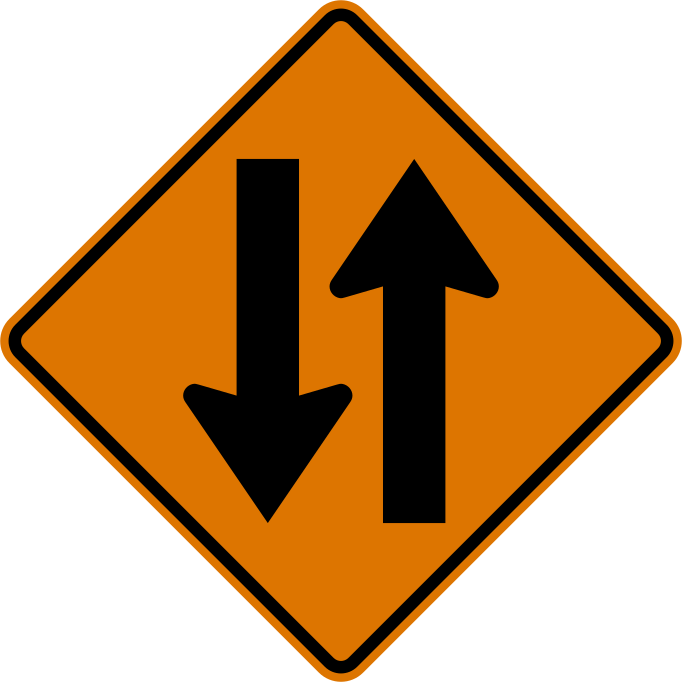
18. What does this orange diamond sign warn of ahead?
- Two-way traffic shares the roadway ahead through the construction area. (correct)
- Your lane ends ahead and traffic must merge to the left.
- A detour begins ahead and directs traffic off the roadway.
- Passing is prohibited through the construction zone ahead.
Why: The orange diamond warns that through the construction area the roadway carries vehicles in both directions, so oncoming traffic will share the same pavement and a driver has to stay right of the centerline. The no-passing answer is the pull here because two-way work zones often do restrict passing, and a learner who has driven through one associates the two ideas; this sign warns of the two-way condition itself, and a separate device carries any passing prohibition.
Source: Manual on Uniform Traffic Control Devices, sign CW6-3 (Two-Way Traffic (Work Zone)).
-
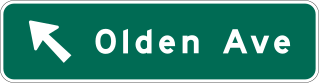
19. What does this exit direction sign at a freeway ramp confirm for a driver?
- The destination and which side you leave the freeway from. (correct)
- The distance remaining to the next service area on this route.
- The speed limit that applies once you're on the ramp itself.
- The route number of the highway you will join after exiting.
Why: The E4-1 stands at the ramp itself and does two jobs: it names the destination this ramp serves and, through the diagonal arrow, shows whether the ramp peels off to the right or the left. That is the last confirmation before a driver commits to leaving the through lanes. The route-number reading is the trap, catching drivers who habitually treat green interchange panels as route shields and reach for a highway number as the headline, even when the sign in front of them is a destination confirmation answering a different question.
Source: Manual on Uniform Traffic Control Devices, sign E4-1 (Exit Direction Sign).
-
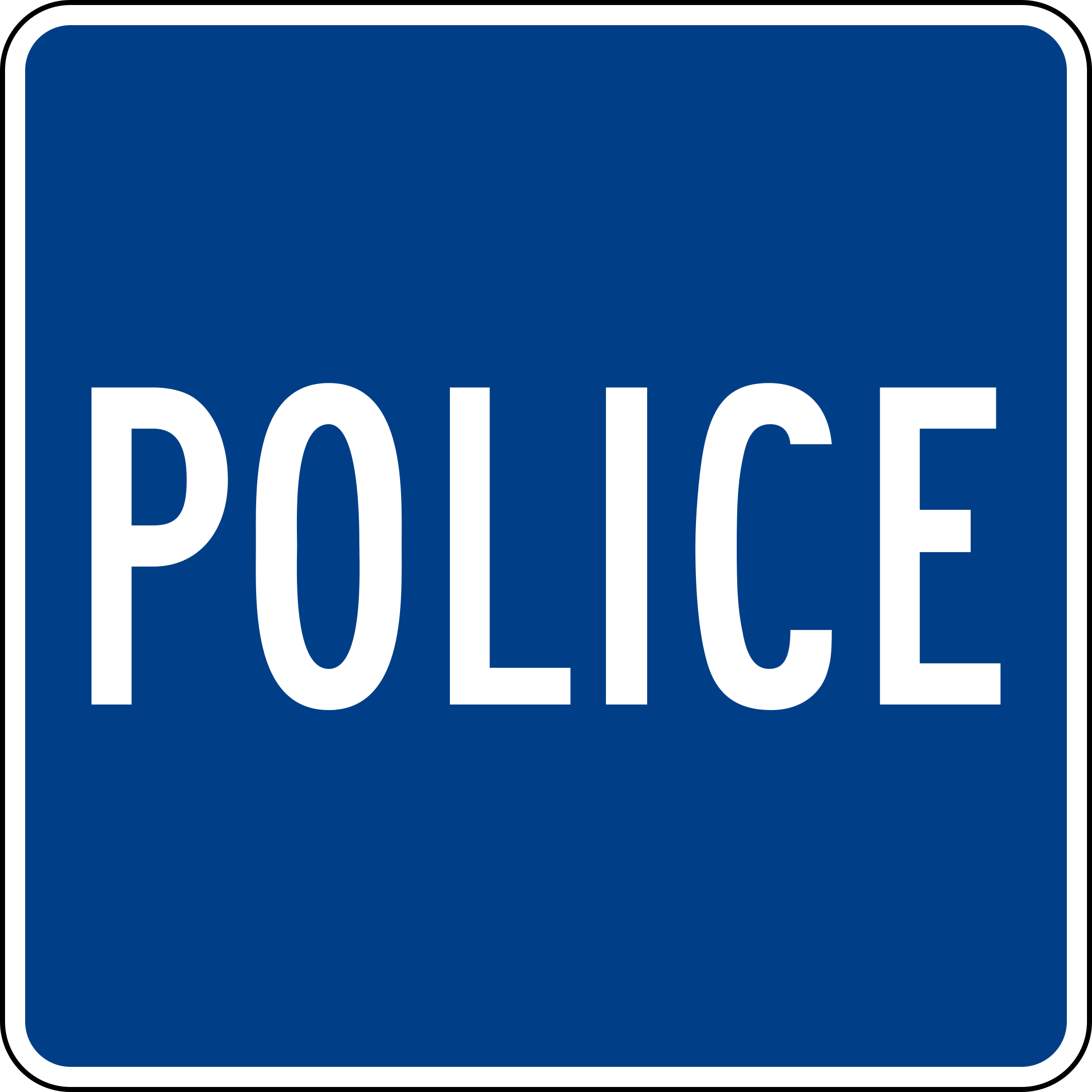
20. What does this Police sign tell a driver?
- A police station is located ahead. (correct)
- A hospital is located ahead.
- A rest area is located ahead.
- An emergency telephone is located ahead.
Why: The white POLICE legend on a blue square directs you to a police station or other law enforcement office ahead. The hospital answer reads the blue services background correctly but ignores the legend printed on the sign, which names police work, not medical care.
Source: Manual on Uniform Traffic Control Devices, sign D9-14 (Police).
-
21. What should you do when this Hill sign warns of a downgrade ahead?
- Reduce speed and shift to a lower gear before starting down. (correct)
- Stop completely at the crest before beginning the descent.
- Yield to any vehicles climbing the grade from below.
- Hold your speed and rely on the brakes throughout the descent.
Why: The Hill sign warns that a steep downgrade is ahead, and the safe response is to slow down and shift to a lower gear before you start down so engine braking helps control your speed. The answer that says to hold your speed and rely on the brakes is the trap: it borrows the everyday habit of tapping the brakes on a mild slope, which lets the brakes overheat and fade on a real grade.
Source: Manual on Uniform Traffic Control Devices, sign W7-1 (Hill).
-
22. A paved area outlined in white and filled with white diagonal stripes sits between a through lane and an off-ramp. What does this marking require of a driver approaching it?
- Steer around it and stay in a defined lane on one side. (correct)
- Drive across it only when changing lanes to merge.
- Stop at the stripes and yield to through traffic.
- Use it as an extra travel lane during heavy congestion.
Why: A painted channelizing island marks a neutral area, and the rule is to keep out of it: steer around the stripes the way you would a raised island and settle into a defined lane on one side before you reach the point. The trap is the answer that treats the striped gore as pavement to drive across on the way into an exit. Gore stripes and merge markings sit next to each other in the same places, so a driver who has watched cars cut across one reads the other as fair use, when the stripes are telling them to stay out.
Source: Manual on Uniform Traffic Control Devices, marking 3B.25 (Painted Channelizing Island).
-
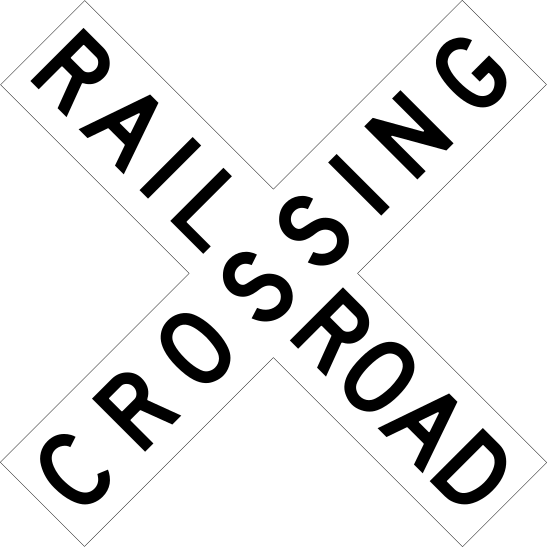
23. What does this crossbuck sign require of a driver approaching the tracks?
- Yield to any approaching train and cross only when the tracks are clear. (correct)
- Come to a complete stop before every crossing, whether or not a train is approaching.
- Proceed without slowing because the crossbuck only marks the location of the tracks.
- Yield to cross traffic on the road that intersects at this location.
Why: The crossbuck acts as a yield device at a highway-rail grade crossing: slow down, look and listen both ways, and cross only when no train is coming. The trap is the answer that treats every crossing as a mandatory stop, which carries a stop-sign habit over to a device that only demands a stop when a train is actually there.
Source: Manual on Uniform Traffic Control Devices, sign R15-1 (Railroad Crossing (Crossbuck)).
-
24. What does this R15-6 sign require of a driver?
- Keep motor vehicles off the light rail or railroad tracks. (correct)
- Stop before crossing the tracks ahead.
- Yield the right of way to any approaching train.
- The lane is reserved for buses and rail vehicles only.
Why: The sign is a regulatory prohibition: motor vehicles may not travel on the light rail or railroad tracks that run beside the roadway. Drivers who read any track-related sign as a cue to stop reach for the stop-before-crossing answer, importing the rule that belongs to a crossbuck or an octagonal stop sign at the crossing itself.
Source: Manual on Uniform Traffic Control Devices, sign R15-6 (No Motor Vehicles On Tracks).
-
25. What does this blue service sign with a white Rx symbol tell you?
- A pharmacy is available ahead. (correct)
- A hospital emergency department is ahead.
- A staffed first-aid station is ahead.
- A drugstore that stocks only over-the-counter remedies is ahead.
Why: The white Rx on a blue square is the federal services sign for a pharmacy, sitting in the same blue services family as the white H for a hospital and the knife-and-fork for a food service. Drivers who read 'drugstore' as an everyday synonym for pharmacy reach for the over-the-counter-only shop, forgetting that the Rx pictograph points at a prescription counter, not at any corner store stocking aspirin.
Source: Manual on Uniform Traffic Control Devices, sign D9-20 (Pharmacy).
Keep going.
Want explanations one question at a time? Browse every South Carolina practice question or jump into the topic study guide.