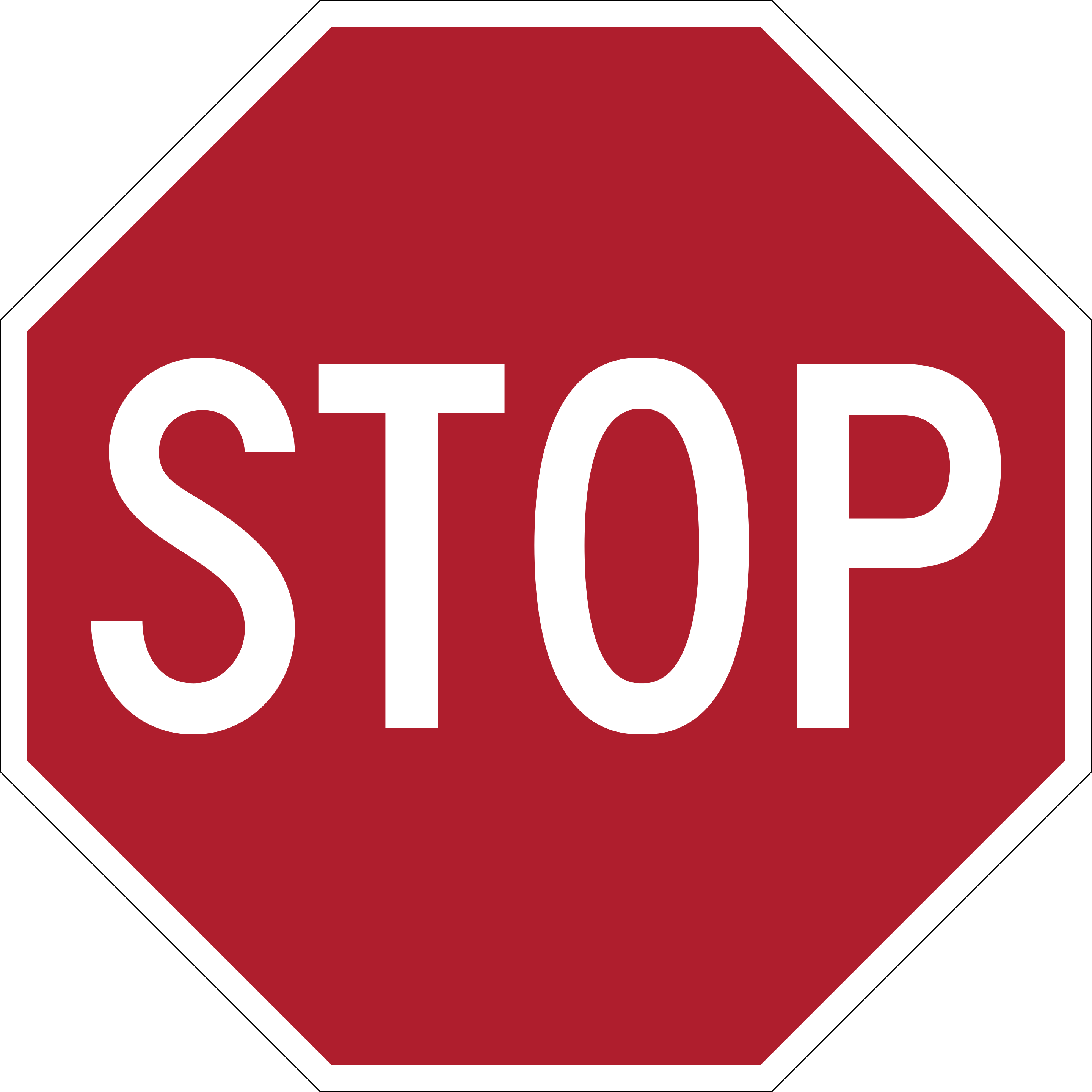
After the wheels have fully stopped at a stop sign, when may the driver proceed?
-
A.
After yielding to pedestrians and cross traffic with the right-of-way Correct
-
B.
As soon as the vehicle's wheels have fully halted
-
C.
When a traffic light or officer waves the driver through
-
D.
After the driver on the right has gone first
The answer is "After yielding to pedestrians and cross traffic with the right-of-way"
The stop is only the first step; after halting, drivers yield to pedestrians and any cross traffic that already has the right-of-way, then move when the way is clear. Drivers who learned "stop means stop" as the whole rule pull forward the moment the wheels halt and skip the yield step the octagon requires next.
The traps in the wrong answers
B. As soon as the vehicle's wheels have fully halted
Coming to a halt is only half the rule; the stop then requires yielding before moving. Drivers who learned 'stop means stop' as the whole rule read the octagon as halt-and-go rather than halt-then-yield. This answer treats the complete halt as the whole obligation and skips the yield step the octagon requires afterward.
C. When a traffic light or officer waves the driver through
The octagon governs on its own; no signal or officer is needed to release traffic from a stop sign. Drivers used to signal-controlled or officer-directed intersections wait for a release cue that never comes at an octagon. This answer waits for the green-light or officer-wave cue that governs busier intersections, expecting the stop sign to hand out permission the same way.
D. After the driver on the right has gone first
The equal-arrival tiebreaker belongs to four-way stops; a lone stop sign asks the driver to yield to whoever already has the right-of-way. Drivers who apply the four-way stop drill to every octagon wait for a right-side driver even when only their own approach is signed. This answer memorizes yield-to-the-right as the master stop-sign rule and applies it before checking whether the cross street is signed at all.
This question tests your knowledge of Regulatory Signs on the roads of every US state . Source: Manual on Uniform Traffic Control Devices, sign R1-1 (Stop)..
Related questions
- What does this Do Not Enter sign require of a driver facing it? →
- When does the passing restriction created by this Do Not Pass sign end? →
- You are following a light rail vehicle on a shared street and see this R15-5a sign as the train stops at a station. What does it require of you? →
- You approach this sign posted at the front of a raised median that splits the roadway. What does it require of you? →
- What does this sign require of a driver turning left when the signal shows a solid green ball? →