Illinois Driver's Permit Diagnostic Quiz
Find your weak spots before you book the test. 10 questions drawn from the topics the Illinois driver manual spends the most time on. You'll see which topics need work the moment you finish; enter your email at the end and we'll send the full ranked plan with exact scores and the chapters to study next.
Illinois Driver's Permit Diagnostic Quiz (10 questions). Correct answers and explanations follow each question.
-
1. A green rectangular sign posted at the point where an off-ramp splits from the freeway shows EXIT with a number and an arrow. What does this sign identify?
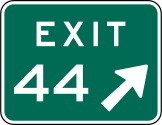
- The exit number of the ramp you are entering at the point of separation. (correct)
- The distance in miles to the next numbered exit ahead.
- The mileage from the state line along this freeway.
- The route number of the highway the ramp connects to.
Why: The E5-1a combines EXIT and the number at the point the ramp splits from the through lanes, so a driver leaving the freeway sees the ramp identified as they enter it. The distance-based pick is the one to watch: it borrows the mileage from an advance guide sign posted a mile or two before the exit, and a reader who pictures that earlier sign carries the mileage across to the gore. The gore sign carries no distance figure.
-
2. Two lanes of same-direction traffic are separated by a solid white line. What does this marking tell drivers?

- Lane changes through the marked area are discouraged. (correct)
- The marking is an absolute prohibition on crossing under any circumstances.
- Traffic on the other side of the line moves in the opposite direction.
- Vehicles may pass slower traffic whenever the road ahead is clear.
Why: A solid white line between same-direction lanes discourages lane changes through the marked area, so drivers should hold their lane through the solid section and cross only when necessary. The "absolute prohibition" answer traps drivers who confuse a solid white lane line with a solid yellow centerline, reading any solid line as an unconditional ban rather than as the passing or lane-change restriction it actually marks.
-
3. What does this Fresh Oil sign require of a driver approaching the treated pavement?

- Brake and steer gently and leave extra following distance behind the vehicle ahead. (correct)
- Maintain highway speed since the treatment sets quickly under traffic.
- Stop before entering the treated section and wait for a flagger to wave you through.
- Change to the adjacent lane to avoid driving on the fresh surface.
Why: The sign marks a surface treatment that has just been laid down and has not yet set, so the pavement offers much less grip than it looks like it should. Brake and steer gently, and leave extra following distance so loose chips and oil thrown up by the vehicle ahead don't reach your windshield. The trap is the choice that turns the sign into a flagger cue and stops the driver; every orange work-zone diamond is a hazard warning, not a traffic-control order, and nothing on this one directs a halt.
-
4. What does this sign require of a driver in the right lane?

- Merge left into the adjacent through lane because the right lane is ending ahead. (correct)
- The left lane is closing, so shift one lane to the right.
- Stay in the right lane, which becomes an exit-only lane at the ramp ahead.
- A new right lane is being added ahead, and through traffic may move into it.
Why: This yellow diamond warns that the right lane is closing, so a driver in it must signal, find a gap, and merge into the adjacent through lane on the left before the pavement drops. The trap is the answer that flips the merge direction; a driver who mixes this sign up with Left Lane Ends reads the tapered side as the left lane and moves right into a lane that has no reason to yield to them.
-
5. What does this warning sign tell a driver about the road ahead?

- Two roads merge together and traffic from the right will enter your lane.
- A side road enters from the right ahead at roughly a right angle. (correct)
- The road ahead ends at a T-intersection where you must turn.
- Roads cross the main roadway from both sides ahead.
Why: The Side Road (Right) sign warns that a road joins the main roadway from the right ahead at roughly a right angle, so watch for vehicles entering or pulling out from that side road. The trap is the crossroad sign, which shows entering roads on both sides; a driver who glances at the diamond without noting that only the right arm is drawn reaches for the crossroad warning instead.
-
6. What does this Hospital sign tell a driver?
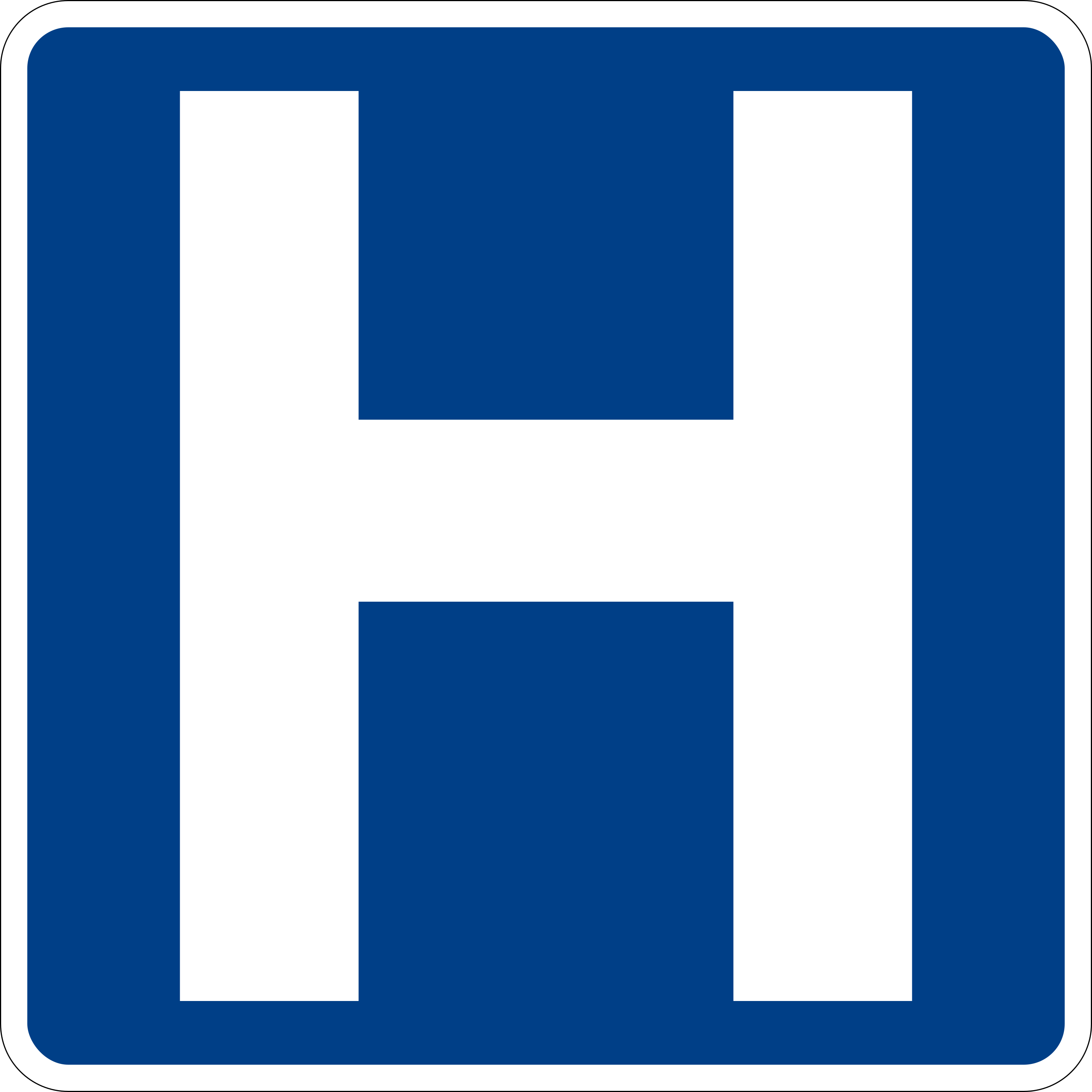
- A hospital is ahead in the direction the sign points. (correct)
- A helicopter landing zone is located ahead on the roadway.
- A general information center for travelers is ahead.
- A pharmacy providing prescription services is ahead.
Why: The white block letter H on a blue services square marks the route to a hospital that offers emergency care, in the direction the sign points. The trap is reading the H as a helipad marker; the block letter H on a blue guide square is reserved for a hospital route, and a helicopter landing area is signed with its own separate symbol.
-
7. You are in the left lane and see this sign in a work zone. What does it require of you?

- Signal, match traffic speed in the right lane, and merge right before the taper. (correct)
- Stop at the taper and wait for a gap in traffic before merging.
- Race to the taper and cut in ahead of continuing traffic.
- Stay in the left lane; traffic in the right lane must yield to you.
Why: In a work-zone lane closure, the driver in the ending lane signals, matches the speed of the through lane, and merges right well before the taper. Racing to the taper and cutting in ahead of continuing traffic tempts drivers who treat the closure as a chance to gain position, the aggressive habit this advance warning is placed to prevent.
-
8. The word SCHOOL is painted in large white block letters on the pavement ahead of you. What does this marking indicate?

- You are approaching a school zone; watch for children and obey any posted school-zone speed limit. (correct)
- You must come to a complete stop before crossing the letters.
- You only need to yield to school buses displaying flashing red lights.
- You must merge into the adjacent lane to bypass a school driveway.
Why: The SCHOOL legend warns you're approaching a school zone or school crossing. Watch for children walking or crossing, and obey any posted school-zone speed limit when the zone is active. Drivers who treat the block letters as a stop bar are reading a warning marking as a regulatory one; big white paint across a lane can look interchangeable, but only a painted stop line demands a halt.
-
9. A stop sign requires a driver to do what at the marked location?
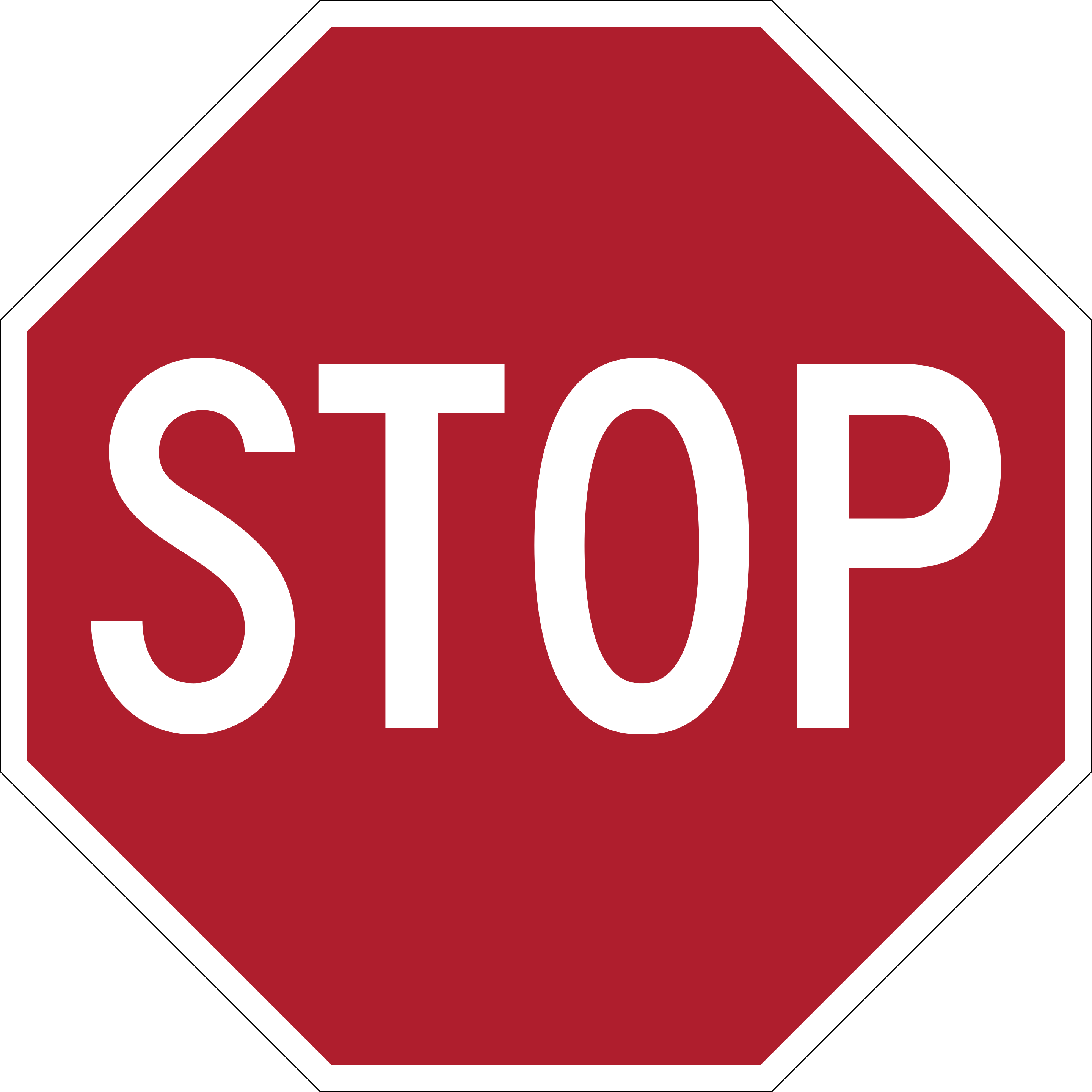
- Come to a complete stop at the line, crosswalk, or intersection before proceeding (correct)
- Slow down and yield only if other traffic or pedestrians are present
- Stop only when cross traffic is visibly approaching the intersection
- Reduce speed and proceed carefully through the intersection
Why: The octagon calls for a full halt at the stop line, crosswalk, or intersection edge, and the driver moves again only when the way is safe. Drivers who slow, glance around, and roll through when the way looks clear are treating the octagon as a yield sign. That habit fails the road test.
-
10. You approach this sign posted at the front of a raised median that splits the roadway. What does it require of you?
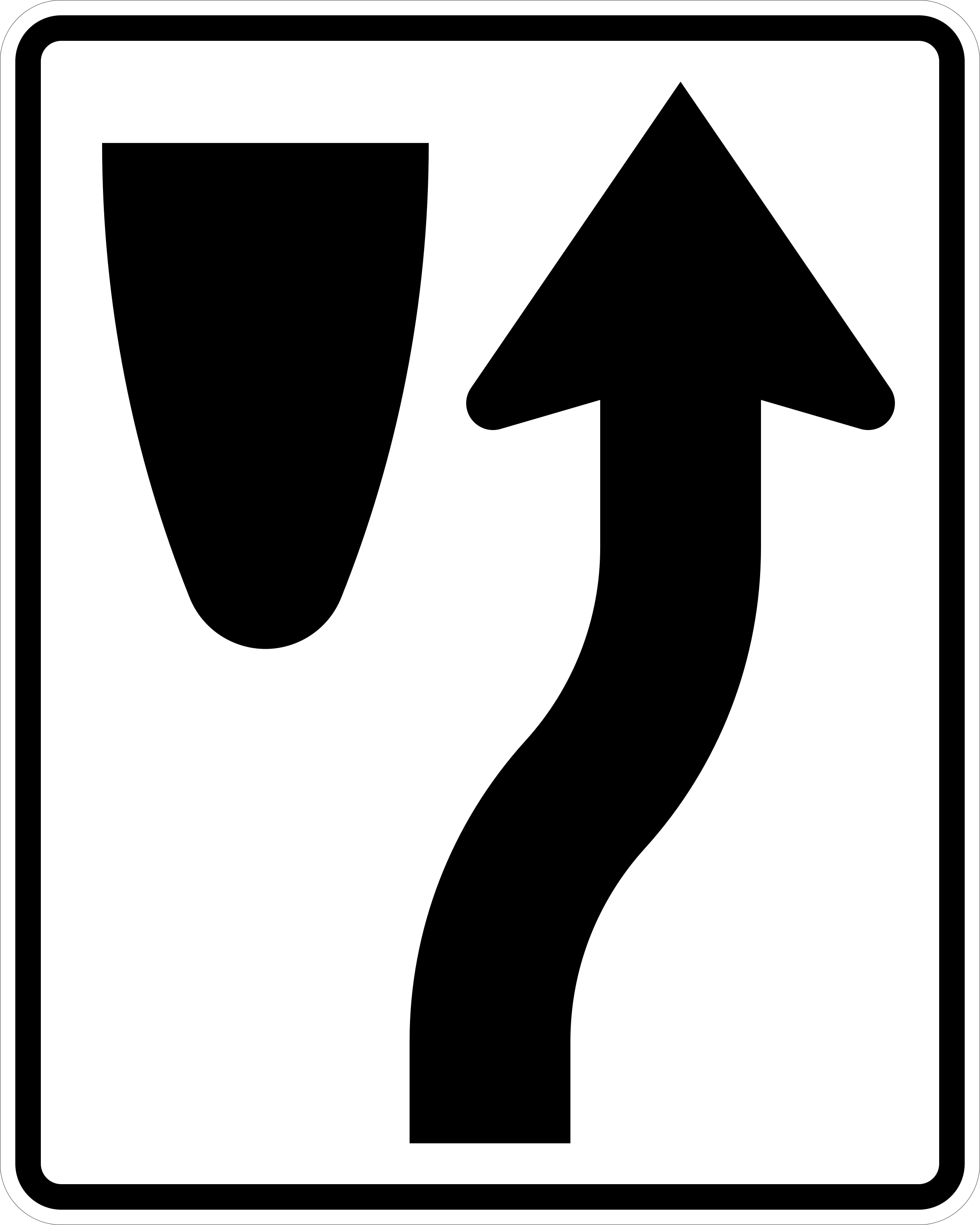
- Pass to the right of the upcoming island or divider. (correct)
- Choose either side of the divider that traffic allows.
- Stop before the divider and yield to oncoming vehicles.
- Move into the left lane before reaching the divider.
Why: The sign directs a driver to pass to the right of the island or divider ahead. The trap is the choice that lets a driver take either side; this sign carries a curved arrow showing one specific required path around the obstruction, not an option. A learner who picks a yield or a lane change is reading the arrow as advice about the roadway ahead rather than as a routing instruction at the obstruction itself.
Where to go next.
Ready for a longer go? Take the full Illinois practice test or jump into the topic study guide.
This diagnostic is one snapshot. The Illinois book unlocks a companion that turns it into a ranked study plan and re-ranks your weakest topics every time you practice, so the top of the list is always what to drill next.