Illinois Practice Test
A full-length practice test for the Illinois SOS knowledge test.
35 Questions Click an answer to reveal the explanation




















Illinois Practice Test (35 questions). Correct answers and explanations are noted under each question.
-
1. A wide solid white line separates a freeway through lane from an exit ramp at the gore. What does it require of you?
- Settle into your lane before the line; crossing it is discouraged. (correct)
- Cross freely between the through lane and the ramp.
- Crossing is prohibited and can be ticketed.
- Traffic beyond the line is moving toward you.
Why: The wide solid white line at a ramp gore forms a neutral area between two paths of same-direction traffic. Settle into either the through lane or the ramp before you reach it, and stay out of the painted zone. The tempting wrong answer is the one that treats the solid white as a broken white lane line. A broken white line invites lane changes; a solid white channelizing line is drawn to hold you in the path you have already chosen, so drivers who are still deciding should decide sooner.
Source: Manual on Uniform Traffic Control Devices, marking 3B.08 (White Channelizing Line).
-
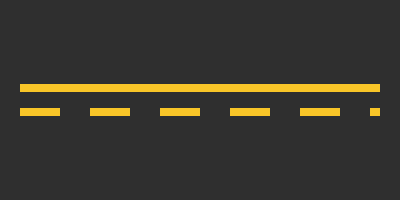
2. A yellow center line has a solid line on your side and a broken line on the side used by oncoming traffic. What does this require of you?
- You are not allowed to pass another vehicle. (correct)
- You may pass when the way ahead is clear.
- Passing is allowed in either direction when safe.
- Passing is prohibited in both directions.
Why: Passing is decided by which line sits on your half of the road. A solid line on your side means passing is not allowed; the broken line belongs to oncoming traffic, and their permission does not extend to you. Drivers who pick the "when the way ahead is clear" option fall back on a rural rule of thumb that any open road allows passing, without first checking which line sits on their own side.
Source: Manual on Uniform Traffic Control Devices, marking 3B.02 (Broken-and-Solid Yellow Center Line).
-
3. What does a lane with this pavement marking indicate?
- Restricted to buses only during posted hours.
- Reserved for high-occupancy vehicles during posted hours. (correct)
- Reserved for bicycles at all times.
- Closed to all traffic during posted hours.
Why: The white diamond marks a lane reserved for high-occupancy vehicles during the hours posted on the accompanying sign. The HOV category covers carpools, vanpools, and buses. Drivers who've watched buses use the lane on their daily commute pick the buses-only choice, treating one qualifying vehicle type as the whole HOV category.
Source: Manual on Uniform Traffic Control Devices, marking 3D.01 (HOV Lane Diamond Symbol).
-
4. A white arrow pointing straight ahead is painted in the lane you are driving in as you approach an intersection. What does it require?
- Proceed straight through the intersection (correct)
- Merge into the adjacent lane before the intersection
- Turn either left or right from this lane
- Yield to cross traffic before proceeding straight
Why: The white straight-ahead arrow reserves the lane for through movement; a driver in it must continue forward through the intersection and cannot turn out. The trap is the choice that lets a driver turn left or right from the lane. A reader who learned the two-way turn arrow first tends to carry that "either way" reading over to any painted arrow, but a single arrow points one direction only, and the lane it marks is committed to that direction.
Source: Manual on Uniform Traffic Control Devices, marking 3B.24 (Straight-Through Arrow).
-
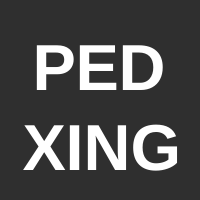
5. A white PED XING legend is painted in your travel lane. What does this marking tell you?
- A marked crosswalk is ahead. (correct)
- The lane is reserved for pedestrian use only.
- You are entering a school zone.
- Pedestrians must yield to vehicles crossing here.
Why: PED XING is the pavement abbreviation for pedestrian crossing, painted white in the travel lane to give drivers advance notice that a marked crosswalk is ahead. The trap is the answer that treats a word painted in the travel lane as reserving that lane for pedestrian use, the way a BUS ONLY legend does; PED XING is a warning aimed at approaching drivers, not a lane designation.
Source: Manual on Uniform Traffic Control Devices, marking 3B.21 (PED XING Pavement Legend).
-
6. What should you do when you approach this Pedestrian Crossing sign?
- Reduce speed and be ready to yield to pedestrians crossing the roadway ahead. (correct)
- Come to a full stop at the sign before continuing through the area.
- Pass the vehicle stopped at the crosswalk if no pedestrian is visible from your lane.
- Slow only when school-aged children are present in the crossing area.
Why: The yellow-green diamond warns that pedestrians may enter the roadway ahead, so slow down and be ready to yield to anyone stepping into or already in the crosswalk. Drivers who fall back on the red-octagon habit of halting at every serious-looking sign pick the come-to-a-full-stop answer instead.
Source: Manual on Uniform Traffic Control Devices, sign W11-2 (Pedestrian Crossing).
-
7. A lane is marked with a white arrow that has one head pointing straight ahead and another pointing left. What does this permit a driver in that lane to do?
- Go straight through the intersection or turn left. (correct)
- Turn left only; through traffic must use another lane.
- Turn left or right at the driver's choice.
- Continue straight only; the left arrow warns of oncoming turners.
Why: A combination arrow with a straight head and a left head marks an optional-movement lane, so a driver in it may continue straight through the intersection or turn left. The trap is the choice that reads the marking as a left-turn-only lane, reached by treating any left-pointing arrow as a mandatory turn and skipping past the straight head sharing the same marking.
Source: Manual on Uniform Traffic Control Devices, marking 3B.24 (Straight-or-Left Combination Arrow).
-
8. You approach a roundabout entry marked with a row of solid white triangles pointing toward you. What does the marking require before you cross it?
- Yield to traffic in the roundabout and cross only when safe. (correct)
- Come to a complete stop before entering, then proceed.
- Maintain speed and merge into any gap you find.
- Wait for a driver in the circle to wave you in.
Why: The row of triangles is a yield line, and it puts the duty to yield on you. Slow down, watch for traffic and pedestrians already in the circle, and cross only when there is a safe gap. The trap is the answer that requires a full stop; drivers reach for it by treating the triangles like a stop bar. A stop bar is a single solid white line spanning the lane and it is what a stop sign uses, while shark's teeth signal yielding, not stopping.
Source: Manual on Uniform Traffic Control Devices, marking 3B.19 (Yield Line (Shark's Teeth)).
-
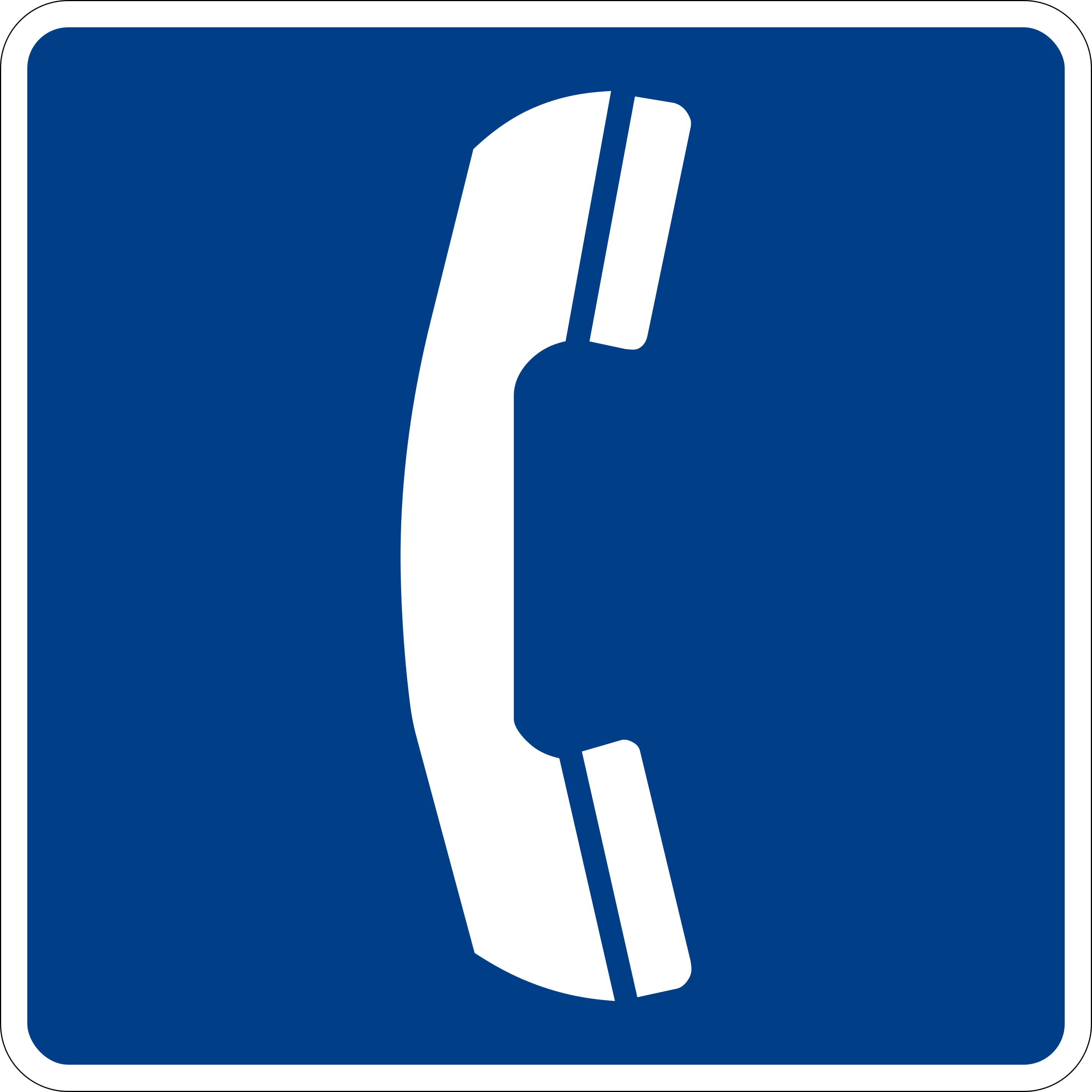
9. What does this Telephone sign tell a driver about the road ahead?
- A public telephone is available ahead. (correct)
- A rest area with restrooms is ahead.
- Cellular phone use is not allowed here.
- An emergency call box requires you to stop.
Why: The white handset on a blue square is a motorist service symbol, and blue services signs point drivers to something helpful ahead: here, a public telephone. The sign marks the phone itself, not any larger facility around it. The rest-area answer is the trap. Because the phone symbol often appears at rest stops, a reader can expect the sign to advertise the whole facility rather than the single service actually pictured on it.
Source: Manual on Uniform Traffic Control Devices, sign D9-1 (Telephone).
-
10. What does this D9-11b sign tell a driver about services available ahead?
- A public electric vehicle charging station is ahead. (correct)
- Gasoline is sold at a fuel pump ahead.
- A diesel truck stop is located ahead.
- A rest area for drivers is available ahead.
Why: The blue square with a fuel pump icon and the letters EV marks a public electric vehicle charging station ahead. The trap is the plain gasoline pump reading, taken by a driver who registers the pump icon and stops there without noticing that the letters on the pump are what name the fuel; on this sign those letters read EV, so the service ahead is charging, not gasoline.
Source: Manual on Uniform Traffic Control Devices, sign D9-11b (Electric Vehicle Charging).
-
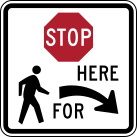
11. What does this Stop Here For Pedestrians sign require of a driver?
- Come to a complete stop for pedestrians at the marked crosswalk on the right. (correct)
- Yield to pedestrians and continue through the crosswalk if it is clear.
- Stop at the sign on every approach, whether or not a pedestrian is present.
- Slow down and watch for people who may cross the road ahead.
Why: The sign is a regulatory instruction to come to a full stop at the stop line for any pedestrian using the marked crosswalk on the right. The trap is the answer that treats it as an unconditional stop on every approach, which borrows the rule from the red octagonal stop sign; this device is triggered by a person in the crosswalk, not by arriving at the sign.
Source: Manual on Uniform Traffic Control Devices, sign R1-5bR (Stop Here For Pedestrians (Right)).
-
12. What does this Lodging sign tell a driver?
- A hotel, motel, or other overnight lodging is available ahead. (correct)
- A public rest area with restrooms is available ahead.
- A restaurant or food service is available ahead.
- A campground for overnight camping is available ahead.
Why: The blue Lodging services sign marks a hotel, motel, or other overnight lodging near the exit ahead. The choice pointing to a rest area is the trap because both signs are blue services panels, and a driver who does not check the pictograph reaches for the roadside stop a highway traveler uses more often. The person-lying-in-a-bed pictograph separates them: it signals a paid room for the night, not a roadside pull-out.
Source: Manual on Uniform Traffic Control Devices, sign D9-9 (Lodging).
-
13. What does this Reverse Curve sign warn of ahead?
- A single curve bending to the right.
- Two consecutive curves in opposite directions, first right then left. (correct)
- A curve to the right followed by a straight section.
- Two sharp right-angle turns, first right then left.
Why: The W1-4R Reverse Curve sign warns of two consecutive curves in opposite directions, the first bending right and the second bending left. Approach at a reduced speed with steady steering; the advisory speed plaque, when posted, states the recommended speed for the pair. Drivers reach for the right-angle answer because they carry over the look of the Reverse Turn sign (W1-3R), which uses angular arrows for sharper turns in opposite directions rather than the smooth curves shown here.
Source: Manual on Uniform Traffic Control Devices, sign W1-4R (Reverse Curve (Right)).
-
14. The word BIKE is painted in white inside a travel lane. What does this pavement legend identify?
- A lane designated for the preferential use of bicyclists (correct)
- A lane where motorists and bicyclists share the space
- A crossing where bicyclists ride across the roadway
- A curbside space reserved for bicycle parking
Why: The BIKE word legend marks a bicycle lane, the portion of the roadway set aside for the preferential use of riders. Drivers who pick the shared-lane answer are confusing this word legend with the sharrow, the bicycle symbol topped by two white chevron arrows used when motorists and bicyclists share the same lane.
Source: Manual on Uniform Traffic Control Devices, marking 3C.02 (BIKE Pavement Legend).
-
15. A broken white line separates your lane from the lane to your left, both traveling in the same direction. What does this marking permit?
- Lane changes across the line when it is safe to do so. (correct)
- Passing by crossing into oncoming traffic.
- Crossing only in an emergency.
- Nothing; the line must not be crossed.
Why: A broken white line divides lanes moving the same way, and a driver may cross it to change lanes whenever the move is safe: signal, check mirrors and blind spots, then move over. The choice about passing into oncoming traffic reaches for the rule that governs broken yellow center lines on two-way roadways; broken white never sits between opposing lanes and has nothing to do with oncoming vehicles.
Source: Manual on Uniform Traffic Control Devices, marking 3B.04 (Broken White Lane Line).
-
16. What should a driver do when approaching this Road Work Ahead sign?
- Slow down and watch for workers, equipment, and changed lanes. (correct)
- Stop at the sign and wait for a flagger before proceeding.
- Merge left because the right lane closes at the sign.
- Take the marked detour beginning at the sign.
Why: This advance warning sign tells you there's road work ahead, so slow down and watch for workers, equipment, and changed lanes. The merge answer comes from treating this general work-zone warning as the arrowed lane-closure sign that follows it further along the approach only when a lane actually drops.
Source: Manual on Uniform Traffic Control Devices, sign W20-1 (Road Work Ahead).
-
17. What does this sign tell a driver about the road ahead?
- A campground for tent camping is available ahead. (correct)
- A roadside rest area is available ahead.
- A picnic area with tables is available ahead.
- A recreational vehicle sanitary dump station is ahead.
Why: A white tent on a blue square is a services sign that marks a campground for tent camping ahead. Drivers who pick the sanitary dump station reach for it because the reference entry lists dump stations as a related facility, but that is a separate device for a different service: this sign promises overnight tent sites.
Source: Manual on Uniform Traffic Control Devices, sign D9-3 (Camping).
-
18. A solid yellow line runs down the middle of a two-way roadway, separating your lane from oncoming traffic. What does it require of you?
- Stay right of the line and do not cross it to pass slower vehicles. (correct)
- Pass slower vehicles ahead when the way looks clear.
- Cross the line at will to reach any driveway, alley, or side road.
- Make no left turn across the line at any point.
Why: A solid yellow line down the center of a two-way road separates opposing traffic and closes passing on your side. You keep to the right of it and cross it only to make a permitted left turn into a driveway, alley, or side road, and only when it is safe. The trap is the choice that reads the marking as a broken yellow line and treats a clear road ahead as permission to overtake. A solid stroke has already settled the passing decision against you, regardless of how clear the road looks at the moment.
Source: Manual on Uniform Traffic Control Devices, marking 3B.01 (Solid Yellow Center Line).
-
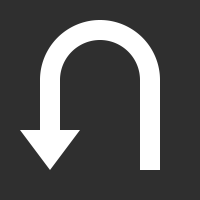
19. What does this pavement marking permit a driver in the lane to do?
- Reverse direction with a U-turn at the intersection. (correct)
- Make a left turn only at the intersection.
- Use the lane for left turns from either direction of travel.
- Execute a three-point turn to change direction.
Why: A curved arrow that loops a full 180 degrees marks the lane as one where U-turns are permitted, so a driver may reverse direction at the intersection. The trap sits with the plain left-turn reading: a left-turn arrow bends once toward the left and stops there, while the U-turn arrow wraps the whole way around to show the reversal, and the two markings sit close enough in shape that the loop gets misread as an ordinary left.
Source: Manual on Uniform Traffic Control Devices, marking 3B.24 (U-Turn Arrow).
-
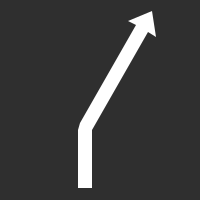
20. What does this lane-reduction arrow require you to do?
- Move into the next lane in the direction the arrow points before this lane ends. (correct)
- Turn in the direction the arrow points at the next intersection.
- Stay in this lane; adjacent traffic must yield so you can merge later.
- Continue straight; drivers in the adjacent lane must move over into your lane.
Why: A lane-reduction arrow warns that your lane is ending, and its bend points at the open lane you must merge into before the pavement runs out. The tempting wrong pick is the turn-arrow reading, since painted arrows on intersection approach lanes usually direct a required turn. But a mandatory-turn arrow runs straight the whole length of its shaft and sits in a dedicated turn pocket, while this arrow bends part-way along a through lane to say the lane itself is going away.
Source: Manual on Uniform Traffic Control Devices, marking 3B.12 (Lane-Reduction Arrow).
-
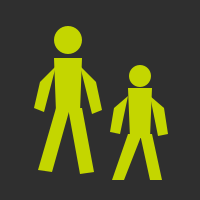
21. You see a fluorescent yellow-green pedestrian symbol painted on the pavement ahead. What does this pavement marking warn you about?
- A school crossing is just ahead (correct)
- A general pedestrian crosswalk with no school nearby
- A playground or park entrance ahead
- A bike route crossing the roadway
Why: A fluorescent yellow-green pedestrian symbol painted on the pavement warns you that a school crossing is just ahead, so slow down, watch for children and crossing guards, and be ready to stop. The traffic-control manual reserves this pavement marking for school crossings; it isn't a general crosswalk indicator, a park symbol, or a bike-route marker. Drivers who read any pedestrian figure on the roadway as an ordinary crosswalk warning are the ones who miss that this specific pavement marking flags a school zone.
Source: Manual on Uniform Traffic Control Devices, marking 3B.22 (School Crossing Pavement Symbol).
-
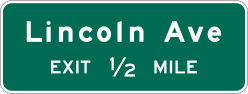
22. You see this interchange advance guide sign one mile before your exit. What does it cue you to do?
- Begin moving toward the right lane while keeping your speed. (correct)
- Slow down in the through lane so you don't miss the exit.
- Exit immediately from whatever lane you happen to be in.
- Change to the left lane to let exiting traffic use the right lane.
Why: An advance guide sign is posted well ahead of the ramp, at two miles, one mile, and half a mile, so you can drift toward the right lane at highway speed. The trap is the answer that reads the mileage as a cue to slow down. That habit comes from surface-street warning signs that really do mean prepare to stop; at highway speed a mile out, braking in the through lane invites a rear-end hit.
Source: Manual on Uniform Traffic Control Devices, sign E1-1 (Interchange Advance Guide Sign).
-
23. What should a driver do when approaching this Divided Highway Ends sign?
- Keep right and be ready for oncoming traffic in the lane next to you. (correct)
- Merge left because the right lane ends ahead.
- Yield to traffic entering from a road that joins on the right.
- Prepare to stop because two one-way roadways are ending at an intersection.
Why: The two separated one-way roadways are about to merge back into one two-way road, so keep right and be ready for opposing traffic in the lane next to you. Passing here is risky because the neighboring lane now carries vehicles coming toward you rather than traveling with you. Drivers who read the word 'ends' on a yellow diamond as a lane drop reach for the merge-left answer, treating this the way they would a lane-reduction warning that uses the same shape and color.
Source: Manual on Uniform Traffic Control Devices, sign W6-2 (Divided Highway Ends).
-
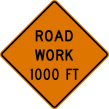
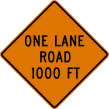
24. What does this orange diamond warning sign tell you about the road ahead?
- One lane about 1,000 feet ahead shared by traffic in both directions. (correct)
- Two lanes merge into one in your direction of travel ahead.
- The road is closed to through traffic 1,000 feet ahead.
- A one-way street begins 1,000 feet ahead.
Why: The sign warns that about 1,000 feet ahead the road narrows to one lane that both directions of traffic must share, so you slow down and prepare to yield to oncoming vehicles or a flagger. The trap is the choice that reads it as a lane-drop merge; a merge sign shows two same-direction lanes joining into one, while this sign specifically warns of two-way traffic sharing a single lane.
Source: Manual on Uniform Traffic Control Devices, sign CW20-4 (One Lane Road 1000 Ft).
-
25. What does this Food sign tell a driver about the road ahead?
- A restaurant or other place to eat is available ahead. (correct)
- A rest area with picnic tables lies ahead.
- Overnight lodging is offered near this exit.
- Fuel can be purchased at the next exit.
Why: The blue Food sign, a white fork and knife inside a circle, points to a restaurant or other place to eat off the highway ahead. The rest-area answer is the reach: a driver who groups every blue roadside services sign into a single 'rest stop' bucket picks it, without noticing the fork-and-knife icon that reserves this sign for dining.
Source: Manual on Uniform Traffic Control Devices, sign D9-8 (Food).
-
26. A series of wide white bars is painted across the road, parallel to the direction of traffic, like piano keys. What does this marking indicate?
- A high-visibility pedestrian crosswalk. (correct)
- A stop line telling drivers where to halt at the intersection.
- A yield line telling drivers to slow and give way.
- A rumble strip designed to alert drowsy drivers.
Why: A series of wide white bars painted across the road, parallel to the direction of traffic, marks a continental crosswalk, a high-visibility pedestrian crossing. Drivers must yield to pedestrians within it, must not stop on or block the bars, and must not pass another vehicle stopped for someone in the crossing. The stop-line answer comes from confusing these parallel bars with the single perpendicular white line at an intersection that tells drivers where to halt; the two markings run in different directions and carry different meanings.
Source: Manual on Uniform Traffic Control Devices, marking 3B.18 (Continental Crosswalk).
-
27. The word ONLY is painted in white in your travel lane next to a lane-use arrow. What does this require of you?
- Make the movement the arrow indicates. (correct)
- Yield to any driver in the adjacent lane before proceeding.
- Stop at the intersection before making the indicated movement.
- Choose either the arrow's movement or continuing straight ahead.
Why: The ONLY legend, paired with a lane-use arrow, reserves the lane for a single movement, so a driver in that lane must turn or continue as the arrow directs. Drivers who read the arrow as one allowed movement alongside a straight-through default are the ones who miss it, because a lane marked ONLY is never applied to a lane that serves more than one movement.
Source: Manual on Uniform Traffic Control Devices, marking 3B.21 (ONLY Pavement Legend).
-
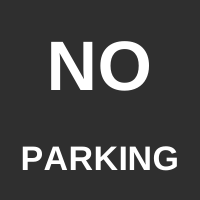
28. A white 'NO PARKING' legend is painted on the pavement along the curb ahead. What does it require of you?
- Park briefly if you leave your hazard lights on.
- Do not park a vehicle in that space. (correct)
- Park there outside posted business hours.
- The prohibition applies only during posted rush hours.
Why: The painted NO PARKING legend means you cannot park a vehicle in that space; treat it the same way you would a posted No Parking sign. The idea that flashing hazard lights buy you a quick stop is borrowed from delivery vans double-parking, and the painted word does not read blinkers.
Source: Manual on Uniform Traffic Control Devices, marking 3B.20 ("No Parking" Pavement Word Marking).
-
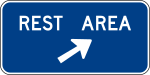
29. What does this rest area sign require of a driver who wants to stop at the rest area?
- Turn where the arrow points to enter the rest area. (correct)
- Continue straight; the entrance ramp is farther ahead.
- Take the next freeway exit to reach the rest area.
- Slow down for pedestrians walking across the roadway.
Why: The sign is posted at the turn-off itself, and the diagonal arrow shows the ramp or driveway that enters the rest area. The trap is the answer that treats it as an advance notice placed miles ahead of the exit; that job belongs to a different rest area guide sign posted well upstream, while this one appears right at the entrance and is the last chance to turn in.
Source: Manual on Uniform Traffic Control Devices, sign D5-2 (Rest Area Entrance Direction).
-
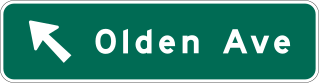
30. What does this exit direction sign at a freeway ramp confirm for a driver?
- The destination and which side you leave the freeway from. (correct)
- The distance remaining to the next service area on this route.
- The speed limit that applies once you're on the ramp itself.
- The route number of the highway you will join after exiting.
Why: The E4-1 stands at the ramp itself and does two jobs: it names the destination this ramp serves and, through the diagonal arrow, shows whether the ramp peels off to the right or the left. That is the last confirmation before a driver commits to leaving the through lanes. The route-number reading is the trap, catching drivers who habitually treat green interchange panels as route shields and reach for a highway number as the headline, even when the sign in front of them is a destination confirmation answering a different question.
Source: Manual on Uniform Traffic Control Devices, sign E4-1 (Exit Direction Sign).
-
31. What should you do when this Hill sign warns of a downgrade ahead?
- Reduce speed and shift to a lower gear before starting down. (correct)
- Stop completely at the crest before beginning the descent.
- Yield to any vehicles climbing the grade from below.
- Hold your speed and rely on the brakes throughout the descent.
Why: The Hill sign warns that a steep downgrade is ahead, and the safe response is to slow down and shift to a lower gear before you start down so engine braking helps control your speed. The answer that says to hold your speed and rely on the brakes is the trap: it borrows the everyday habit of tapping the brakes on a mild slope, which lets the brakes overheat and fade on a real grade.
Source: Manual on Uniform Traffic Control Devices, sign W7-1 (Hill).
-
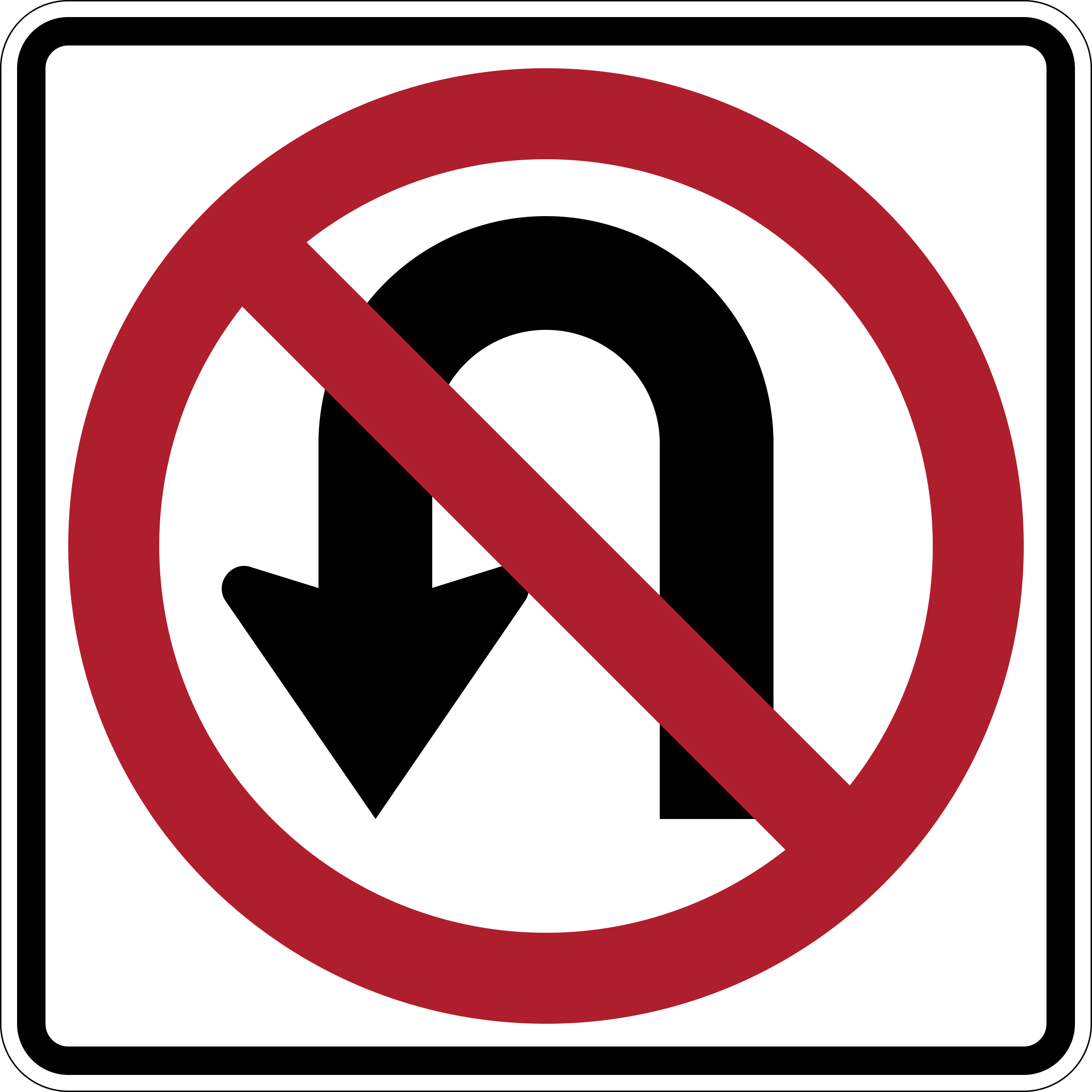
32. You approach this No U-Turn sign and need to reverse your direction of travel. What does the sign require?
- Continue past and use a designated turnaround or another intersection. (correct)
- Complete the U-turn only when the road is clear of oncoming traffic.
- Complete the U-turn only from the leftmost lane on a green signal.
- Turn left here instead, since the sign forbids only left turns.
Why: A No U-Turn sign forbids reversing direction by turning 180 degrees through this intersection or median opening, so a driver who needs to turn around continues past and uses a designated turnaround or another intersection where U-turns are allowed. Drivers who read the sign as a yield-style caution pick the answer that waits for a clear oncoming lane; the sign is a prohibition, not a caution about traffic, and a clear lane does not make the U-turn legal here.
Source: Manual on Uniform Traffic Control Devices, sign R3-4 (No U-Turn).
-
33. What does this Merge Right sign warn of ahead?
- Traffic from the right merges into your lane ahead. (correct)
- A lane on the right ends and drivers must move left.
- The roadway narrows from both sides ahead.
- Two-way traffic begins on the roadway ahead.
Why: The diamond warns that traffic from the right merges into your lane ahead, which is why you check your right mirror and blind spot as you approach and adjust speed for vehicles joining. The trap is the answer about a lane ending and drivers moving left; that is the Lane Ends sign, and readers pick it because both signs feature a slanting line and get filed together on first pass.
Source: Manual on Uniform Traffic Control Devices, sign W4-1R (Merge Right).
-
34. The word BUS is painted in white in a travel lane. What tells you who may use the lane and during which hours?
- The posted signs at the location (correct)
- The color of the pavement legend
- Whether the legend spells out BUS ONLY or BUS STOP
- A federal default schedule for bus lanes
Why: The BUS pavement legend identifies a lane or curb zone as bus-designated, but the posted regulatory signs at that location are what state who may enter and when. The trap is the choice that reads the specific legend wording as if BUS ONLY versus BUS STOP carried the schedule itself; the pavement word only supplements the signs, and the signs carry the who and the when.
Source: Manual on Uniform Traffic Control Devices, marking 3E.03 (BUS Pavement Legend).
-
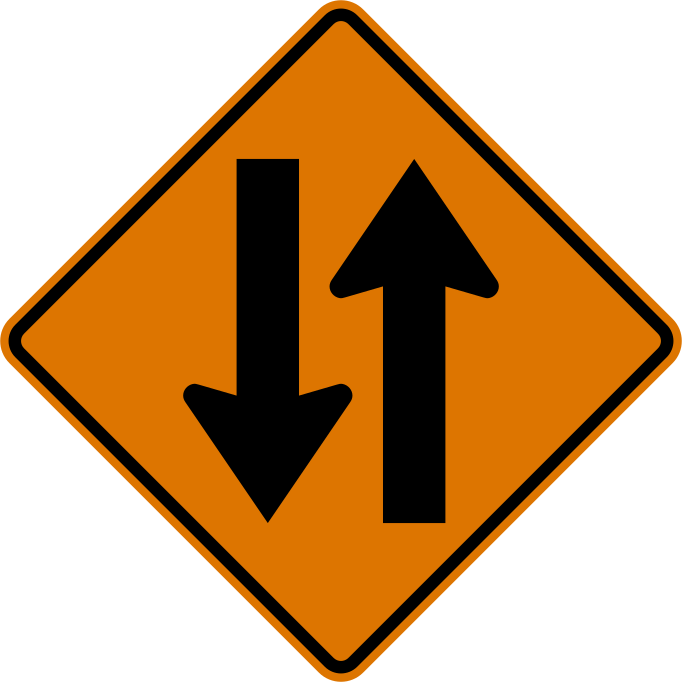
35. What does this orange diamond sign warn of ahead?
- Two-way traffic shares the roadway ahead through the construction area. (correct)
- Your lane ends ahead and traffic must merge to the left.
- A detour begins ahead and directs traffic off the roadway.
- Passing is prohibited through the construction zone ahead.
Why: The orange diamond warns that through the construction area the roadway carries vehicles in both directions, so oncoming traffic will share the same pavement and a driver has to stay right of the centerline. The no-passing answer is the pull here because two-way work zones often do restrict passing, and a learner who has driven through one associates the two ideas; this sign warns of the two-way condition itself, and a separate device carries any passing prohibition.
Source: Manual on Uniform Traffic Control Devices, sign CW6-3 (Two-Way Traffic (Work Zone)).
Keep going.
Want explanations one question at a time? Browse every Illinois practice question or jump into the topic study guide.