Virginia Driver's Permit Diagnostic Quiz
Find your weak spots before you book the test. 10 questions drawn from the topics the Virginia driver manual spends the most time on. You'll see which topics need work the moment you finish; enter your email at the end and we'll send the full ranked plan with exact scores and the chapters to study next.
Virginia Driver's Permit Diagnostic Quiz (10 questions). Correct answers and explanations follow each question.
-
1. Traffic on the far side of the intersection has stopped as you reach a white KEEP CLEAR legend painted across your lane. What does the marking require of you?

- Wait behind the marking until you can get across without stopping in it. (correct)
- Stop inside the marked area to hold your position in the traffic queue.
- Pull forward into the marked area to leave the intersection behind you clear.
- Enter the marked area only after the cross-street signal turns red.
Why: The KEEP CLEAR legend holds the marked area open for cross traffic and vehicles entering the intersection, so when the road ahead is stopped and you cannot clear the marking you wait behind it. The trap is the choice that stops inside the box; a driver who sees painted words on the road defaults to reading them as a stop line, because that is how most pavement legends work, but this one marks the exact place the driver must not stop.
-
2. What does this Lodging sign tell a driver?

- A hotel, motel, or other overnight lodging is available ahead. (correct)
- A public rest area with restrooms is available ahead.
- A restaurant or food service is available ahead.
- A campground for overnight camping is available ahead.
Why: The blue Lodging services sign marks a hotel, motel, or other overnight lodging near the exit ahead. The choice pointing to a rest area is the trap because both signs are blue services panels, and a driver who does not check the pictograph reaches for the roadside stop a highway traveler uses more often. The person-lying-in-a-bed pictograph separates them: it signals a paid room for the night, not a roadside pull-out.
-
3. What does the number on this milepost tell a driver?
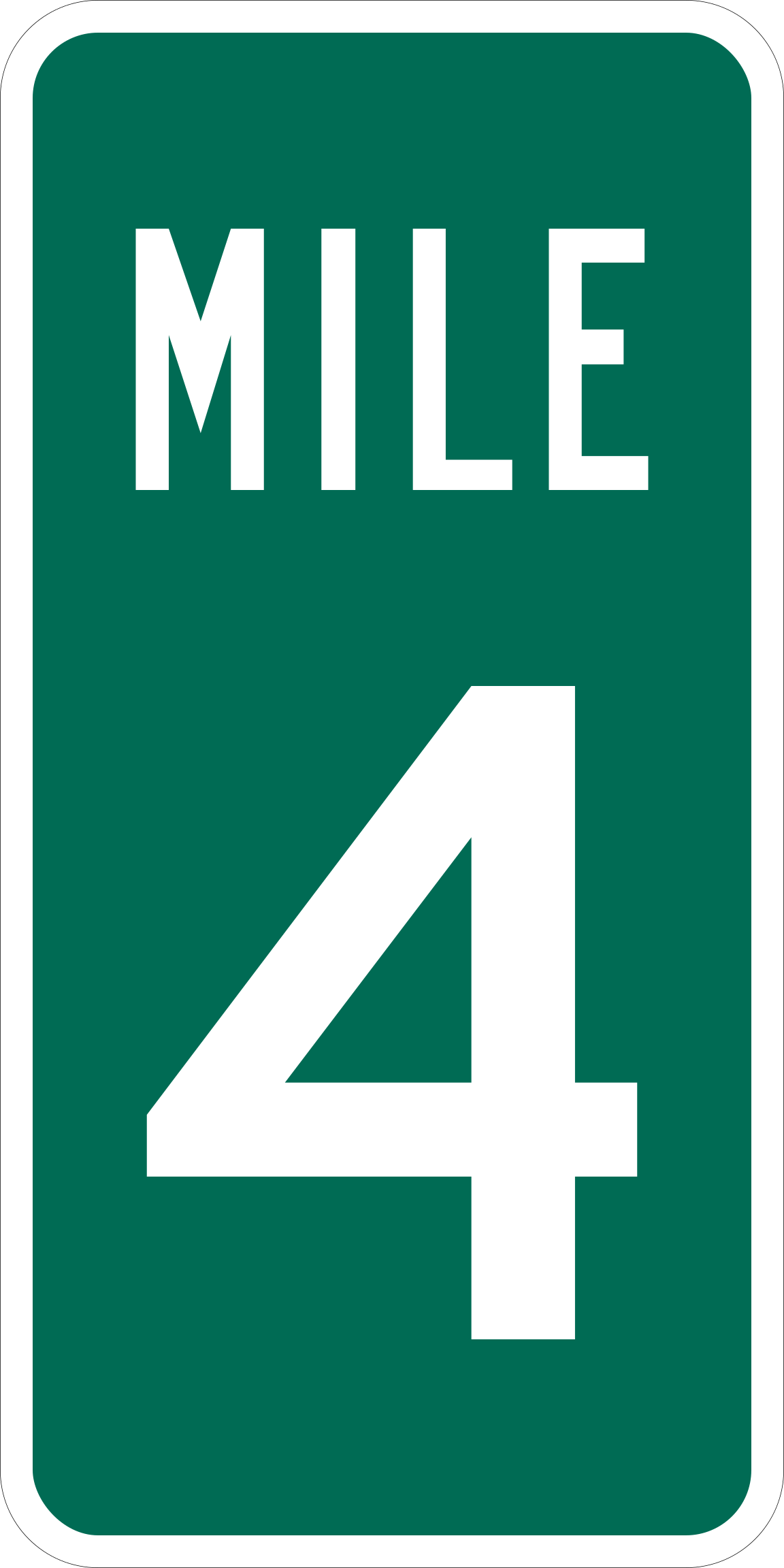
- Miles along the route from where it entered the state. (correct)
- The route number assigned to this highway.
- How many miles are left until the state line.
- The distance to the next numbered exit.
Why: Green milepost panels count up from the point where the route enters the state, giving a running mile count along the route rather than a distance to anywhere ahead. Depending on direction of travel the numbers may rise or fall, but they are not a countdown to the next border or exit. The "miles left until the state line" answer is the trap for drivers used to watching a GPS clock down to a destination. They expect the milepost to work the same way and read the panel as miles remaining rather than miles counted since entering.
-
4. What does this Turn Right sign warn a driver about the road ahead?

- A sharp right turn ahead where the road changes direction abruptly and a reduced speed is needed (correct)
- A gentle right curve ahead that can be rounded at the posted speed limit
- A right lane ending soon where drivers must merge left before it closes
- A right-turn-only lane ahead that through traffic must move out of
Why: The W1-1R diamond warns of a sharp right turn: an abrupt change in roadway alignment that cannot be taken safely at the approach speed, so slow before the bend and stay in your lane through it. The trap is the choice that reads this as a gentle curve; a curve at a speed you can already hold is warned by the W1-2 series, whose arrow bends smoothly rather than turning at a right angle like the arrow on this sign.
-
5. You pass a Flagger Ahead sign and enter the work zone. A flagger in the zone waves you through the intersection while the traffic light ahead shows red. What are you required to do?
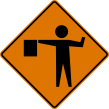
- Stop for the red light; the traffic light has final authority.
- Follow the flagger's signal and proceed through the intersection. (correct)
- Stop and wait until the signal turns green, then proceed.
- Proceed only if the flagger and the signal both permit it.
Why: A flagger's directions legally override even a traffic light, so when the flagger in the work zone waves you through, you drive past the red. Drivers who stop for the red anyway fall back on the everyday rule that a steady red is always absolute, and miss that the orange diamond warned of a flagger whose directions now outrank the light.
-
6. What does this Speed Limit 50 sign tell a driver about 50 mph on this roadway?
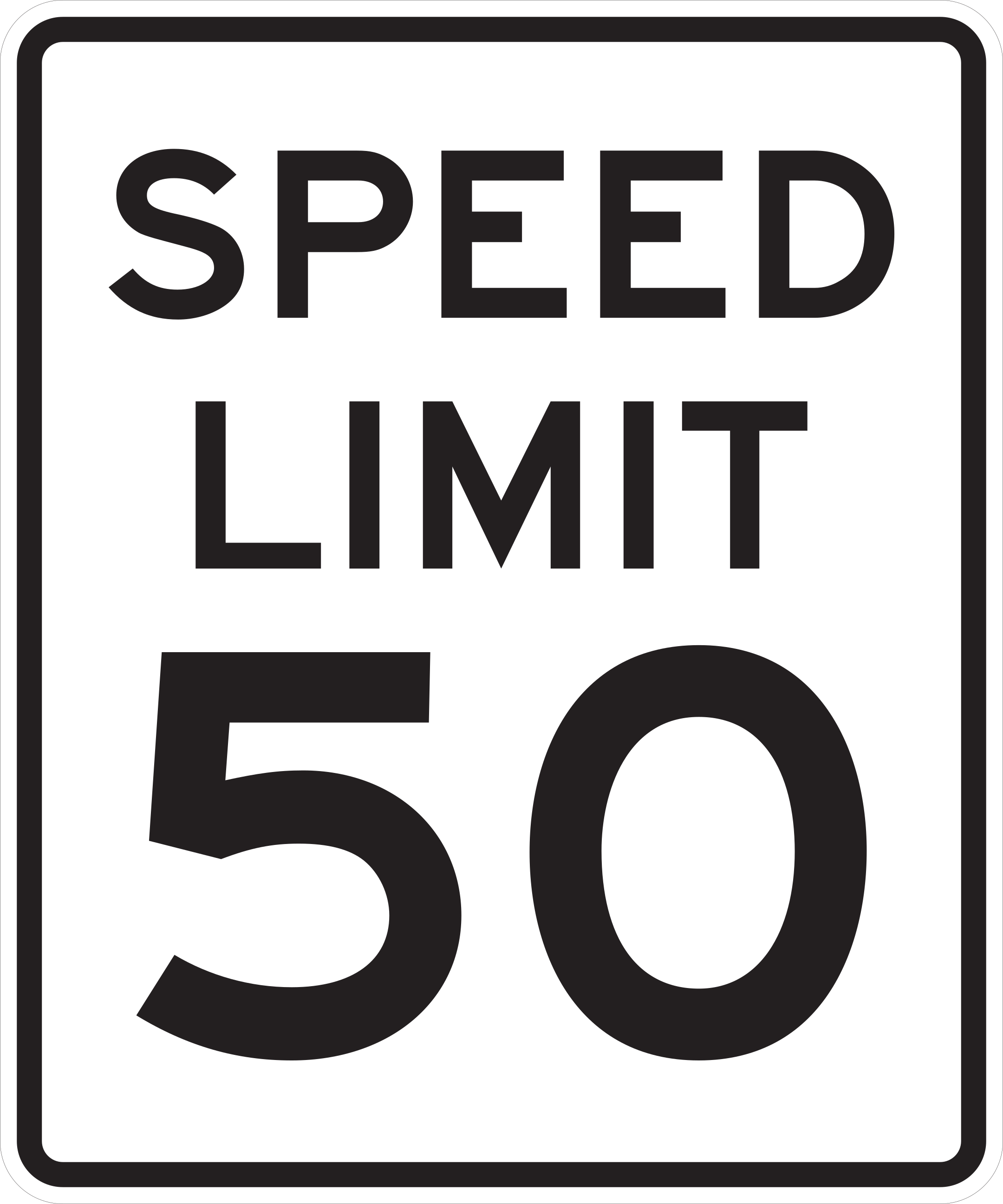
- 50 mph is the maximum legal speed on this roadway. (correct)
- 50 mph is the required minimum speed for through traffic here.
- 50 mph is an advisory speed for a curve or hazard ahead.
- Drivers should target 50 mph as the ideal cruising speed here.
Why: The sign posts the statutory maximum for the road ahead, so 50 mph is the ceiling, the highest speed a driver may legally travel until another speed limit sign changes it. Nothing on this sign requires driving 50 mph; it caps the speed rather than mandating it. Drivers who read the number as a required minimum are borrowing the look of a different white rectangle specifically labeled MINIMUM SPEED or MINIMUM SPEED LIMIT.
-
7. What does this Stop Here For Pedestrians sign require of a driver?
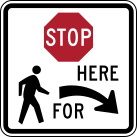
- Come to a complete stop for pedestrians at the marked crosswalk on the right. (correct)
- Yield to pedestrians and continue through the crosswalk if it is clear.
- Stop at the sign on every approach, whether or not a pedestrian is present.
- Slow down and watch for people who may cross the road ahead.
Why: The sign is a regulatory instruction to come to a full stop at the stop line for any pedestrian using the marked crosswalk on the right. The trap is the answer that treats it as an unconditional stop on every approach, which borrows the rule from the red octagonal stop sign; this device is triggered by a person in the crosswalk, not by arriving at the sign.
-
8. What should a driver do when approaching this Road Work Ahead sign?
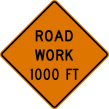
- Slow down and watch for workers, equipment, and changed lanes. (correct)
- Stop at the sign and wait for a flagger before proceeding.
- Merge left because the right lane closes at the sign.
- Take the marked detour beginning at the sign.
Why: This advance warning sign tells you there's road work ahead, so slow down and watch for workers, equipment, and changed lanes. The merge answer comes from treating this general work-zone warning as the arrowed lane-closure sign that follows it further along the approach only when a lane actually drops.
-
9. A lane line becomes a series of closely spaced short white dots through an interchange. What does this dotted pattern tell you about the lane?

- The lane ends at the next intersection and you must change lanes now.
- The lane continues but is shared, dropping, or merging. (correct)
- The lane is reserved for buses or high-occupancy vehicles through the gap.
- You may cross the dotted line only in an emergency.
Why: A dotted white extension line is a lane line continued in short, closely spaced dots through a merge, exit, interchange, or intersection area. The dots tell you the lane keeps going, but its purpose is changing: it is shared with entering traffic, about to drop, or being merged into another lane. Track the dots to stay aligned and watch for cars entering or exiting through the gap. The trap is the answer that reads a broken-up line as a lane-drop warning. A driver who learned that a solid line becomes broken when a lane is ending carries that habit forward and reads any interruption in the striping the same way. The dotted extension does the opposite: it says the lane continues where the normal stripe cannot be drawn, and only the pattern of use is changing.
-
10. What does this Reduced Speed Limit Ahead sign require of a driver?
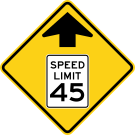
- Begin slowing so your speed is at or below the new limit by the regulatory sign that follows. (correct)
- Immediately drop to the value shown the moment you pass this sign.
- Slow only if current road conditions make the posted limit unsafe.
- Hold current speed until you reach the new regulatory speed-limit sign.
Why: This sign is advance notice. Begin slowing now so your speed is at or below the new limit by the time you reach the regulatory sign that actually posts it. The trap is the choice that says drop to the shown value the moment you pass the diamond. That reads the yellow warning as if it were the black-on-white regulatory posting, but a yellow diamond never sets the enforceable limit; the regulatory sign that follows does.
Where to go next.
Ready for a longer go? Take the full Virginia practice test or jump into the topic study guide.
This diagnostic is one snapshot. The Virginia book unlocks a companion that turns it into a ranked study plan and re-ranks your weakest topics every time you practice, so the top of the list is always what to drill next.