Florida Practice Test
A full-length practice test for the Florida DMV knowledge test.
50 Questions Click an answer to reveal the explanation













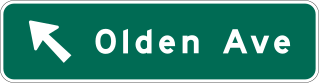
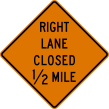
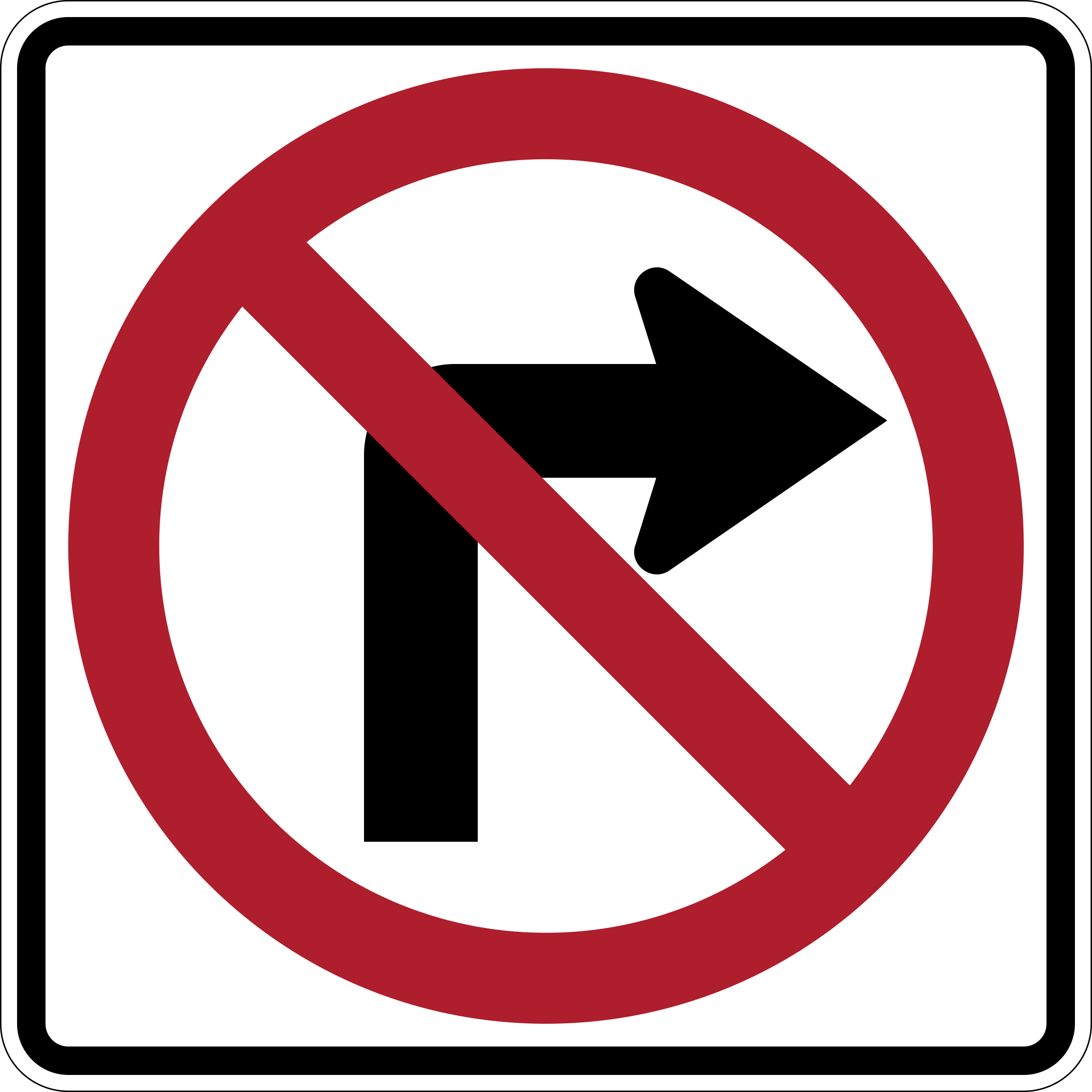
Florida Practice Test (50 questions). Correct answers and explanations are noted under each question.
-
1. Your brakes got wet after driving through heavy rain. How does the manual say to dry them?
- Pump the brakes hard several times at a full stop
- Drive slowly in low gear and apply the brakes (correct)
- Pull over and let the brakes air-dry before driving
- Drive at highway speed with the brakes untouched
Why: The manual says to dry the brakes by driving slowly in low gear and applying the brakes; the friction warms the brake components and drives off the moisture. Choice C is the trap because "let them air-dry" is a habit borrowed from wet shoes and towels, but the manual wants active drying, not passive.
Source: Florida Driver Manual, "Handling Emergencies - Wet Brakes," p.80.
-
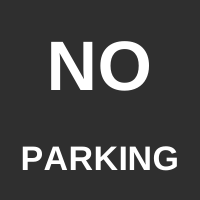
2. A white 'NO PARKING' legend is painted on the pavement along the curb ahead. What does it require of you?
- Park briefly if you leave your hazard lights on.
- Do not park a vehicle in that space. (correct)
- Park there outside posted business hours.
- The prohibition applies only during posted rush hours.
Why: The painted NO PARKING legend means you cannot park a vehicle in that space; treat it the same way you would a posted No Parking sign. The idea that flashing hazard lights buy you a quick stop is borrowed from delivery vans double-parking, and the painted word does not read blinkers.
Source: Manual on Uniform Traffic Control Devices, marking 3B.20 ("No Parking" Pavement Word Marking).
-
3. A white left-turn arrow is painted in the lane you are driving in as you approach an intersection. What does it require?
- If you stay in this lane, you must turn left at the intersection (correct)
- You may turn left or continue straight ahead
- You may turn left only on a green arrow signal
- You may use this lane for any movement as long as you signal
Why: A left-turn-only arrow reserves the lane for left turns, so if you remain in this lane at the intersection you must turn left. The left-or-straight answer is the trap: it carries over from the combined arrow at other intersections, whose second head points straight to permit that movement, and reads a single left head as if it worked the same way.
Source: Manual on Uniform Traffic Control Devices, marking 3B.24 (Left-Turn Arrow).
-
4. How closely does Florida law allow you to follow a fire truck that is responding to an emergency?
- Stay at least five hundred feet behind it. (correct)
- Give a four-second gap like any other vehicle.
- Match your speed to the truck and follow close for the ride.
- Keep back the three hundred feet required between two trucks.
Why: Florida law prohibits following a responding fire truck closer than five hundred feet. The three-hundred-foot answer belongs to the adjacent rule for one truck following another truck; readers who scan both lines in the same section swap the two figures.
Source: Florida Driver Manual, "Driving Safety: Following Distances," p.62.
-
5. A yellow diamond warning sign shows a leaping deer. What does the Florida manual say this sign means?
- A wildlife facility releases deer that cross the road here.
- Reduce your speed to the posted advisory speed.
- A state wildlife refuge exit is coming up on this road.
- Watch for the pictured animal crossing at twilight and nighttime. (correct)
Why: The animal crossing sign warns that the pictured species is common in the area and that crossings peak at twilight and nighttime, so scan the shoulders as the light fades. Drivers who pair any wildlife image with the brown-and-white recreation signs pointing to parks and preserves reach for the state wildlife refuge answer instead.
Source: Florida Driver Manual, "Warning Signs: Animal Crossing," p.50.
-
6. Before an under-18 applicant can move from a learner's license to a Class E driver license, how much driving experience must be certified?
- 100 hours, with a professional instructor's signature
- 30 hours total, all logged during daylight only
- 40 hours, with 5 hours logged after sunset
- 50 hours, of which at least 10 must be at night (correct)
Why: A parent, legal guardian, or responsible adult 21 or older must certify at least 50 hours of driving experience, 10 of them at night. Applicants who carry the 40-hour parent-supervised total from another state's teen-driver program pick the 40-and-5 answer and land short of Florida's higher requirement.
Source: Florida Driver Manual, "Requirements for Class E Learner's & Driver License: If under age 18," p.8.
-
7. What action does Florida law specifically require before you leave your parked vehicle?
- Roll up every window completely
- Take the keys out of the vehicle (correct)
- Point the front wheels straight ahead
- Leave the transmission in Neutral
Why: Florida law names removing the keys as the step required before you leave the vehicle. Drivers who pick D reach for Neutral as a 'safe' middle setting, but the manual requires Park on automatics and Reverse on manuals, so Neutral is neither the required transmission setting nor the step the statute calls out on departure.
Source: Florida Driver Manual, "Parking," p.65.
-
8. A yellow diamond warning sign lists a height in feet and inches above a road structure. What does the Florida manual say the sign requires?
- The shoulder drops off by the height shown on the sign.
- Trucks must come to a full stop at the marked point.
- Do not enter if your vehicle is taller than the listed height. (correct)
- Overhead utility wires along the road hang at that height.
Why: A low clearance sign forbids entry when the vehicle is taller than the height printed on the sign, so the driver checks the vehicle's height against the number before proceeding. The tempting wrong answer is the overhead-wire reading, because drivers see any height figure suspended over a road and picture the utility clearance markers on rural power lines rather than the structure ahead.
Source: Florida Driver Manual, "Warning Signs: Low Clearance," p.50.
-
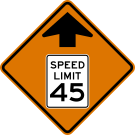
9. What should a driver do after seeing this Reduced Speed Limit Ahead sign near a work zone?
- Slow to the posted number before reaching the regulatory sign it announces (correct)
- Drop to the shown speed immediately as soon as this sign is visible
- Come to a complete stop before the marked work zone begins
- Keep the current speed until workers are visible in the zone
Why: An orange diamond warns of what is ahead, not what is required now. The number posted on this sign starts where the regulatory sign it announces is placed, so you slow through the gap and arrive at that regulatory sign already at the new limit. Drivers who read any sign carrying a speed number as the limit itself brake the moment they see this one, applying the reduction before the zone it belongs to.
Source: Manual on Uniform Traffic Control Devices, sign W3-5 (Reduced Speed Limit Ahead).
-
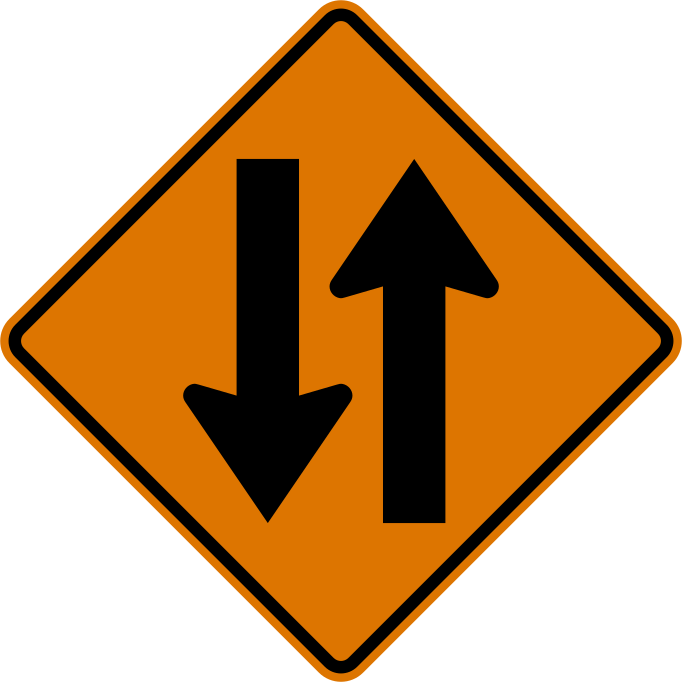
10. What does this orange diamond sign warn of ahead?
- Two-way traffic shares the roadway ahead through the construction area. (correct)
- Your lane ends ahead and traffic must merge to the left.
- A detour begins ahead and directs traffic off the roadway.
- Passing is prohibited through the construction zone ahead.
Why: The orange diamond warns that through the construction area the roadway carries vehicles in both directions, so oncoming traffic will share the same pavement and a driver has to stay right of the centerline. The no-passing answer is the pull here because two-way work zones often do restrict passing, and a learner who has driven through one associates the two ideas; this sign warns of the two-way condition itself, and a separate device carries any passing prohibition.
Source: Manual on Uniform Traffic Control Devices, sign CW6-3 (Two-Way Traffic (Work Zone)).
-
11. What does this Lodging sign tell a driver?
- A hotel, motel, or other overnight lodging is available ahead. (correct)
- A public rest area with restrooms is available ahead.
- A restaurant or food service is available ahead.
- A campground for overnight camping is available ahead.
Why: The blue Lodging services sign marks a hotel, motel, or other overnight lodging near the exit ahead. The choice pointing to a rest area is the trap because both signs are blue services panels, and a driver who does not check the pictograph reaches for the roadside stop a highway traveler uses more often. The person-lying-in-a-bed pictograph separates them: it signals a paid room for the night, not a roadside pull-out.
Source: Manual on Uniform Traffic Control Devices, sign D9-9 (Lodging).
-
12. What does this warning sign tell a driver about the road ahead?
- Two roads merge together and traffic from the right will enter your lane.
- A side road enters from the right ahead at roughly a right angle. (correct)
- The road ahead ends at a T-intersection where you must turn.
- Roads cross the main roadway from both sides ahead.
Why: The Side Road (Right) sign warns that a road joins the main roadway from the right ahead at roughly a right angle, so watch for vehicles entering or pulling out from that side road. The trap is the crossroad sign, which shows entering roads on both sides; a driver who glances at the diamond without noting that only the right arm is drawn reaches for the crossroad warning instead.
Source: Manual on Uniform Traffic Control Devices, sign W2-2R (Side Road (Right)).
-
13. According to the Florida manual, above what speed are high beam headlights most effective for revealing objects ahead at night?
- 45 MPH
- 25 MPH (correct)
- 30 MPH
- 50 MPH
Why: The manual pairs the 450-foot high-beam reach with a threshold: they earn their extra distance at speeds above 25 MPH. Choice C is the standard urban limit posted on most residential streets, which drivers who confuse a speed limit with the beam-effectiveness figure reach for.
Source: Florida Driver Manual, "Night Driving," p.73.
-
14. Which category of driver distraction does the Florida manual describe as taking your eyes off the road?
- Manual
- Cognitive
- Sensory
- Visual (correct)
Why: The manual pairs Visual directly with taking your eyes off the road. Manual (hands off the wheel) and Cognitive (mind off driving) fill out the other two slots on the same list; a test-taker who treats "eyes" as a sensory input reaches for C, but Sensory is not one of the three categories the manual names.
Source: Florida Driver Manual, "Before You Drive: Distracted Driving, Categories of Distraction," p.34.
-
15. You see a diamond-shaped sign with a yellow background beside the road. What kind of message is it giving you?
- A regulatory rule you are required to obey.
- A nearby park or historical point of interest.
- A general warning about roadway conditions ahead. (correct)
- A construction or maintenance work area ahead.
Why: A yellow diamond marks the general warning category, alerting you to a condition ahead rather than a rule you must obey. Drivers who carry the "diamond means work zone" shortcut over from highway construction pick D, forgetting that work-zone diamonds print on orange and everyday warnings print on yellow.
Source: Florida Driver Manual, "Warning Signs," p.49.
-
16. How many multiple-choice questions are on the Florida Class E Knowledge Exam?
- 20 questions drawn only from traffic controls
- 50 questions on laws, safe driving, and traffic controls (correct)
- 40 questions covering only Florida traffic laws
- 100 questions with a separate identification section
Why: The manual specifies 50 multiple-choice questions covering the three listed topic areas: Florida traffic laws, safe driving practices, and identifying traffic controls. The 100-question choice tempts drivers who assume Florida bolts a separate sign-identification block onto the knowledge exam the way a few states do.
Source: Florida Driver Manual, "Class E Knowledge Exam," p.20.
-
17. Under Florida rules for entering a limited access highway, when may you stop in the acceleration lane?
- Only when traffic is too heavy and there is no space to enter safely (correct)
- Whenever a driver behind you is following too closely
- Never; stopping in the acceleration lane is always prohibited
- Whenever you need extra time to check the highway for traffic
Why: The manual permits a stop in the acceleration lane only when traffic is too heavy and there is no space to enter safely. Drivers who harden the general 'never stop on a limited access highway' rule into an absolute pick C, missing the narrow carve-out the manual prints for heavy through-traffic.
Source: Florida Driver Manual, "Entering & Leaving Limited Access Highways," p.63.
-
18. A white PED XING legend is painted in your travel lane. What does this marking tell you?
- A marked crosswalk is ahead. (correct)
- The lane is reserved for pedestrian use only.
- You are entering a school zone.
- Pedestrians must yield to vehicles crossing here.
Why: PED XING is the pavement abbreviation for pedestrian crossing, painted white in the travel lane to give drivers advance notice that a marked crosswalk is ahead. The trap is the answer that treats a word painted in the travel lane as reserving that lane for pedestrian use, the way a BUS ONLY legend does; PED XING is a warning aimed at approaching drivers, not a lane designation.
Source: Manual on Uniform Traffic Control Devices, marking 3B.21 (PED XING Pavement Legend).
-
19. You are entering a paved road from an unpaved side road at an intersection with no signs or signals. What must you do?
- Proceed since you reached the intersection first.
- Yield the right-of-way to traffic on the paved road. (correct)
- Traffic on the paved road must yield to you.
- Both drivers must stop before entering the intersection.
Why: Florida's open-intersection rules require a driver leaving an unpaved road to yield to traffic on the paved road. Drivers pick A by extending the all-way stop's 'first to arrive goes first' tiebreaker, but the paved-vs-unpaved rule at an open intersection outranks arrival order.
Source: Florida Driver Manual, "Driving Safety: Open Intersections," p.62.
-
20. A single broken yellow line runs down the center of a two-way roadway. What does it permit a driver to do?
- Pass slower traffic by briefly crossing into the oncoming lane when the way is clear (correct)
- Make left turns from the center lane in either direction of travel
- Drive in the oncoming lane whenever traffic in the driver's own lane is heavy
- Straddle the line to share the roadway with wide oncoming vehicles
Why: A single broken yellow center line permits passing when the way is clear. A driver may briefly cross into the oncoming lane to pass slower traffic and then return. The trap is the answer that treats this line as a two-way left-turn lane; those lanes are marked with outer solid yellow lines paired with inner broken yellow lines, and a driver who learned that pattern first can reach for it here.
Source: Manual on Uniform Traffic Control Devices, marking 3B.01 (Broken Yellow Center Line).
-
21. You are next to a large tractor-trailer at an intersection and the truck begins swinging wide to the left to make a right turn. Where does the Florida manual tell you not to be?
- Between the truck and the curb on its right side. (correct)
- Two car lengths ahead of the truck.
- Directly behind the truck in the same lane.
- In the lane to the left of the truck.
Why: A truck that swings left to set up a right turn creates a gap between its trailer and the curb, and a car that slides into that gap disappears from the driver's mirrors right as the trailer sweeps back. The tempting answer is to stay in the truck's blind spot on its left, but the manual singles out the curb-side gap as the specific place a right-turning truck's driver cannot see you.
Source: Florida Driver Manual, "Sharing the Road: Commercial Motor Vehicles, Rules for Motorists," p.83.
-
22. After coming to a full stop at a red light, when may you turn right?
- As soon as your vehicle has stopped, regardless of nearby signs.
- When there is no NO TURN ON RED sign and the way is clear. (correct)
- Only after the light has cycled to green in your direction.
- Whenever cross traffic slows down enough to leave a gap.
Why: After a full stop at a steady red, a right turn is legal only when there is no NO TURN ON RED sign posted and the way is clear of traffic and pedestrians. The permission is not automatic once the wheels stop, and it does not require waiting for the signal to cycle back to green. Drivers who lock onto 'right on red is legal' and drop the paired sign-check are the ones picking A.
Source: Florida Driver Manual, "Traffic Signals: Steady Signal Lights, Red Light," p.51.
-
23. What should a driver do when approaching this Divided Highway Ends sign?
- Keep right and be ready for oncoming traffic in the lane next to you. (correct)
- Merge left because the right lane ends ahead.
- Yield to traffic entering from a road that joins on the right.
- Prepare to stop because two one-way roadways are ending at an intersection.
Why: The two separated one-way roadways are about to merge back into one two-way road, so keep right and be ready for opposing traffic in the lane next to you. Passing here is risky because the neighboring lane now carries vehicles coming toward you rather than traveling with you. Drivers who read the word 'ends' on a yellow diamond as a lane drop reach for the merge-left answer, treating this the way they would a lane-reduction warning that uses the same shape and color.
Source: Manual on Uniform Traffic Control Devices, sign W6-2 (Divided Highway Ends).
-
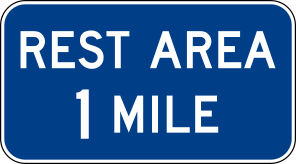
24. What does this Rest Area sign tell a driver?
- The distance to the next rest area ahead. (correct)
- That a rest area entrance is at this location.
- That vehicles may pull onto the road from a shoulder ahead.
- The gas and food brands available at the coming exit.
Why: A blue rectangular Rest Area advance sign posts how far ahead the next rest area is, so you can plan whether to pull off in time. The pick that reads the sign as the entrance itself confuses this advance version with the ramp-mouth sign at the actual driveway; the advance sign is set back so drivers still have room to slow, signal, and exit.
Source: Manual on Uniform Traffic Control Devices, sign D5-1 (Rest Area Advance).
-
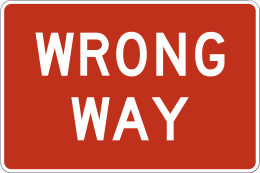
25. You see a red-and-white Wrong Way regulatory sign facing you. What does it require?
- Continue with caution and watch for oncoming traffic.
- Pull onto the shoulder and wait for a break in traffic.
- Yield to traffic in your lane before proceeding.
- Turn around immediately; you are going the wrong way. (correct)
Why: The Wrong Way sign tells you that you have already entered a roadway against traffic and must reverse course now, not adjust speed or position. Drivers who reach for the shoulder-stop choice are carrying over the habit that any highway emergency ends at the shoulder, forgetting that a parked car still points at oncoming traffic until the driver turns around.
Source: Florida Driver Manual, "Regulatory Signs: Wrong Way," p.47.
-
26. A solid yellow line runs down the middle of a two-way roadway, separating your lane from oncoming traffic. What does it require of you?
- Stay right of the line and do not cross it to pass slower vehicles. (correct)
- Pass slower vehicles ahead when the way looks clear.
- Cross the line at will to reach any driveway, alley, or side road.
- Make no left turn across the line at any point.
Why: A solid yellow line down the center of a two-way road separates opposing traffic and closes passing on your side. You keep to the right of it and cross it only to make a permitted left turn into a driveway, alley, or side road, and only when it is safe. The trap is the choice that reads the marking as a broken yellow line and treats a clear road ahead as permission to overtake. A solid stroke has already settled the passing decision against you, regardless of how clear the road looks at the moment.
Source: Manual on Uniform Traffic Control Devices, marking 3B.01 (Solid Yellow Center Line).
-
27. You are preparing to make a right turn across a designated bike lane. A bicyclist is riding straight ahead in that lane. What must you do?
- Yield to the bicyclist and complete your turn behind them. (correct)
- Signal and turn at the same time as the bicyclist.
- Turn ahead of the bicyclist since motor vehicles have priority.
- Sound your horn to warn the bicyclist and turn immediately.
Why: When your right turn crosses a bike lane, yield to the bicyclist going straight and complete the turn behind them. The manual treats a through-moving bicyclist in a marked bike lane as any other vehicle with the right of way, and the lane itself is part of the roadway you must check before crossing. Drivers who pick C are relying on the general habit that a motor vehicle outranks a bicycle on shared pavement, a habit the marked bike lane specifically overrides at the turn.
Source: Florida Driver Manual, "Sharing the Road: Bicyclists, Rules for Motorists," p.81.
-
28. How close to a stop sign or flashing traffic light does Florida law allow you to park?
- No closer than 30 feet (correct)
- No closer than 50 feet
- No closer than 15 feet
- No closer than 20 feet
Why: Florida law bars parking within 30 feet of any flashing signal, stop sign, or traffic light, protecting sight lines drivers need to read the sign. The 20-foot choice pulls from the intersection rule printed one bullet above the flashing-signal rule in the same list, and the two distances get swapped by drivers who remember the list but not which number attaches to which fixture.
Source: Florida Driver Manual, "Parking: It's Against the Law to Park," p.66.
-
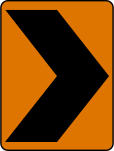
29. You approach this orange chevron sign posted through a work zone. What does it require of you as a driver?
- Reduce speed and follow the chevrons through the curve as the road bends right. (correct)
- Merge to the left because the right lane ends ahead in the work zone.
- Stop completely before entering the curve and wait for a flagger.
- Do not pass because a hill or curve limits the sight distance ahead.
Why: The orange chevron is an alignment marker on the outside of a rightward curve in a work zone, so slow down and steer along the chevrons while watching for shifted lanes, barriers, or workers. The lane-ends reading pulls in drivers who treat any orange rectangle in a work zone as a merge warning, but this device shows the shape of the road, not the loss of a lane.
Source: Manual on Uniform Traffic Control Devices, sign CW1-8R (Chevron Alignment Right (Work Zone)).
-
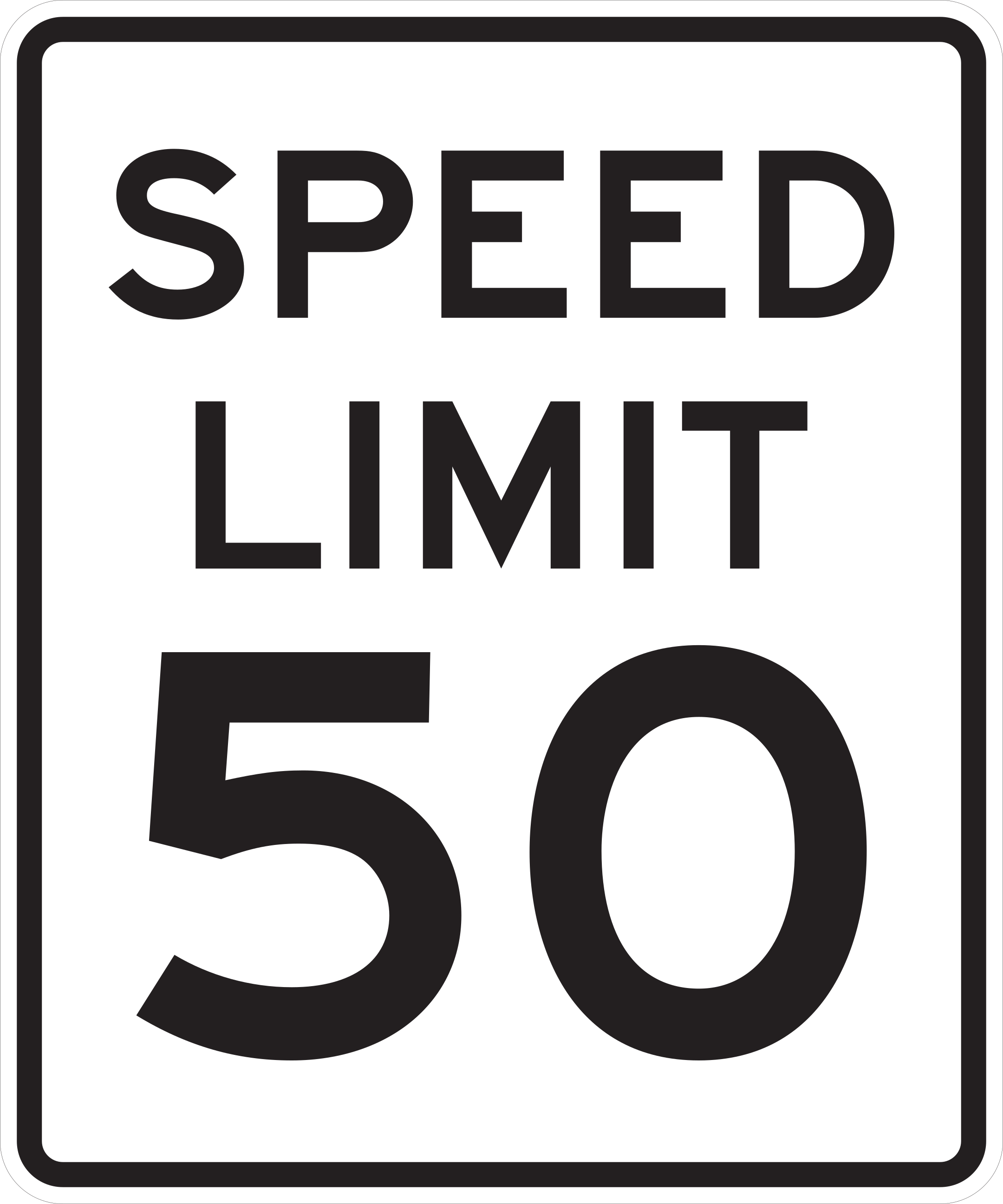
30. What does this Speed Limit 50 sign tell a driver about 50 mph on this roadway?
- 50 mph is the maximum legal speed on this roadway. (correct)
- 50 mph is the required minimum speed for through traffic here.
- 50 mph is an advisory speed for a curve or hazard ahead.
- Drivers should target 50 mph as the ideal cruising speed here.
Why: The sign posts the statutory maximum for the road ahead, so 50 mph is the ceiling, the highest speed a driver may legally travel until another speed limit sign changes it. Nothing on this sign requires driving 50 mph; it caps the speed rather than mandating it. Drivers who read the number as a required minimum are borrowing the look of a different white rectangle specifically labeled MINIMUM SPEED or MINIMUM SPEED LIMIT.
Source: Manual on Uniform Traffic Control Devices, sign R2-1 (Speed Limit 50).
-
31. You see a series of solid white triangles painted on the pavement ahead, all pointing in your direction of travel. What are these markings telling you?
- A speed hump or speed table; slow before you cross it. (correct)
- A pedestrian crossing ahead; yield to anyone in it.
- A railroad crossing ahead; stop if a train is near.
- A lane ending ahead; merge into the next lane.
Why: A row of solid white triangles pointing in your direction of travel warns of a speed hump or speed table ahead, so slow to the posted advisory speed before you cross. The pedestrian-crossing answer is the trap: a crosswalk uses parallel white bars or blocks straight across the road, and drivers who read any bold white pavement pattern as a crosswalk cue miss that these triangles point along the lane, not across it.
Source: Manual on Uniform Traffic Control Devices, marking 3B.27 (Speed Hump Marking).
-
32. Where must the insurance policy on your Florida-registered vehicle be purchased?
- From an insurance agency licensed to do business in Florida (correct)
- From any company that is licensed in any US state
- From a federally chartered insurer only
- From any online insurance broker operating nationwide
Why: The manual requires you to purchase the policy from an insurance agency licensed to do business in Florida. Option B traps drivers who carry driver-license reciprocity over to insurance, assuming a company licensed anywhere in the country satisfies Florida, when the state instead checks the agency's Florida license.
Source: Florida Driver Manual, "Insurance Laws: No-Fault Law," p.23.
-
33. You enter a ramp and see a large white arrow painted on the pavement pointing straight back toward your vehicle. What does this marking tell you?
- You are going the wrong way; stop and turn around when safe. (correct)
- The lane ahead ends and you must merge into the next lane.
- Continue in the direction the arrow points at the next intersection.
- The lane can carry traffic in either direction at certain hours.
Why: A white arrow aimed back at the driver marks the correct direction of traffic on a one-way road or exit ramp, so seeing the arrowhead means the vehicle has entered against the flow and must stop and turn around as soon as it is safe. The tempting wrong pick is the lane-ending reading, chosen by a driver used to reading every pavement arrow as a movement instruction; the lane-reduction arrow angles diagonally into an open lane rather than aiming straight back at the vehicle.
Source: Manual on Uniform Traffic Control Devices, marking 3B.24 (Wrong-Way Arrow).
-
34. What does the speed shown on this advisory speed plaque tell a driver?
- The speed at which the hazard ahead can be comfortably negotiated. (correct)
- The maximum legal speed limit that applies through the hazard.
- The minimum speed drivers must maintain through the curve.
- The speed limit that applies only in wet or icy conditions.
Why: An advisory speed plaque names the speed at which the hazard ahead can be comfortably negotiated, and it is a recommendation posted with a warning sign rather than a posted limit. The pull toward the legal-limit answer comes from carrying over the habit of reading any number on a roadside sign as enforceable; yellow warning signs advise, and the plaque takes its color and authority from the diamond above it.
Source: Manual on Uniform Traffic Control Devices, sign W13-1aP (Advisory Speed Plaque).
-
35. Regulatory signs on Florida roads set limits or instruct drivers what they should or should not do. What does the Florida manual say about obeying them?
- They are enforceable by law, and drivers can be cited for disobeying them (correct)
- They apply only during the hours posted on the sign face
- They apply only to commercial vehicles unless the sign says otherwise
- They are advisory only, and drivers should use their own judgment
Why: Regulatory signs (white with black lettering, plus stop and yield) are enforceable by law, so ignoring one can bring a citation the same way running a red light can. Option D is where half-prepared drivers land because they mentally file every roadside sign under the same yellow-diamond 'watch out' register they learned first, and treat regulatory instructions as suggestions rather than the enforceable commands the manual calls them.
Source: Florida Driver Manual, "Traffic Signs: Regulatory Signs," p.47.
-
36. You are parking uphill next to a curb. Which way should you point your front wheels?
- Toward the curb
- Straight ahead
- Slightly angled toward the curb
- Away from the curb (correct)
Why: Uphill against a curb, wheels turned away send a rollback into the curb rather than into the traffic lane. B treats a curbed hill park like level-ground parking and skips the wheel-turn step the manual requires whenever the vehicle is stopped on a slope.
Source: Florida Driver Manual, "Parking on Hills," p.66.
-
37. The lead vehicle of a funeral procession enters an intersection ahead of you and the light then turns red. What does Florida law allow the rest of the procession to do?
- Split up and reform on the far side of the intersection
- Stop and wait for the next green light before continuing
- Follow through the intersection regardless of the traffic light (correct)
- Follow only if a law enforcement escort waves them through
Why: Once the lead vehicle of a funeral procession enters an intersection, the remaining vehicles may follow through regardless of the traffic light or sign. Choice B is the trap: it carries the ordinary red-light stop rule into a situation Florida deliberately exempts, so drivers who default to their normal signal habit pick it.
Source: Florida Driver Manual, "Funeral Processions," p.84.
-
38. What should a driver do when approaching this Slippery When Wet sign?
- Reduce speed and avoid sudden moves like hard braking. (correct)
- Come to a full stop before continuing onto the wet pavement.
- Pull off the roadway until the pavement fully dries.
- Turn on hazard lights and maintain the posted speed.
Why: The sign warns that the road surface ahead loses traction in rain, snow, or ice, so you ease off the accelerator, add following distance, and keep every input on the wheel and pedals gentle. The trap is the choice that calls for a full stop; a yellow warning diamond flags what to expect, and a driver who reaches for the stop-sign rule at every diamond is applying a regulatory response to a caution.
Source: Manual on Uniform Traffic Control Devices, sign W8-5 (Slippery When Wet).
-
39. You are on a Florida road with four or more lanes carrying two-way traffic. In which lanes should you normally drive?
- The center lane, to leave passing room on either side
- Any lane, as long as you match the flow of traffic
- The right lanes, except when overtaking and passing (correct)
- The left lanes, so you can watch oncoming traffic sooner
Why: On a road with four or more lanes carrying two-way traffic, the manual tells you to drive in the right lanes and use the left lanes only for overtaking and passing. The tempting misread is to treat a multi-lane road as free choice, picking 'any lane is fine' and skipping the keep-right rule Florida applies to two-way highways.
Source: Florida Driver Manual, "Traffic Lanes," p.69.
-
40. You approach an intersection showing a flashing yellow traffic light. What does it require of you?
- Speed up briefly to clear the area before the light changes.
- Come to a complete stop before entering the intersection.
- Stop, yield to cross traffic, and then continue through.
- Slow down and proceed with caution through the intersection. (correct)
Why: A flashing yellow warns of a nearby hazard or warning sign, so slow down and proceed with caution rather than stopping. Drivers who treat every flashing color the same import the flashing-red 'stop, then go' rule and pick B, but Florida pairs each color with its own action.
Source: Florida Driver Manual, "Traffic Signals: Flashing Signal Lights, Flashing Yellow Light," p.52.
-
41. Which of the following does the Florida manual list as a common driver distraction?
- Following another vehicle too closely
- Talking on a cell phone (correct)
- Driving in rush-hour traffic
- Wearing sunglasses at night
Why: The manual lists talking on a cell phone among the common driver distractions on page 34. Rush-hour traffic in choice C sits one page earlier under 'risky driving times' that older drivers should avoid; readers who conflate that older-driver safety list with the distractions bullets pick it, treating a time slot to stay off the road as if it were a distraction the driver carries into the car.
Source: Florida Driver Manual, "Distracted Driving: common distractions," p.34.
-
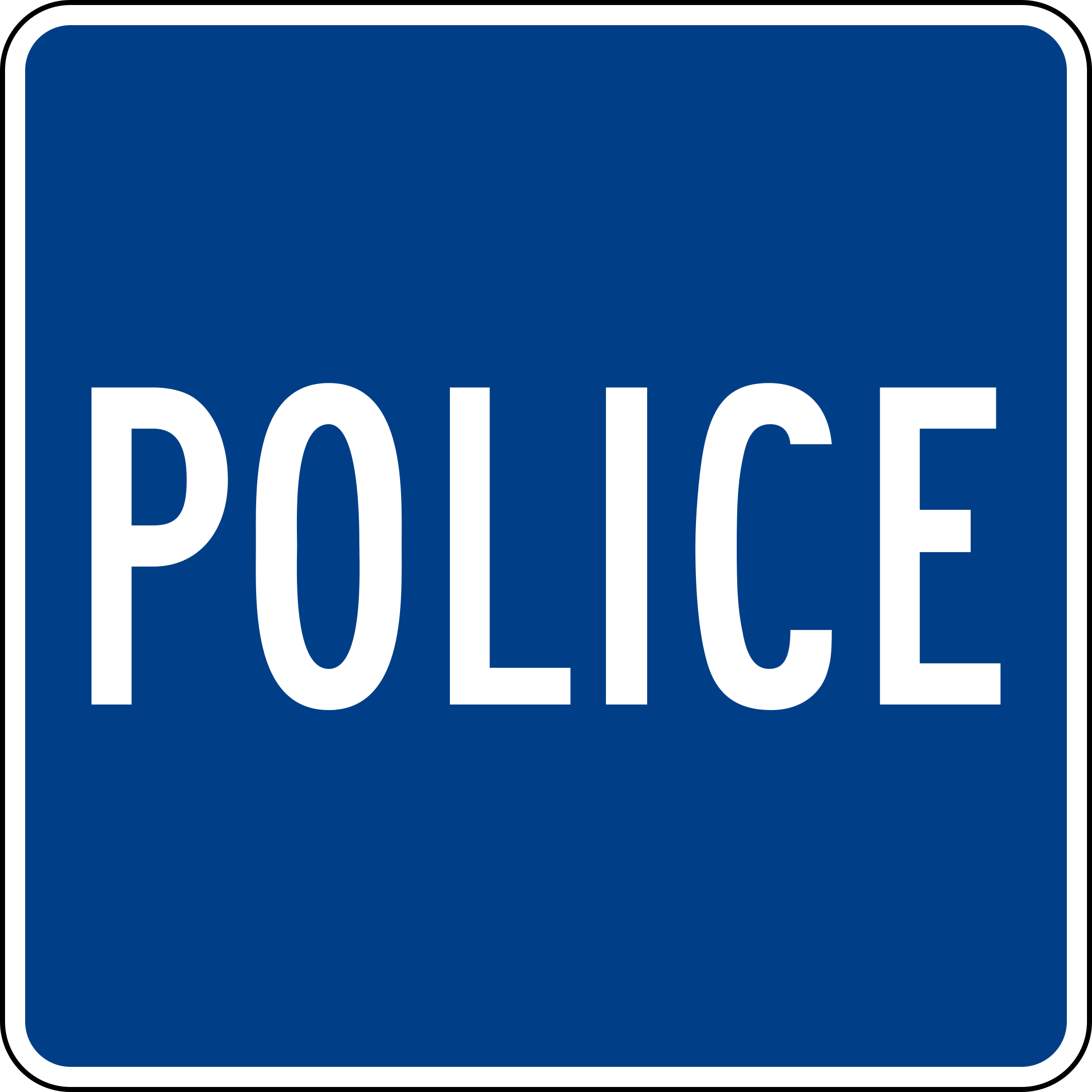
42. What does this Police sign tell a driver?
- A police station is located ahead. (correct)
- A hospital is located ahead.
- A rest area is located ahead.
- An emergency telephone is located ahead.
Why: The white POLICE legend on a blue square directs you to a police station or other law enforcement office ahead. The hospital answer reads the blue services background correctly but ignores the legend printed on the sign, which names police work, not medical care.
Source: Manual on Uniform Traffic Control Devices, sign D9-14 (Police).
-
43. The word BUS is painted in white in a travel lane. What tells you who may use the lane and during which hours?
- The posted signs at the location (correct)
- The color of the pavement legend
- Whether the legend spells out BUS ONLY or BUS STOP
- A federal default schedule for bus lanes
Why: The BUS pavement legend identifies a lane or curb zone as bus-designated, but the posted regulatory signs at that location are what state who may enter and when. The trap is the choice that reads the specific legend wording as if BUS ONLY versus BUS STOP carried the schedule itself; the pavement word only supplements the signs, and the signs carry the who and the when.
Source: Manual on Uniform Traffic Control Devices, marking 3E.03 (BUS Pavement Legend).
-
44. What does this exit direction sign at a freeway ramp confirm for a driver?
- The destination and which side you leave the freeway from. (correct)
- The distance remaining to the next service area on this route.
- The speed limit that applies once you're on the ramp itself.
- The route number of the highway you will join after exiting.
Why: The E4-1 stands at the ramp itself and does two jobs: it names the destination this ramp serves and, through the diagonal arrow, shows whether the ramp peels off to the right or the left. That is the last confirmation before a driver commits to leaving the through lanes. The route-number reading is the trap, catching drivers who habitually treat green interchange panels as route shields and reach for a highway number as the headline, even when the sign in front of them is a destination confirmation answering a different question.
Source: Manual on Uniform Traffic Control Devices, sign E4-1 (Exit Direction Sign).
-
45. You are convicted of texting while driving and the violation occurred in a school zone. What does Florida add to the base penalty?
- Automatic license revocation for one year
- A one-year license suspension and fine
- A mandatory ignition interlock installation
- Three additional points on top of the primary offense (correct)
Why: The point table adds three points to the primary texting offense when it occurs in a school zone. Choice A names revocation, which the manual applies to serious offenses such as DUI, certain felonies involving a motor vehicle, and racing on the highway; drivers who assume the school-zone label alone escalates a texting offense onto that list reach for revocation instead of the points enhancement the manual actually adds.
Source: Florida Driver Manual, "Common Violations and Associated Point Value," p.30.
-
46. What is the safest response for a driver traveling in the right lane who sees this Right Lane Closed Ahead sign?
- Merge out of the right lane early rather than waiting for it to end (correct)
- Stay in the right lane until it physically ends, then merge left
- Come to a stop at the sign and wait for the lane to reopen
- Move all the way to the far left lane before reaching the work zone
Why: The sign is posted in advance of the closure so you have time to find a safe gap and merge out of the right lane before the lane runs out. Move over while traffic is still flowing at speed, not once you reach the taper. Drivers who read the advance warning as permission to ride the closing lane to the last inch, then force a merge where it ends, are the ones who miss this.
Source: Manual on Uniform Traffic Control Devices, sign W20-5 (Right Lane Closed Ahead).
-
47. Another vehicle is coming straight at you in your lane. What does the Florida manual list as the first response?
- Sound the horn and flash your high beams (correct)
- Steer to the right shoulder without slowing
- Speed up so you can clear the driver's path faster
- Cross into the opposing lane the other driver just left
Why: The manual's numbered steps for a vehicle approaching in your lane are sound the horn and flash the high beams, then brake hard, then steer to the side of the road. Choice B is the trap because 'steer to the shoulder' feels like the safest instinct, but the manual wants you to try to alert the other driver first, since they may still be able to correct.
Source: Florida Driver Manual, "Handling Emergencies - Vehicle Approaching in Your Lane," p.80.
-
48. What does this No Right Turn sign require of a driver in the lane where it is posted?
- Stop before turning right, then proceed when the way is clear.
- Continue straight or use another approved movement instead of turning right. (correct)
- Yield to any crossing traffic before completing a right turn.
- Turn right only when a green arrow signal is showing.
Why: The sign forbids a right turn at that intersection or driveway from the lane where it's posted, so a driver in that lane continues straight or uses another approved movement. The stop-then-turn answer pulls at drivers who carry a stop-sign habit into a white regulatory sign, treating a full stop as permission to complete the turn; the R3-1 is an outright prohibition, and no amount of stopping first satisfies it.
Source: Manual on Uniform Traffic Control Devices, sign R3-1 (No Right Turn).
-
49. You approach a signal with a flashing yellow arrow for your left turn. What is required of you?
- Stop and wait for a solid green arrow before starting your left turn.
- Turn immediately because oncoming traffic has been stopped by red.
- Treat the flashing arrow the same as a flashing red stop signal.
- Turns are allowed, but you must yield to oncoming traffic and pedestrians. (correct)
Why: A flashing yellow arrow lets you turn in the direction of the arrow, but oncoming traffic has the green, so you must yield to oncoming traffic and pedestrians before completing the turn. Drivers who carry the solid-green-arrow rule over to the flashing yellow, expecting oncoming traffic to be held for a protected phase, are the ones who turn without yielding.
Source: Florida Driver Manual, "Traffic Signals: Flashing Signal Lights, Flashing Yellow Arrow," p.52.
-
50. You approach a motorcycle traveling in the lane ahead of you. Under Florida law, what does the manual say about sharing that lane with the motorcyclist?
- Sharing the lane is allowed if the motorcycle stays to the right.
- Sharing the lane is allowed when passing on a two-lane road.
- The motorcyclist is entitled to the entire lane. (correct)
- Sharing the lane is allowed only in slow, heavy traffic.
Why: Florida law treats a motorcycle as entitled to the full width of the lane, so cars must not squeeze past inside the same lane. A driver who thinks the motorcycle counts as half a car and leaves room to slip alongside is applying a habit from watching bicycles filter through traffic; the motorcycle rule works the opposite way.
Source: Florida Driver Manual, "Sharing the Road: Motorcycles and Mopeds, Rules for Motorists," p.85.
Keep going.
Want explanations one question at a time? Browse every Florida practice question or jump into the topic study guide. Ready to close the gaps for good? Own the Florida book and its study system.