Colorado Practice Test
A full-length practice test for the Colorado DMV knowledge test.
25 Questions Click an answer to reveal the explanation









Colorado Practice Test (25 questions). Correct answers and explanations are noted under each question.
-
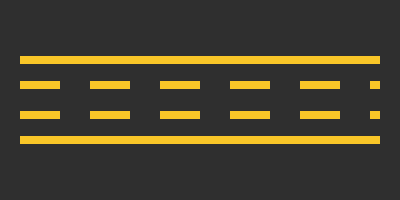
1. A center travel lane is bordered on each side by an outer solid yellow line and an inner broken yellow line. What is this lane used for?
- Left turns by traffic traveling in either direction. (correct)
- Passing slower vehicles when the adjacent through lane is blocked.
- Left turns made only by oncoming traffic from the opposite direction.
- Through travel to bypass congestion in the adjacent lane.
Why: A center lane bordered by outer solid and inner broken yellow lines is a two-way left-turn lane, used by traffic from both directions only to make left turns. The trap is the choice that treats the broken yellow line as a passing line; on a two-lane road a broken yellow line does permit passing, but here the broken line only marks where vehicles may cross into the lane to turn left, and passing inside the lane is not allowed.
Source: Manual on Uniform Traffic Control Devices, marking 3B.05 (Two-Way Left-Turn Lane).
-
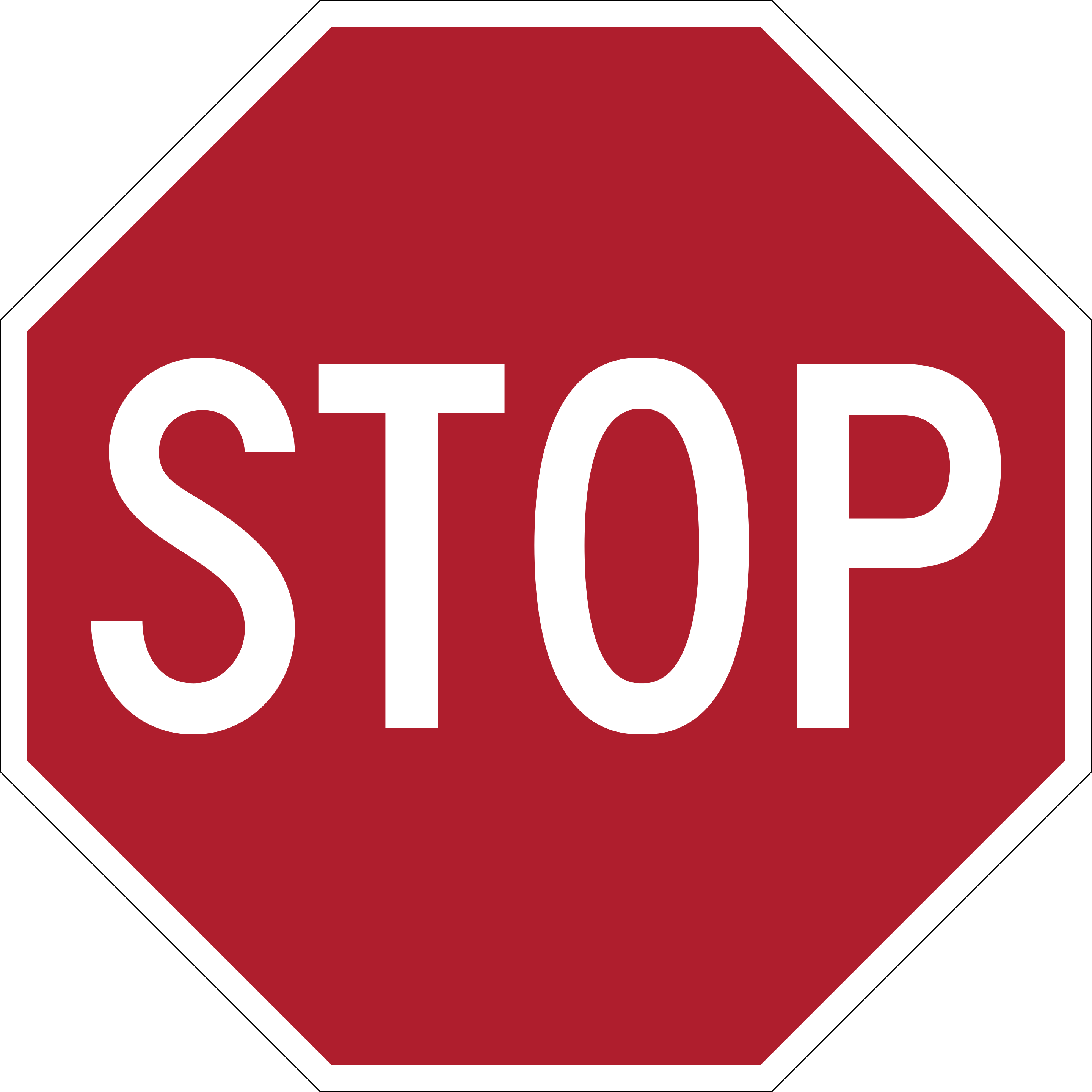
2. After the wheels have fully stopped at a stop sign, when may the driver proceed?
- After yielding to pedestrians and cross traffic with the right-of-way (correct)
- As soon as the vehicle's wheels have fully halted
- When a traffic light or officer waves the driver through
- After the driver on the right has gone first
Why: The stop is only the first step; after halting, drivers yield to pedestrians and any cross traffic that already has the right-of-way, then move when the way is clear. Drivers who learned "stop means stop" as the whole rule pull forward the moment the wheels halt and skip the yield step the octagon requires next.
Source: Manual on Uniform Traffic Control Devices, sign R1-1 (Stop).
-
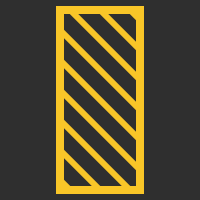
3. Yellow diagonal stripes inside a solid yellow border fill a rectangle between opposing-direction lanes. What does this require of you?
- Use it as a two-way left-turn lane for turns to either side.
- Do not drive into the striped area. (correct)
- Treat it as a passing zone for opposing traffic.
- Stop inside the stripes before merging into the next lane.
Why: A rectangle outlined in solid yellow and filled with diagonal stripes is a painted median between opposing-direction lanes, and it is closed to travel. The trap is the two-way left-turn lane, which also sits between opposing traffic and uses yellow paint; a driver who learned that rule first carries it over. But a two-way left-turn lane is bounded by a solid outer yellow and a broken inner yellow with no diagonal fill, and it exists to be entered for turns. The diagonal stripes flag pavement not meant for any travel at all.
Source: Manual on Uniform Traffic Control Devices, marking 3B.25 (Yellow Diagonal Crosshatch (Neutral Median Area)).
-
4. What does this warning sign tell a driver about the road ahead?
- Two roads merge together and traffic from the right will enter your lane.
- A side road enters from the right ahead at roughly a right angle. (correct)
- The road ahead ends at a T-intersection where you must turn.
- Roads cross the main roadway from both sides ahead.
Why: The Side Road (Right) sign warns that a road joins the main roadway from the right ahead at roughly a right angle, so watch for vehicles entering or pulling out from that side road. The trap is the crossroad sign, which shows entering roads on both sides; a driver who glances at the diamond without noting that only the right arm is drawn reaches for the crossroad warning instead.
Source: Manual on Uniform Traffic Control Devices, sign W2-2R (Side Road (Right)).
-
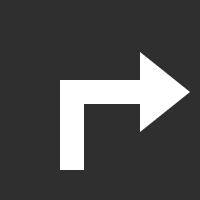
5. A white right-turn arrow is painted in the lane you're driving in. What does it require?
- You must turn right at the next intersection. (correct)
- You may turn right or continue straight from the lane.
- You must yield to traffic before turning right.
- You must stop at the arrow before proceeding.
Why: A right-turn arrow painted in the lane makes that lane right-turn only, so any driver who enters it must turn right at the next intersection. The answer that also lets you continue straight is the trap for drivers who read the painted arrow as guidance to weigh against other movements, the way a shared-lane 'sharrow' marking works, rather than as a lane restriction that rules out every movement the arrow does not show.
Source: Manual on Uniform Traffic Control Devices, marking 3B.24 (Right-Turn Arrow).
-
6. What does this sign tell you about the facility ahead?
- A full-service hospital with a 24-hour emergency room.
- Emergency medical care at a facility short of a full hospital. (correct)
- A highway rest area with restrooms and vending.
- A 24-hour pharmacy for prescription refills.
Why: This blue sign carries a white Star of Life and marks emergency medical services ahead. It is used where medical help is available but the facility is not a full hospital, such as an ambulance station, an urgent care facility, or a trauma center. Supplemental plaques below the sign name the specific type of care offered. Drivers who reach for the hospital answer read the Star of Life as if it were the H that marks a full hospital, mixing two symbols because both belong to the same blue services family.
Source: Manual on Uniform Traffic Control Devices, sign D9-13 (Emergency Medical Services).
-
7. A broken white line separates your lane from the lane to your left, both traveling in the same direction. What does this marking permit?
- Lane changes across the line when it is safe to do so. (correct)
- Passing by crossing into oncoming traffic.
- Crossing only in an emergency.
- Nothing; the line must not be crossed.
Why: A broken white line divides lanes moving the same way, and a driver may cross it to change lanes whenever the move is safe: signal, check mirrors and blind spots, then move over. The choice about passing into oncoming traffic reaches for the rule that governs broken yellow center lines on two-way roadways; broken white never sits between opposing lanes and has nothing to do with oncoming vehicles.
Source: Manual on Uniform Traffic Control Devices, marking 3B.04 (Broken White Lane Line).
-
8. You approach a roundabout entry marked with a row of solid white triangles pointing toward you. What does the marking require before you cross it?
- Yield to traffic in the roundabout and cross only when safe. (correct)
- Come to a complete stop before entering, then proceed.
- Maintain speed and merge into any gap you find.
- Wait for a driver in the circle to wave you in.
Why: The row of triangles is a yield line, and it puts the duty to yield on you. Slow down, watch for traffic and pedestrians already in the circle, and cross only when there is a safe gap. The trap is the answer that requires a full stop; drivers reach for it by treating the triangles like a stop bar. A stop bar is a single solid white line spanning the lane and it is what a stop sign uses, while shark's teeth signal yielding, not stopping.
Source: Manual on Uniform Traffic Control Devices, marking 3B.19 (Yield Line (Shark's Teeth)).
-
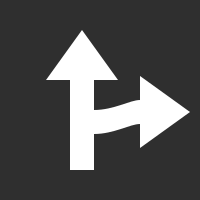
9. A lane is marked with this straight-or-right combination arrow. What does it permit a driver in that lane to do?
- Continue straight through the intersection or turn right. (correct)
- The lane is a right-turn-only lane; you must turn right.
- You must go straight; turning right from this lane is not allowed.
- Continue straight, turn right, or make a U-turn.
Why: The combination arrow marks an optional-movement lane: a driver may either continue straight through the intersection or turn right from the same lane. The tempting wrong pick is the right-turn-only reading, which comes from treating the second arrowhead as if it were a standalone right-turn arrow and ignoring the straight shaft paired with it.
Source: Manual on Uniform Traffic Control Devices, marking 3B.23 (Straight-or-Right Combination Arrow).
-
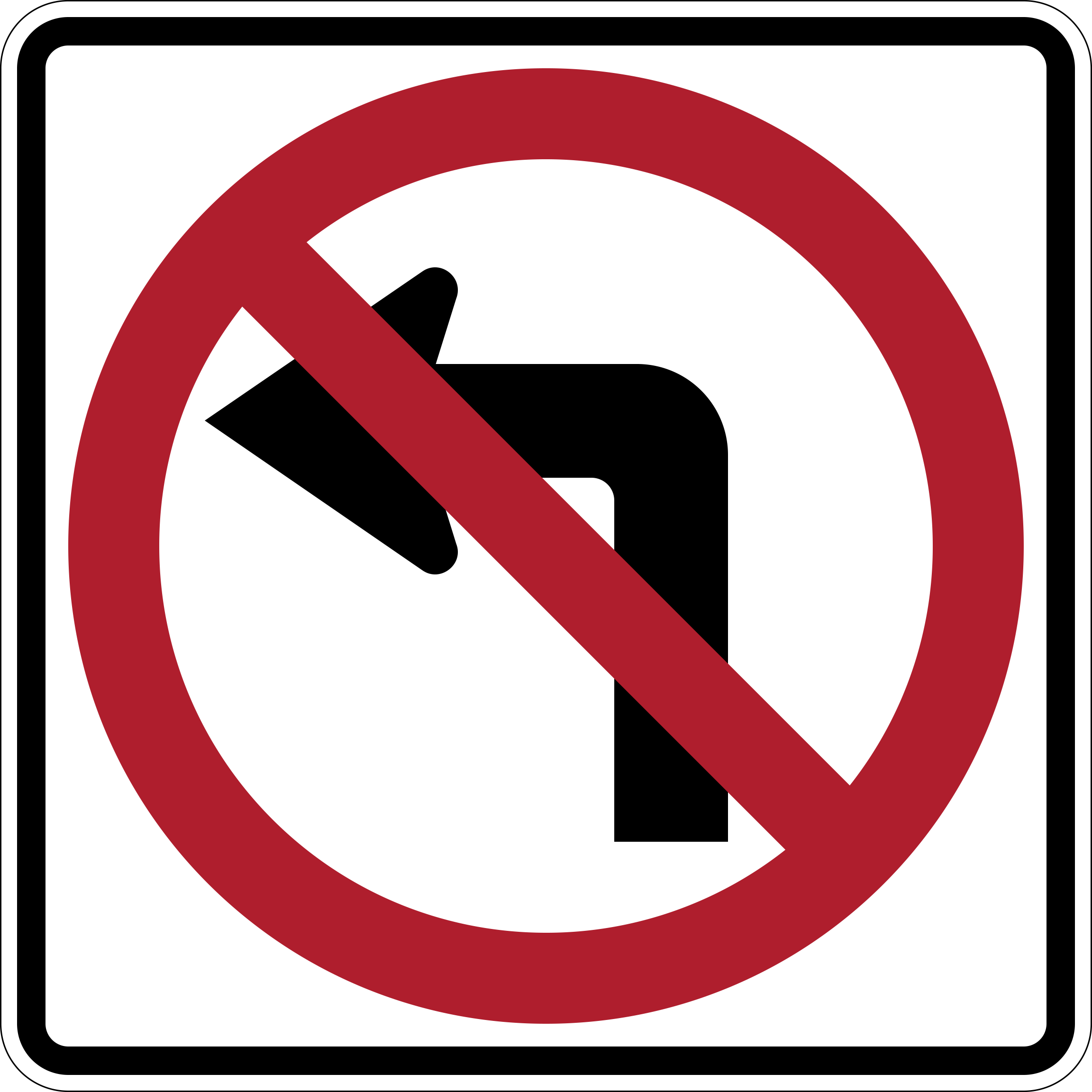
10. What does this No Left Turn sign require of a driver in the lane where it is posted?
- Continue straight or use another approved movement; a left turn from that lane is prohibited. (correct)
- Make the left turn only after coming to a complete stop and yielding to oncoming traffic.
- Make the left turn only when a green arrow is displayed on the traffic light.
- The prohibition applies only during the hours shown on a plaque mounted below the sign.
Why: The sign forbids a left turn from that lane at any time, so a driver must continue straight or use another approved movement. The trap is the time-of-day answer, which reads the exception as the base rule; a supplemental time plaque is needed to limit the prohibition to certain hours, and without one the sign applies full-time.
Source: Manual on Uniform Traffic Control Devices, sign R3-2 (No Left Turn).
-
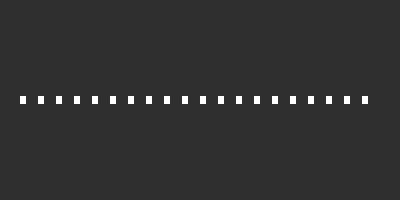
11. A lane line becomes a series of closely spaced short white dots through an interchange. What does this dotted pattern tell you about the lane?
- The lane ends at the next intersection and you must change lanes now.
- The lane continues but is shared, dropping, or merging. (correct)
- The lane is reserved for buses or high-occupancy vehicles through the gap.
- You may cross the dotted line only in an emergency.
Why: A dotted white extension line is a lane line continued in short, closely spaced dots through a merge, exit, interchange, or intersection area. The dots tell you the lane keeps going, but its purpose is changing: it is shared with entering traffic, about to drop, or being merged into another lane. Track the dots to stay aligned and watch for cars entering or exiting through the gap. The trap is the answer that reads a broken-up line as a lane-drop warning. A driver who learned that a solid line becomes broken when a lane is ending carries that habit forward and reads any interruption in the striping the same way. The dotted extension does the opposite: it says the lane continues where the normal stripe cannot be drawn, and only the pattern of use is changing.
Source: Manual on Uniform Traffic Control Devices, marking 3B.04 (Dotted White Extension Line).
-
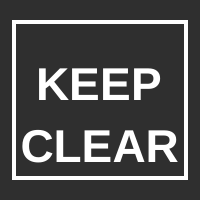
12. Traffic on the far side of the intersection has stopped as you reach a white KEEP CLEAR legend painted across your lane. What does the marking require of you?
- Wait behind the marking until you can get across without stopping in it. (correct)
- Stop inside the marked area to hold your position in the traffic queue.
- Pull forward into the marked area to leave the intersection behind you clear.
- Enter the marked area only after the cross-street signal turns red.
Why: The KEEP CLEAR legend holds the marked area open for cross traffic and vehicles entering the intersection, so when the road ahead is stopped and you cannot clear the marking you wait behind it. The trap is the choice that stops inside the box; a driver who sees painted words on the road defaults to reading them as a stop line, because that is how most pavement legends work, but this one marks the exact place the driver must not stop.
Source: Manual on Uniform Traffic Control Devices, marking 3B.26 (KEEP CLEAR Pavement Legend).
-
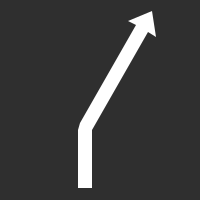
13. What does this lane-reduction arrow require you to do?
- Move into the next lane in the direction the arrow points before this lane ends. (correct)
- Turn in the direction the arrow points at the next intersection.
- Stay in this lane; adjacent traffic must yield so you can merge later.
- Continue straight; drivers in the adjacent lane must move over into your lane.
Why: A lane-reduction arrow warns that your lane is ending, and its bend points at the open lane you must merge into before the pavement runs out. The tempting wrong pick is the turn-arrow reading, since painted arrows on intersection approach lanes usually direct a required turn. But a mandatory-turn arrow runs straight the whole length of its shaft and sits in a dedicated turn pocket, while this arrow bends part-way along a through lane to say the lane itself is going away.
Source: Manual on Uniform Traffic Control Devices, marking 3B.12 (Lane-Reduction Arrow).
-
14. A white arrow pointing straight ahead is painted in the lane you are driving in as you approach an intersection. What does it require?
- Proceed straight through the intersection (correct)
- Merge into the adjacent lane before the intersection
- Turn either left or right from this lane
- Yield to cross traffic before proceeding straight
Why: The white straight-ahead arrow reserves the lane for through movement; a driver in it must continue forward through the intersection and cannot turn out. The trap is the choice that lets a driver turn left or right from the lane. A reader who learned the two-way turn arrow first tends to carry that "either way" reading over to any painted arrow, but a single arrow points one direction only, and the lane it marks is committed to that direction.
Source: Manual on Uniform Traffic Control Devices, marking 3B.24 (Straight-Through Arrow).
-
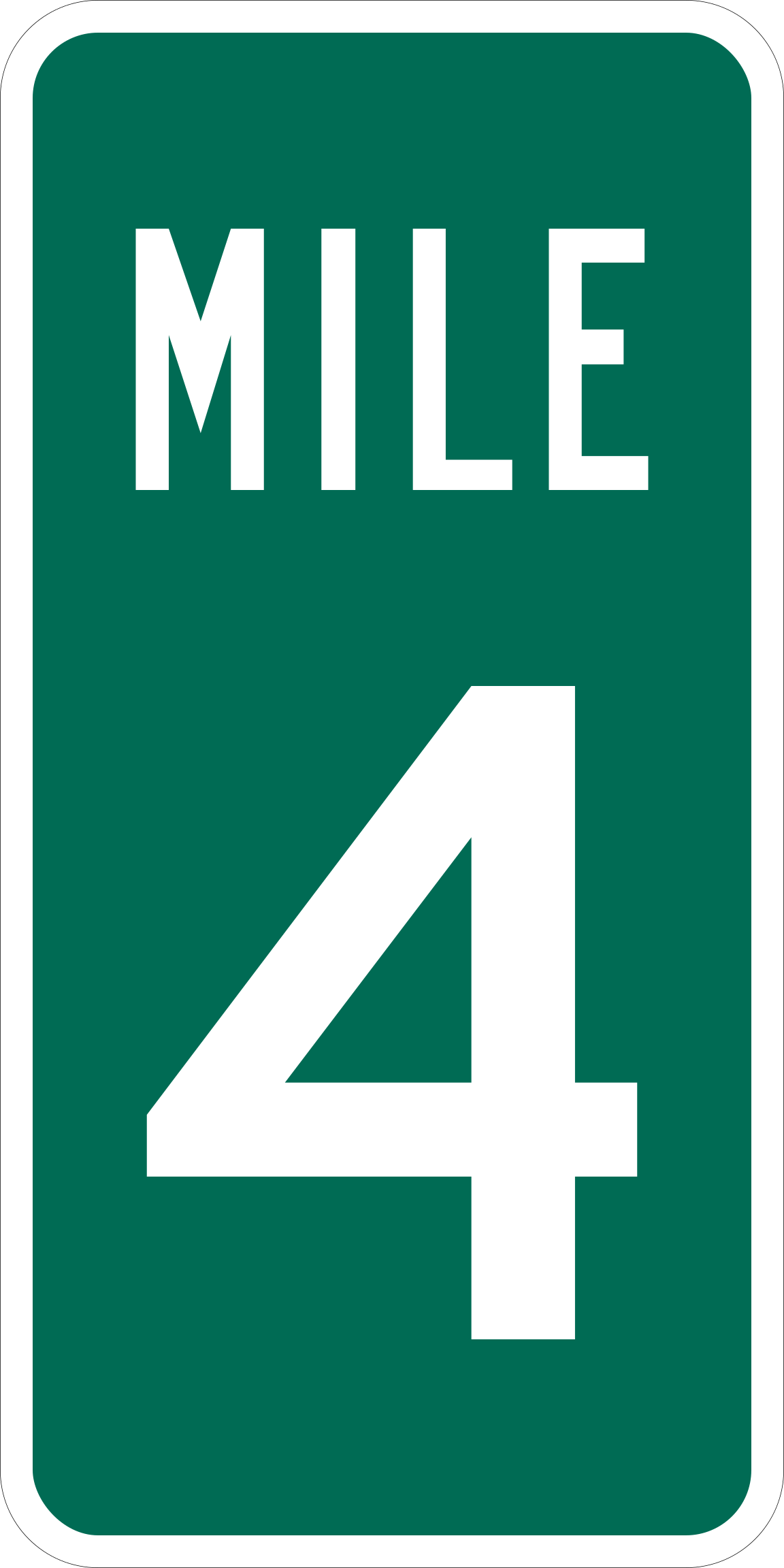
15. What does the number on this milepost tell a driver?
- Miles along the route from where it entered the state. (correct)
- The route number assigned to this highway.
- How many miles are left until the state line.
- The distance to the next numbered exit.
Why: Green milepost panels count up from the point where the route enters the state, giving a running mile count along the route rather than a distance to anywhere ahead. Depending on direction of travel the numbers may rise or fall, but they are not a countdown to the next border or exit. The "miles left until the state line" answer is the trap for drivers used to watching a GPS clock down to a destination. They expect the milepost to work the same way and read the panel as miles remaining rather than miles counted since entering.
Source: Manual on Uniform Traffic Control Devices, sign D10-1 (Reference Location Sign (Milepost)).
-
16. You reach a railroad crossing pavement marking. Before starting onto the tracks, what must you have?
- Enough room on the far side to fully clear the tracks. (correct)
- A green light at the intersection past the railroad crossing.
- A hand signal from the driver who just crossed the tracks.
- Lowered gates and flashing lights over the near side of the crossing.
Why: You never roll onto the rails until there is space on the far side for your whole vehicle; a stall between them puts you in the path of a train. A green past the crossing controls the intersection ahead, not the rail behind it. Drivers who read that downstream signal as permission to enter, the way they would watch only the next light on an ordinary block, are the ones who end up stuck over the tracks.
Source: Manual on Uniform Traffic Control Devices, marking 3B.21 (Railroad Crossing Pavement Marking).
-
17. What should a driver understand from this Curve Right sign?
- Slow before the rightward curve and keep to your lane. (correct)
- Stop at the curve and yield to oncoming traffic before entering.
- Make a sharp right turn at the intersection ahead.
- Merge left because the right lane ends ahead.
Why: This is a warning of a rightward curve, so be ready to slow before the bend as the road calls for and hold your lane through it. Drivers who read a yellow warning diamond as though it carried the regulatory force of a red-and-white sign, expecting it to command a stop or yield, are the ones drawn to the stop-and-yield answer.
Source: Manual on Uniform Traffic Control Devices, sign W1-2R (Curve Right).
-
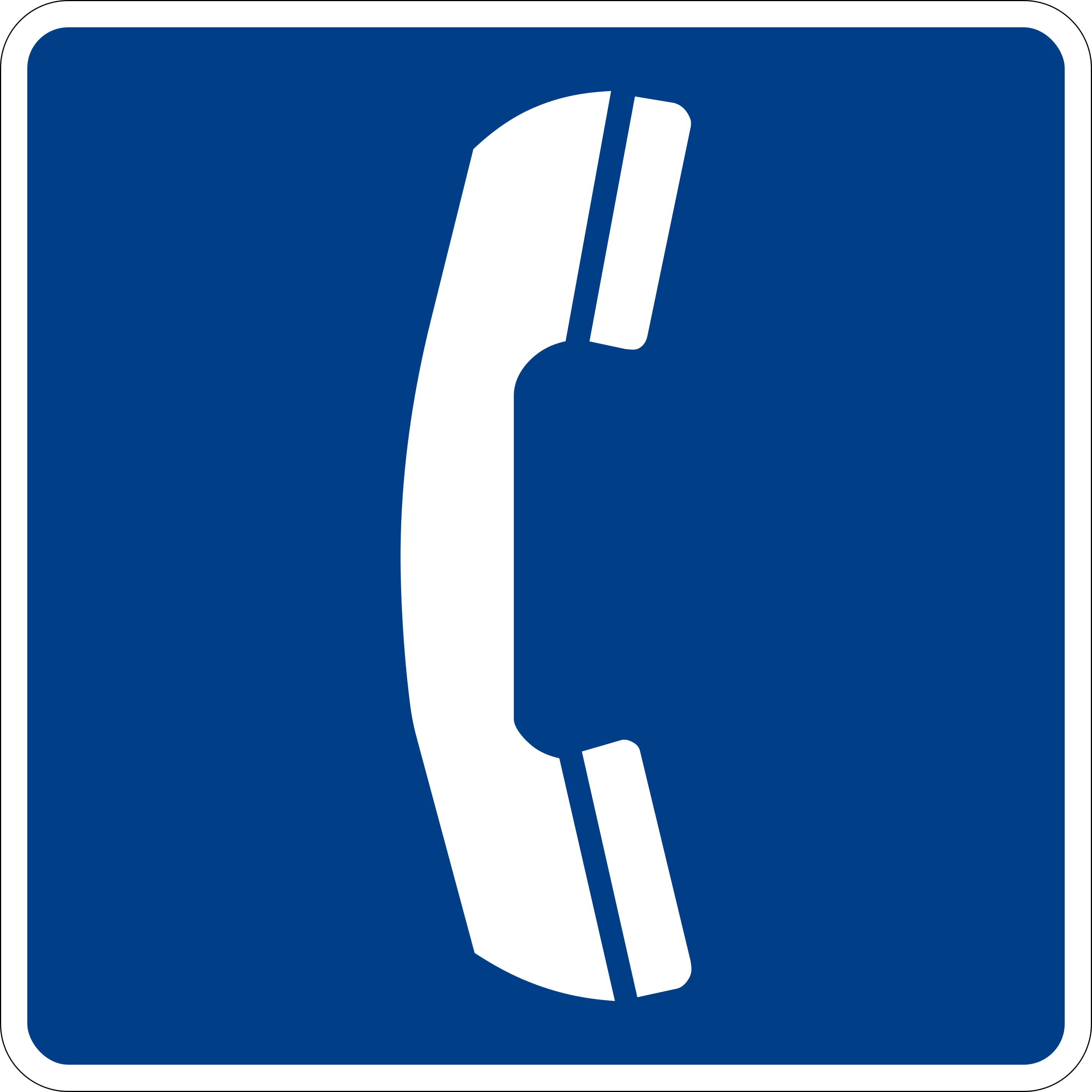
18. What does this Telephone sign tell a driver about the road ahead?
- A public telephone is available ahead. (correct)
- A rest area with restrooms is ahead.
- Cellular phone use is not allowed here.
- An emergency call box requires you to stop.
Why: The white handset on a blue square is a motorist service symbol, and blue services signs point drivers to something helpful ahead: here, a public telephone. The sign marks the phone itself, not any larger facility around it. The rest-area answer is the trap. Because the phone symbol often appears at rest stops, a reader can expect the sign to advertise the whole facility rather than the single service actually pictured on it.
Source: Manual on Uniform Traffic Control Devices, sign D9-1 (Telephone).
-
19. What does this Gas sign tell a driver about the road ahead?
- A gas station is nearby. (correct)
- Lodging is available at the next exit.
- A rest area is ahead.
- An electric vehicle charger is at this interchange.
Why: The fuel pump on a blue service square marks a gas station near the interchange, usually shown grouped with other service symbols so drivers can spot fuel at a glance. The trap to watch is the electric vehicle charger; the entry notes that related signs add a letter or word to the pump to show electric charging instead of gasoline, so a plain pump points to gasoline for a fueled car, not a plug for an EV.
Source: Manual on Uniform Traffic Control Devices, sign D9-7 (Gas).
-
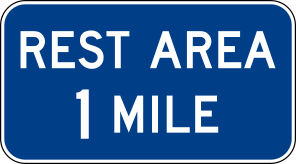
20. What does this Rest Area sign tell a driver?
- The distance to the next rest area ahead. (correct)
- That a rest area entrance is at this location.
- That vehicles may pull onto the road from a shoulder ahead.
- The gas and food brands available at the coming exit.
Why: A blue rectangular Rest Area advance sign posts how far ahead the next rest area is, so you can plan whether to pull off in time. The pick that reads the sign as the entrance itself confuses this advance version with the ramp-mouth sign at the actual driveway; the advance sign is set back so drivers still have room to slow, signal, and exit.
Source: Manual on Uniform Traffic Control Devices, sign D5-1 (Rest Area Advance).
-
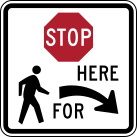
21. What does this Stop Here For Pedestrians sign require of a driver?
- Come to a complete stop for pedestrians at the marked crosswalk on the right. (correct)
- Yield to pedestrians and continue through the crosswalk if it is clear.
- Stop at the sign on every approach, whether or not a pedestrian is present.
- Slow down and watch for people who may cross the road ahead.
Why: The sign is a regulatory instruction to come to a full stop at the stop line for any pedestrian using the marked crosswalk on the right. The trap is the answer that treats it as an unconditional stop on every approach, which borrows the rule from the red octagonal stop sign; this device is triggered by a person in the crosswalk, not by arriving at the sign.
Source: Manual on Uniform Traffic Control Devices, sign R1-5bR (Stop Here For Pedestrians (Right)).
-
22. What does this Food sign tell a driver about the road ahead?
- A restaurant or other place to eat is available ahead. (correct)
- A rest area with picnic tables lies ahead.
- Overnight lodging is offered near this exit.
- Fuel can be purchased at the next exit.
Why: The blue Food sign, a white fork and knife inside a circle, points to a restaurant or other place to eat off the highway ahead. The rest-area answer is the reach: a driver who groups every blue roadside services sign into a single 'rest stop' bucket picks it, without noticing the fork-and-knife icon that reserves this sign for dining.
Source: Manual on Uniform Traffic Control Devices, sign D9-8 (Food).
-
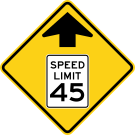
23. What does this Reduced Speed Limit Ahead sign require of a driver?
- Begin slowing so your speed is at or below the new limit by the regulatory sign that follows. (correct)
- Immediately drop to the value shown the moment you pass this sign.
- Slow only if current road conditions make the posted limit unsafe.
- Hold current speed until you reach the new regulatory speed-limit sign.
Why: This sign is advance notice. Begin slowing now so your speed is at or below the new limit by the time you reach the regulatory sign that actually posts it. The trap is the choice that says drop to the shown value the moment you pass the diamond. That reads the yellow warning as if it were the black-on-white regulatory posting, but a yellow diamond never sets the enforceable limit; the regulatory sign that follows does.
Source: Manual on Uniform Traffic Control Devices, sign W3-5 (Reduced Speed Limit Ahead).
-
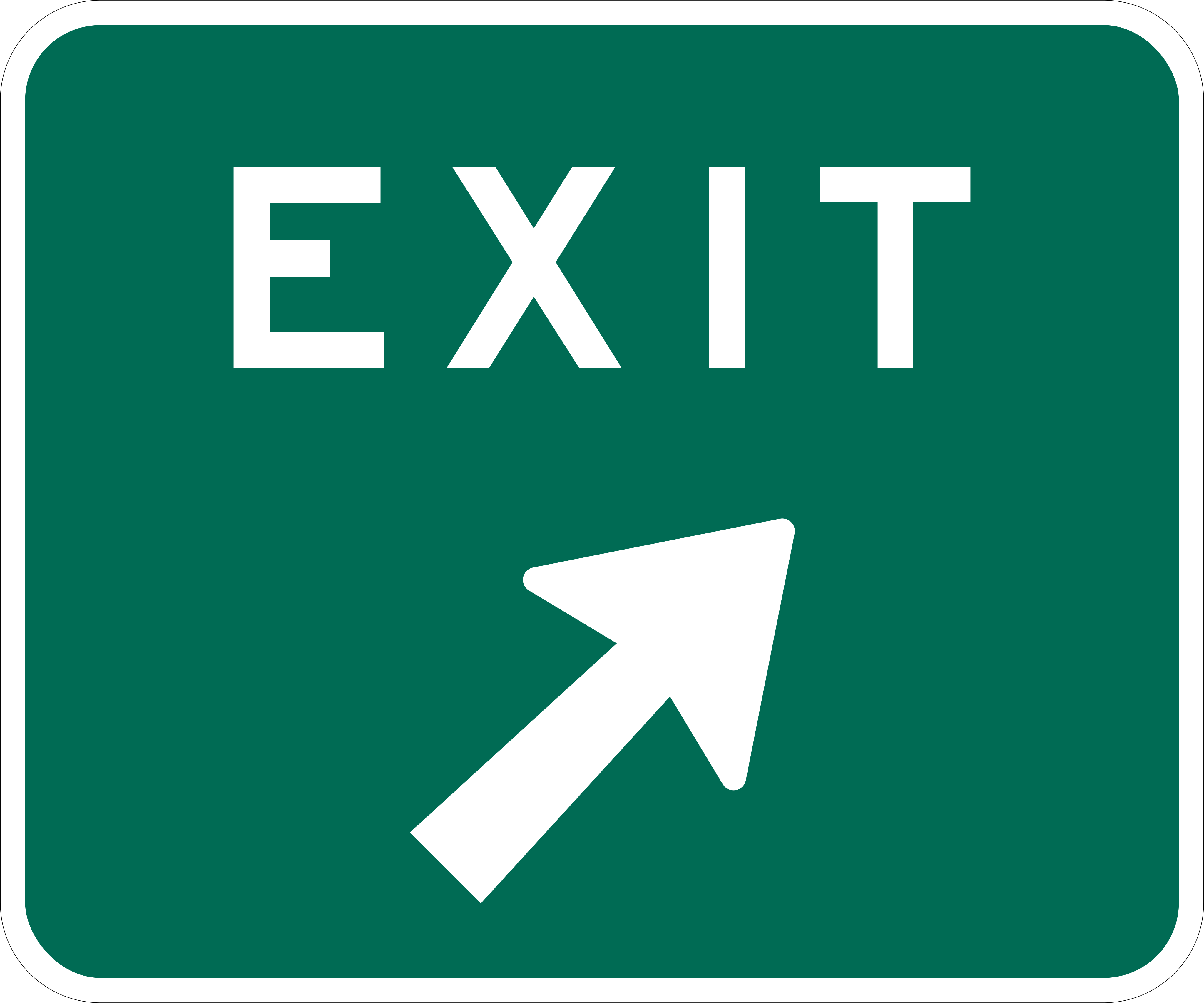
24. What does this Exit Gore sign mark on the freeway?
- It marks the point where the exit ramp separates from the freeway (correct)
- It shows where the exit's deceleration lane begins
- It gives the distance remaining to the next exit
- It posts the advisory speed for the ramp curve
Why: The Exit Gore sign stands in the triangular wedge where the ramp splits from the through lanes, marking the point of departure. Its upward-slanting arrow points along the ramp so drivers can identify the split as it happens, not so they can time a late lane change. The distance-to-next-exit answer tempts drivers who read every green freeway rectangle as a mileage panel, a habit built by the distance signs posted along the mainline rather than by anything a gore marker carries.
Source: Manual on Uniform Traffic Control Devices, sign E5-1 (Exit Gore Sign).
-
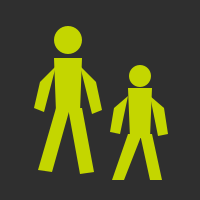
25. You see a fluorescent yellow-green pedestrian symbol painted on the pavement ahead. What does this pavement marking warn you about?
- A school crossing is just ahead (correct)
- A general pedestrian crosswalk with no school nearby
- A playground or park entrance ahead
- A bike route crossing the roadway
Why: A fluorescent yellow-green pedestrian symbol painted on the pavement warns you that a school crossing is just ahead, so slow down, watch for children and crossing guards, and be ready to stop. The traffic-control manual reserves this pavement marking for school crossings; it isn't a general crosswalk indicator, a park symbol, or a bike-route marker. Drivers who read any pedestrian figure on the roadway as an ordinary crosswalk warning are the ones who miss that this specific pavement marking flags a school zone.
Source: Manual on Uniform Traffic Control Devices, marking 3B.22 (School Crossing Pavement Symbol).
Keep going.
Want explanations one question at a time? Browse every Colorado practice question or jump into the topic study guide.